
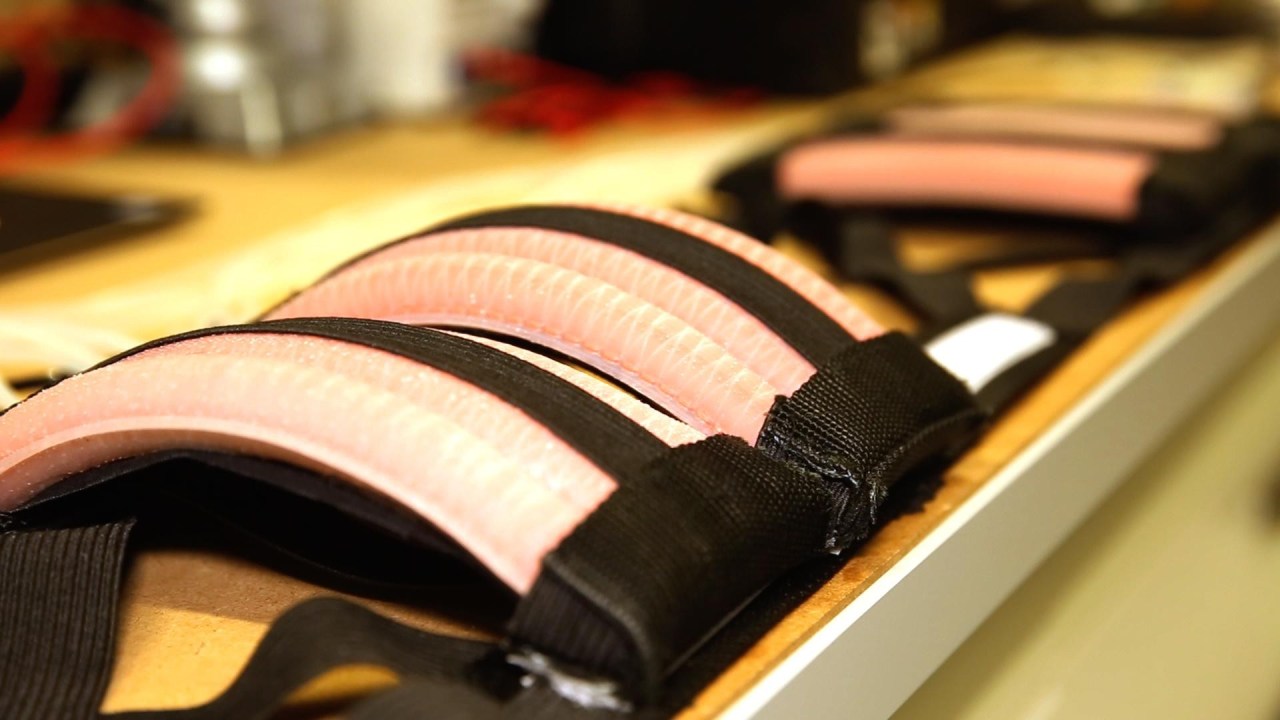
The intersection of technology and healthcare has always sparked intriguing advancements, but few innovations are as compelling as the emergence of soft robotic muscles. Originating from the collaborative efforts of Swiss researchers at the École Polytechnique Fédérale de Lausanne, these groundbreaking devices are reshaping the landscape of physical therapy and rehabilitation. Unlike their rigid counterparts, these soft robotic systems are designed for delicate operations, offering a significant lifeline for individuals recovering from severe health events, such as strokes.
Understanding Soft Robotics
At its core, soft robotics focuses on creating devices from flexible materials that can mimic natural movements. The Reconfigurable Robotics Lab at EPFL has pioneered a technology comprising tubular artificial muscles that can stretch and bend in a controlled manner, activated by air pumps. Currently, while these muscles aren’t compact enough for wearable applications, the researchers are making strides toward this goal.
- Versatility: These soft actuators can be bundled together to form robots that closely imitate human muscle action.
- Safety: Unlike traditional robotic mechanisms, these soft muscles provide a safer interaction for users, minimizing the risk of injury.
- Humanitarian Applications: The focus of the research is not just on industrial uses but on improving human health outcomes.
Aiding Rehabilitation Efforts
In collaboration with physical therapists from the University Hospital of Lausanne, the researchers are channeling their technological expertise into the realm of rehabilitation. The practical application of these soft muscles involves constructing a supportive belt featuring multiple robotic muscles that extends along the lower back of patients recovering from strokes. This design serves a dual purpose by enhancing comfort while also providing the necessary biomechanical assistance to restore motor sensitivity.
As Matthew Robertson from EPFL explains, the intention behind this project is not only to support physical recovery but to rebuild the patient’s confidence in their body’s capabilities. This manifests in subtle ways, from aiding movements to gradually facilitating a return to independence.
The Future of Soft Robotics
The researchers at EPFL are envisioning a future where soft robotics significantly augment rehabilitation practices. Beyond stroke recovery, various other applications are on the horizon, including:
- Assisting elderly individuals with mobility and daily activities.
- Enhancing physical therapy practices with improved patient-centric tools.
- Potential uses in sports medicine for rehabilitation post-injury.
Additionally, the open-sourced hardware design and software tools released by the team empower others in the research community to innovate and expand upon their work, thus fostering a collaborative environment aimed at holistic health improvement.
Conclusion: Bridging Technology and Care
As we forge ahead into an era rich with technological advancements, soft robotic muscles are emerging as a beacon of hope, particularly within the domain of physical therapy and rehabilitation. The thoughtful integration of these devices into care regimens showcases the balanced interplay between engineering and empathy, ultimately improving the quality of life for people in need. At fxis.ai, we believe that such advancements are crucial for the future of AI, as they enable more comprehensive and effective solutions. Our team is continually exploring new methodologies to push the envelope in artificial intelligence, ensuring that our clients benefit from the latest technological innovations.
For more insights, updates, or to collaborate on AI development projects, stay connected with fxis.ai.