
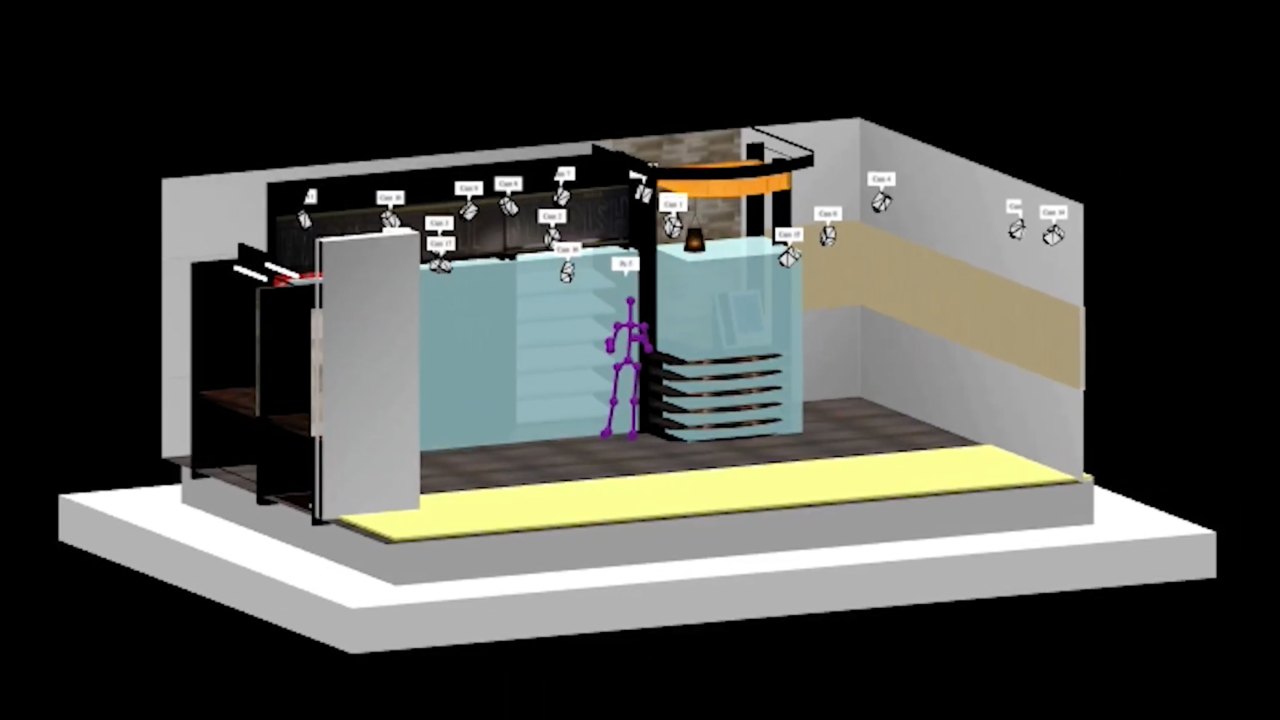
In an era where shopping habits evolve, and consumer expectations surge, the competition among retail giants becomes fierce. One major player, Standard Cognition, is committed to empowering brick-and-mortar stores in their fight against e-commerce behemoths like Amazon. With its innovative autonomous checkout technology, Standard Cognition aims not only to streamline the shopping experience but also to redefine the landscape of retail altogether.
Transforming the Shopping Experience
Standard Cognition is an autonomous checkout startup that has entered the retail fray with considerable ambition. The company’s goal? To render cashiers obsolete, enabling customers to complete their purchases without ever needing to stop at a checkout counter. While Amazon Go has spotlighted smaller 2,000 square-foot spaces, Standard Cognition is setting its sights on much larger establishments—think 20,000 square feet and beyond. This bold approach caters to those drug stores and grocery giants that encompass vast areas and products.
The Power of Acquisition: Explorer.ai
In a strategic move to bolster its technological capabilities, Standard Cognition recently acquired Explorer.ai, a self-driving car startup that specializes in sophisticated mapping. This acquisition, occurring early in the startup’s lifecycle, underscores the rapid advancements within both autonomous vehicle and checkout markets. By merging forces with Explorer.ai, Standard Cognition can harness enhanced mapping technology that is critical for tracking customer movements within expansive retail environments.
Why Mapping Matters
Mapping technology provides the backbone for effective tracking and analysis in autonomous systems. Co-founder and CEO Jordan Fisher emphasizes the essential nature of precision in mapping and machine vision technology, noting that being able to accurately interpret the largest retail spaces is critical for success. The collaboration with Explorer.ai will allow Standard Cognition to scale its operations efficiently, tapping into the potential to service massive retailers and supercenters, all while minimizing operational costs.
The Challenges Ahead
As Standard Cognition advances in its mission to democratize autonomous checkout, it faces key challenges. Chief among them is ensuring that the technology is cost-effective and simple for customers to navigate. Fisher reflects on this, stating: “How do you make this a bulletproof, reproducible system that works as well as a till in a grocery store that no one worries about breaking?” Addressing issues like ensuring the system accurately identifies customer actions—differentiating between putting an item back on the shelf versus shoplifting—will be crucial to achieving success.
The Competitive Landscape
Standard Cognition is not alone in this burgeoning field. Other players, including Grabango and Inokyo, are eyeing similar advancements in autonomous checkout systems. As Fisher acknowledges, they are in the midst of a space race, and the next two to three years are set to become exceptionally vibrant as many startups vie for supremacy in this market.
Looking to the Future
With the acquisition of Explorer.ai, Standard Cognition is poised to progress significantly along its roadmap. The merging of resources and expertise signifies a potent negotiating position to provide next-level solutions to retailers struggling to keep pace with e-commerce trends. “Our goal is not just to deliver autonomous checkout to the world but to do it phenomenally quickly,” says Fisher, capturing the urgency with which Standard Cognition approaches its mission.
At fxis.ai, we believe that such advancements are crucial for the future of AI, as they enable more comprehensive and effective solutions. Our team is continually exploring new methodologies to push the envelope in artificial intelligence, ensuring that our clients benefit from the latest technological innovations.
Conclusion
As technology rapidly evolves, systems like those developed by Standard Cognition offer a glimpse into a future where shopping becomes not just easier, but also more intuitive. The race to innovate in autonomous checkout is ongoing, and companies that adapt swiftly while maintaining high standards for customer care will emerge victorious. Retailers and consumers alike can look forward to an elevated shopping experience that prioritizes convenience, speed, and efficiency.
For more insights, updates, or to collaborate on AI development projects, stay connected with fxis.ai.