
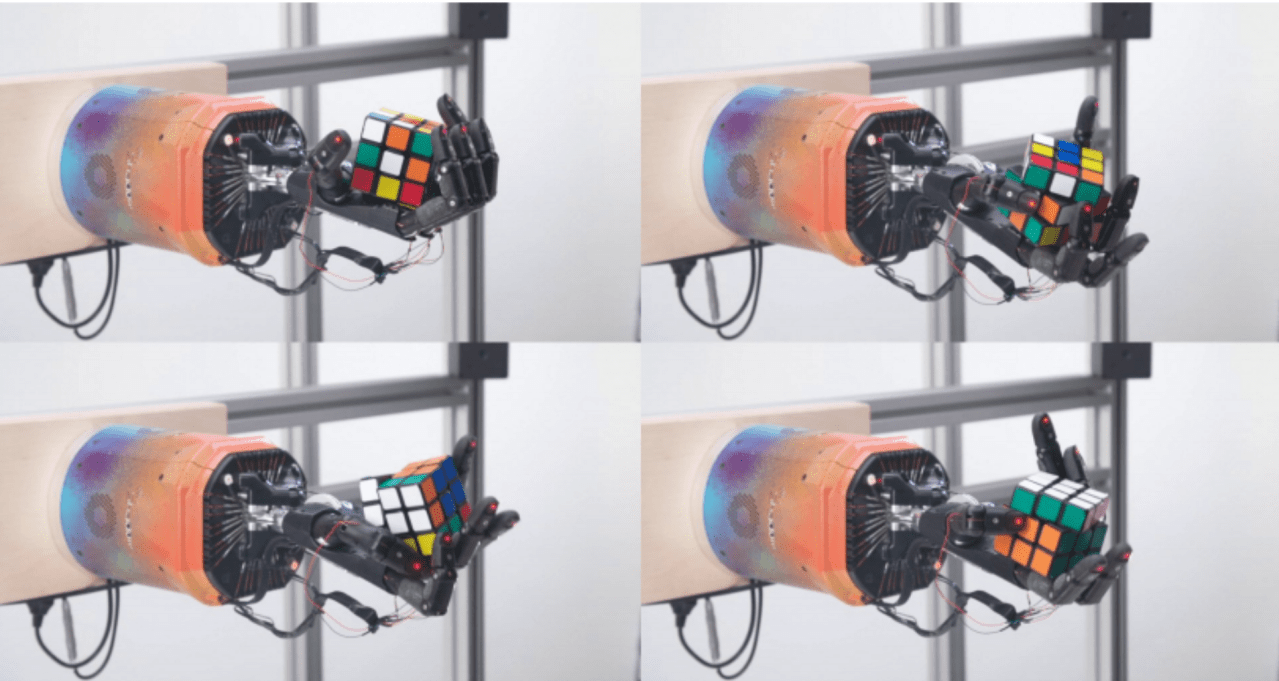
The pursuit of creating machines that mimic human dexterity has taken a giant leap forward with OpenAI’s groundbreaking Dactyl robot. Ever since its debut, Dactyl has been a focal point for showcasing how far we’ve advanced in the world of artificial intelligence and robotics. Imagine a robot that can not only interact with objects but also adapt its movements to solve a Rubik’s Cube with just one hand! This feat is not just a showcase of technical prowess; it’s a glimpse into the future where robots may assist and cooperate with humans in increasingly intricate tasks.
The Challenge of Dexterity
For many, the standard Rubik’s Cube is a test of patience and intellect. Yet, for Dactyl, it became an exploration of adaptability and precision. Solving the cube one-handed poses unique challenges that involve grip, hand-eye coordination, and real-time problem-solving. Where traditional programming may have required detailed instructions, OpenAI harnessed the power of machine learning to empower Dactyl to figure out the solution on its own.
Learning Without Human Intervention
The real magic lies in how Dactyl learns. Instead of relying on human guidance, the robot utilizes various scenarios—many of which are simulated—to refine its skills. This means that Dactyl can work through challenges in environments that it hasn’t explicitly been trained in, a stark contrast to conventional robots that demand human input for even minor adjustments. The robot’s ability to adapt to changes, such as having its fingers virtually tied, showcases the robustness of its problem-solving capabilities.
Impressive Results, Room for Improvement
In a recent demonstration, Dactyl successfully solved a Rubik’s Cube in under four minutes. While it may not yet rival the speed of world-class cube solvers, this achievement is monumental for a machine that operates independently. The accomplishment serves as both an inspiration and a motivator for further advancements in robotics:
- Improved dexterity: Future iterations are expected to exhibit even higher levels of precision and swiftness.
- Real-world applications: The techniques being honed in robotic manipulation could translate into practical applications, such as surgical robots.
- Collaborative technology: As robots become more capable of solving complex tasks, opportunities for human-robot collaboration will abound.
Conclusion: A Glimpse Into the Future
The achievement of Dactyl not only signifies a leap in robotic dexterity but also opens up exciting possibilities for the future. As robotics and AI merge, we’re faced with the prospect of machines that can perform intricate tasks, adapt to new situations, and even learn independently. We are just at the beginning of what these advancements can bring to various sectors such as healthcare, manufacturing, and beyond.
At fxis.ai, we believe that such advancements are crucial for the future of AI, as they enable more comprehensive and effective solutions. Our team is continually exploring new methodologies to push the envelope in artificial intelligence, ensuring that our clients benefit from the latest technological innovations.
For more insights, updates, or to collaborate on AI development projects, stay connected with fxis.ai.