
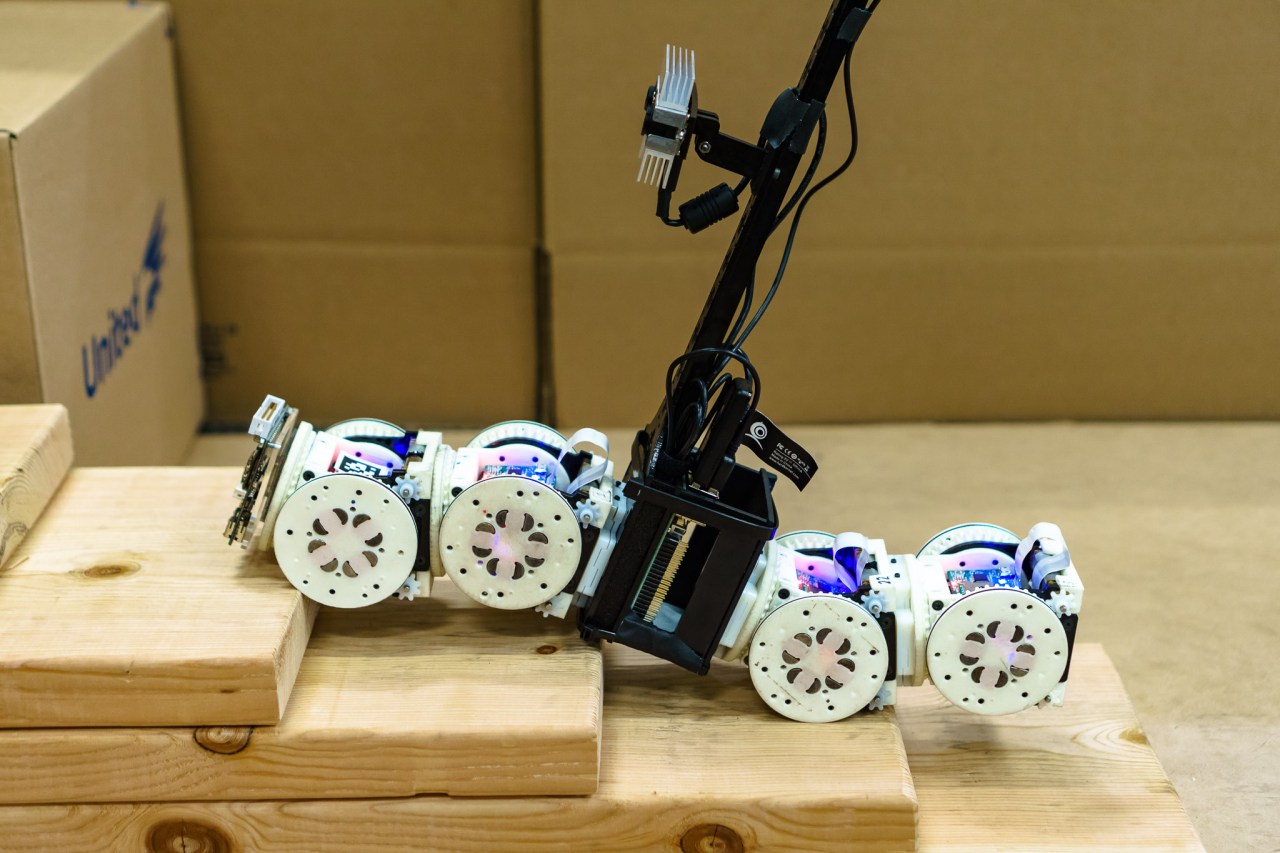
Imagine a world where robots could transform their shapes and functions on-the-fly, just like how we adapt our movements based on the task at hand. Recent research from a collaboration between Cornell University and the University of Pennsylvania has brought us closer to this imaginative reality with the development of SMORES-EP, a modular robot capable of reconfiguration. This innovation opens the door to unprecedented versatility in the realm of robotics, sparking interest in both academic and commercial circles.
The Power of Adaptability
The core idea behind SMORES-EP is to mimic human-like adaptability. For instance, when you need to navigate through tight spaces or lift heavy objects, you adjust your body movements accordingly. Traditional robots are plagued by limitations in their hardware and software, which often restrict their functionality. The groundbreaking research led by graduate students aims to combat this rigidity. By creating a versatile library of actions that a robot can adopt in real-time, SMORES-EP promises to tackle complex tasks more efficiently.
Understanding SMORES-EP: The Building Blocks
At its core, the SMORES-EP system is an assembly of small cube-shaped robots, each ingeniously designed with wheels and magnets. This enables them to connect and cooperate, forming a collective unit capable of executing tasks that a single module couldn’t accomplish alone. A central unit with advanced sensors and cameras serves as the brain of this operation, allowing it to assess its environment and make decisions based on spatial awareness.
Practical Applications: Real World Scenarios
- Household Assistance: Imagine a scenario where the robot is tasked with gathering scattered shoes around a living space. The robot’s intelligence allows it to evaluate whether it can physically reach the target under a bed. If it’s too large, it can swiftly reconfigure to access that space through smart maneuverability.
- Logistics and Warehousing: In environments where space is tight and tasks frequently vary, these adaptable robots could streamline processes by navigating around obstacles and executing complex package retrieval efficiently.
- Rescue Operations: The flexibility of SMORES-EP could even have life-saving implications in search and rescue missions. By fitting into confined spaces and reconfiguring to grasp or manipulate objects, these robots could be deployed to recover individuals or deliver supplies in disaster-stricken areas.
The Challenges Ahead
While the concept of a flexible, self-reconfiguring robot is thrilling, significant challenges remain. Developing a cognitive system that can accurately interpret its surroundings, recognize objects, and comprehend the relationships between them is no simple feat. Even tasks that appear basic for humans, such as understanding how to lift an object or navigate around obstacles, require sophisticated programming and algorithms. The research team acknowledges these hurdles but remains optimistic about the future, highlighting iterative progress over time.
An Eye on the Future
As robotics technology continues to progress, the implications for industries and everyday life grow exponentially. Though the initial tests for SMORES-EP involved relatively simple tasks, they represent a stepping stone toward more complex functionalities. The authors of the research have transitioned into new roles; for example, Tarik Tosun is now exploring the theoretical frameworks of modular robotics. His work, which also includes VSPARC, a simulator for modular robots, underscores the continued drive for innovation and understanding in this field.
Conclusion: A Step Towards Intelligent Machines
The journey of SMORES-EP is just the beginning of what we can achieve with adaptable robotics. By creating machines that can autonomously transform to meet specific needs, we are laying the groundwork for a future where robots can seamlessly integrate into various aspects of our lives. With ongoing research and development, we can anticipate advancements that significantly enhance the capabilities and applications of these transformative technologies.
At fxis.ai, we believe that such advancements are crucial for the future of AI, as they enable more comprehensive and effective solutions. Our team is continually exploring new methodologies to push the envelope in artificial intelligence, ensuring that our clients benefit from the latest technological innovations. For more insights, updates, or to collaborate on AI development projects, stay connected with fxis.ai.