
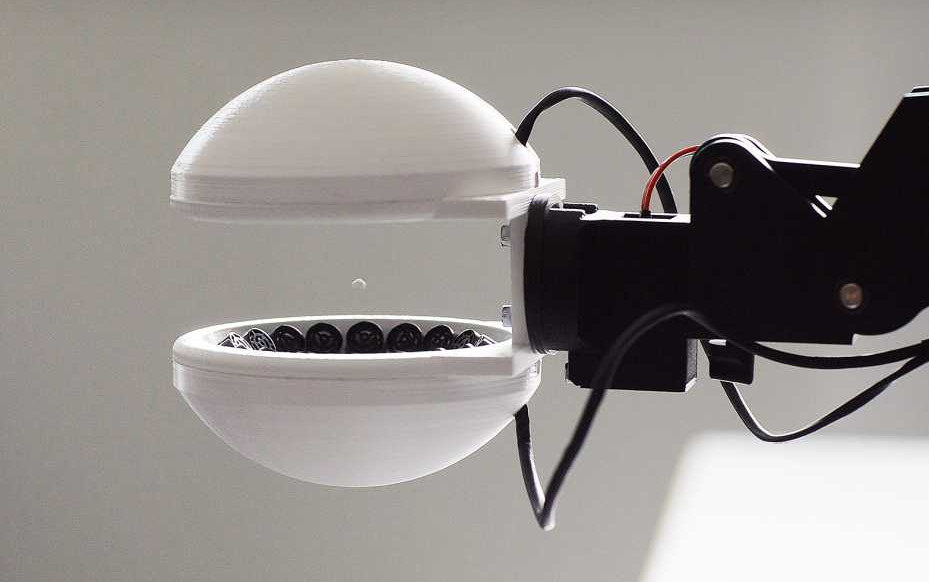
As the realm of robotics expands and integrates more into delicate industries such as healthcare and precision manufacturing, the need for advanced gripping technologies becomes paramount. Enter the ultrasonic gripper, a groundbreaking innovation that offers a solution to the age-old dilemma of holding fragile items without imposing any physical contact. Imagine a robotic arm that can delicately manipulate small components without leaving a trace — that’s the promise of ultrasonic levitation technology.
Understanding Ultrasonic Grippers
At the heart of this innovation is a carefully orchestrated array of tiny speakers that emit sound at specific frequencies and volumes. This generates a standing pressure wave capable of suspending objects in midair, allowing for manipulation without direct contact. This method, known as acoustic levitation, is not entirely new but has found limited practical applications until now.
Applications That Could Benefit
- Medical Facilities: In hospitals, maintaining sterile environments is crucial. Ultrasonic grippers could transport delicate instruments without the risk of contamination.
- Precision Manufacturing: Industries such as watchmaking and micro-robotics rely on extremely delicate components that can be easily damaged by touch or dirt. Holding these parts in midair minimizes risk, ensuring safer and cleaner handling.
- Research Laboratories: Biochemists might utilize these devices for manipulating fragile biological samples, reducing the chances of alteration during handling.
Technical Innovations Behind the Gripper
While the fundamental technology of acoustic levitation forms a solid base, the success of the ultrasonic gripper hinges on advanced software algorithms that configure the right frequencies and amplitudes for various objects. Essentially, each object demands a unique setup to be efficiently suspended and maneuvered. As such, the development team at ETH Zürich, led by researcher Marcel Schuck, has created adaptable software to facilitate this process, making it user-friendly and practical for various applications.
The Road Ahead
The prototype is already a working reality, but the next steps involve engaging with different industries to discover the myriad of ways this technology could be employed effectively. Schuck is focused on finding real-world applications, particularly within the meticulous precision of watchmaking, where even the slightest touch could compromise essential features of the products being crafted.
Furthermore, the potential to transition this innovation into a startup brings exciting prospects. Schuck aims to explore the demands of various sectors and refine their product offerings, with a vision of making ultrasonic grippers accessible to anyone needing a gentle touch in their processes.
Conclusion
Ultrasonic grippers represent a stride towards the future of robotics, where touchless manipulation becomes an everyday solution. As industries grow increasingly reliant on precision, the need for innovations that contribute to cleanliness and safety is more critical than ever. With researchers like Marcel Schuck at the forefront, the dawn of ultralight gripping technology is here, promising to transform how we interact with delicate objects, ensuring their integrity throughout processes.
At fxis.ai, we believe that such advancements are crucial for the future of AI, as they enable more comprehensive and effective solutions. Our team is continually exploring new methodologies to push the envelope in artificial intelligence, ensuring that our clients benefit from the latest technological innovations. For more insights, updates, or to collaborate on AI development projects, stay connected with fxis.ai.