
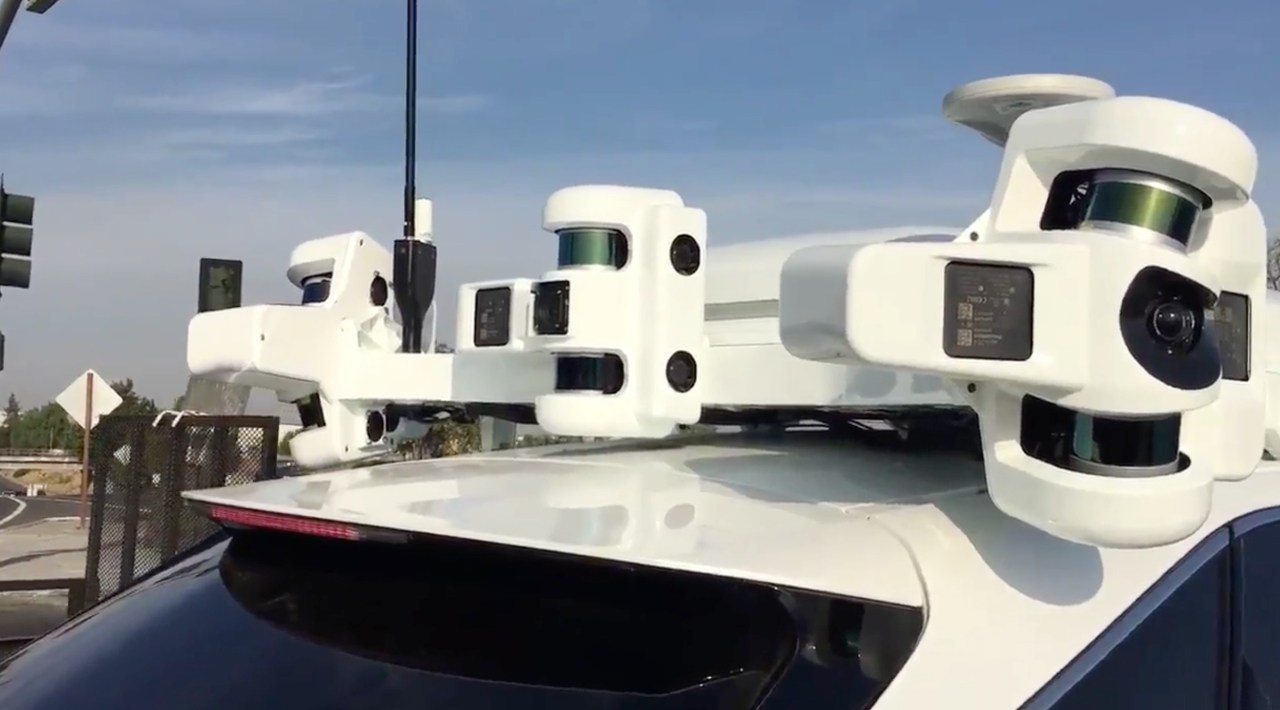
As the race for autonomous vehicles heats up, tech giants like Apple are ramping up their efforts to innovate within this space. Recently, a noteworthy development has emerged from Apple’s research labs—an engaging paper published on Cornell’s arXiv, focusing on how machine learning can bolster the capabilities of LiDAR technology in self-driving systems. This is not merely a continuation of research but a significant leap in reducing dependency on additional sensor data, paving the way for smarter and more efficient vehicles.
Understanding LiDAR and Its Limitations
Before we delve into Apple’s findings, let’s clarify what LiDAR is and why its current limitations present challenges for self-driving vehicles. LiDAR, short for Light Detection and Ranging, is a remote sensing technology that uses laser light to measure distances. By emitting laser beams and calculating their reflection times, LiDAR creates intricate, high-resolution 3D maps of the surrounding environment. Yet, this sophisticated technology often requires supplementary data from cameras or other sensors to accurately detect and identify objects like pedestrians and cyclists.
Machine Learning Meets LiDAR: The VoxelNet Breakthrough
The pioneering work by Apple’s researchers, including authors Yin Zhou and Oncel Tuzel, introduces a novel approach known as VoxelNet. This innovative system transforms the raw point cloud data collected by LiDAR into actionable insights, enabling the identification of 3D objects—all without needing additional sensor data.
- Enhanced Object Detection: By employing VoxelNet, Apple aims to achieve a level of object detection that is both accurate and reliable, allowing LiDAR to operate with enhanced autonomy.
- Processing Efficiency: Leveraging machine learning algorithms facilitates faster data processing and analysis, which are critical for real-time decision-making in self-driving cars.
- Fewer Sensors, Greater Confidence: The ability to utilize LiDAR independently may lead to significant reductions in manufacturing costs and design complexities for self-driving vehicles.
Apple’s Broader Approach to Machine Learning
Apple’s recent openness about its machine-learning endeavors signals a strategic shift in its approach to research and collaboration. The company has begun sharing its findings not just to bolster its own R&D capabilities but also to attract top talent in the machine learning community. By publishing crucial papers, Apple is inviting contributions from across the scientific spectrum, thereby enriching their research and fostering innovations that benefit the technology at large.
The Future Landscape of Self-Driving Vehicles
As we envision the future of autonomous driving, Apple’s advancements indicate a significant turning point. The ability to rely on a single technology, bolstered by machine learning, could simplify complexities involved in hardware integration and pave the way for more robust self-driving solutions. As LiDAR evolves, we may soon witness vehicles that are not just smarter but also safer and more efficient on our roads.
Conclusion
In a rapidly evolving tech landscape, Apple’s innovative approach to enhancing LiDAR through machine learning marks a critical milestone in self-driving technology. By transforming how raw data from LiDAR is utilized, the company is poised to redefine standards for object detection while promoting a shift toward fewer dependency layers in sensor technologies. As we look forward to seeing these advancements materialize in real-world applications, it’s clear that the future is bright for autonomous vehicles.
At fxis.ai, we believe that such advancements are crucial for the future of AI, as they enable more comprehensive and effective solutions. Our team is continually exploring new methodologies to push the envelope in artificial intelligence, ensuring that our clients benefit from the latest technological innovations. For more insights, updates, or to collaborate on AI development projects, stay connected with fxis.ai.