
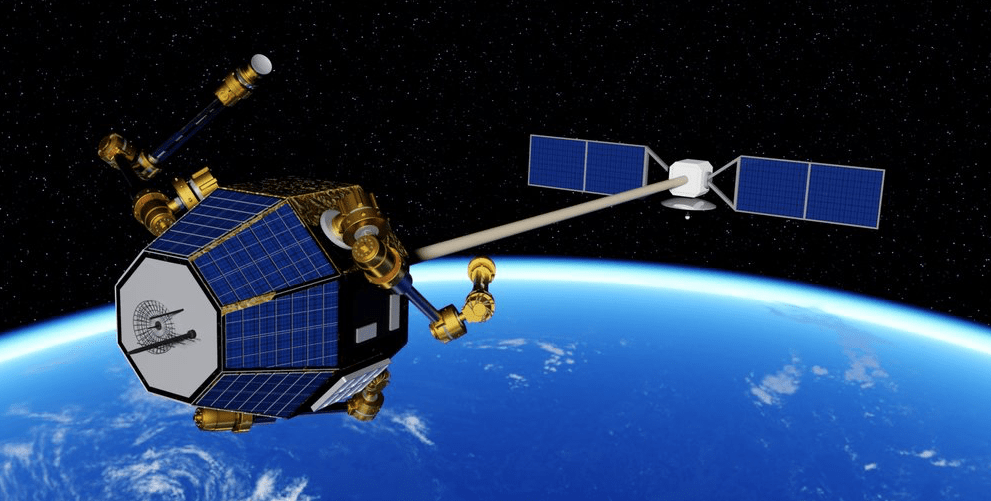
In a world that increasingly looks to the stars, the boundaries of human ingenuity are being stretched further than ever before. Enter Made In Space, Inc., the pioneering company that has not only brought us 3D printing in orbit but is now on the cusp of ushering in a more ambitious endeavor—the Archinaut. This project promises to transform how we think about manufacturing in space, unlocking potential opportunities that could change the face of interstellar exploration and habitation.
The Vision Behind Archinaut
At the helm of this innovative venture is Andrew Rush, CEO of Made In Space, who boldly states that their objective isn’t just to manufacture in space—it’s to facilitate the colonization of other planets. With Archinaut, the company aims to create autonomous, robot-operated factories capable of assembling large-scale equipment like satellites and potentially entire spacecraft while in orbit. Rush summarises it eloquently: “Manufacturing things in space lets us unlock possibilities you can’t when you have to design things to survive launch.”
Breaking Through Challenges
One of the most significant hurdles faced by the team was the selection of materials. Spacecraft components must endure extreme conditions, including wild temperature variations and radiation exposure. The challenge is further amplified by the need to design systems that can produce items in the zero-gravity environment of space without collapsing under their own weight. Traditional 3D printing methods that work effectively on Earth won’t cut it in orbit; therefore, Made In Space has created the ESAMM (Extended Structure Additive Manufacturing Machine), a revolutionary machine that operates like a team of artisans rather than a static printer.
A Sustainable Approach to Manufacturing
The Archinaut is not merely a tool for creating new technology; it also has sustainability at its core. Its design allows it to utilize in situ resources—imagine mining materials from asteroids or repurposing space debris to create fundamental components. This concept paves the way for future space missions that are not just feasible but might also be economically viable.
- Resource Management: Efficiently using available materials reduces the need for massive payload launches from Earth.
- Cost-Effectiveness: By minimizing what needs to be sent from our planet, space missions could become significantly cheaper.
- Environmental Considerations: Recycling and utilizing existing materials reduces waste and optimizes manufacturing processes.
The Road Ahead
As of now, Made In Space operates out of the NASA Ames Research Center, and despite being profitable every year since 2010, the company has opted to remain independent rather than pursue venture funding. Rush notes that the scale of their mission requires patience—a long-term vision that might not yield quick returns, especially in an industry filled with immediacy.
With backing from NASA and collaborations with major defense contractors like Northrop Grumman and Oceaneering Space Systems, the Archinaut Development Program is poised to make waves. The sky is not the limit; it’s just the beginning.
Conclusion
The advent of the Archinaut marks a significant leap into an era of manufacturing possibilities previously confined to science fiction. If successful, this endeavor will not only benefit scientific missions but also lay the groundwork for human colonization of other celestial bodies. The concept of building, maintaining, and potentially thriving in space is becoming more tangible every day.
At fxis.ai, we believe that such advancements are crucial for the future of AI, as they enable more comprehensive and effective solutions. Our team is continually exploring new methodologies to push the envelope in artificial intelligence, ensuring that our clients benefit from the latest technological innovations.
For more insights, updates, or to collaborate on AI development projects, stay connected with fxis.ai.