
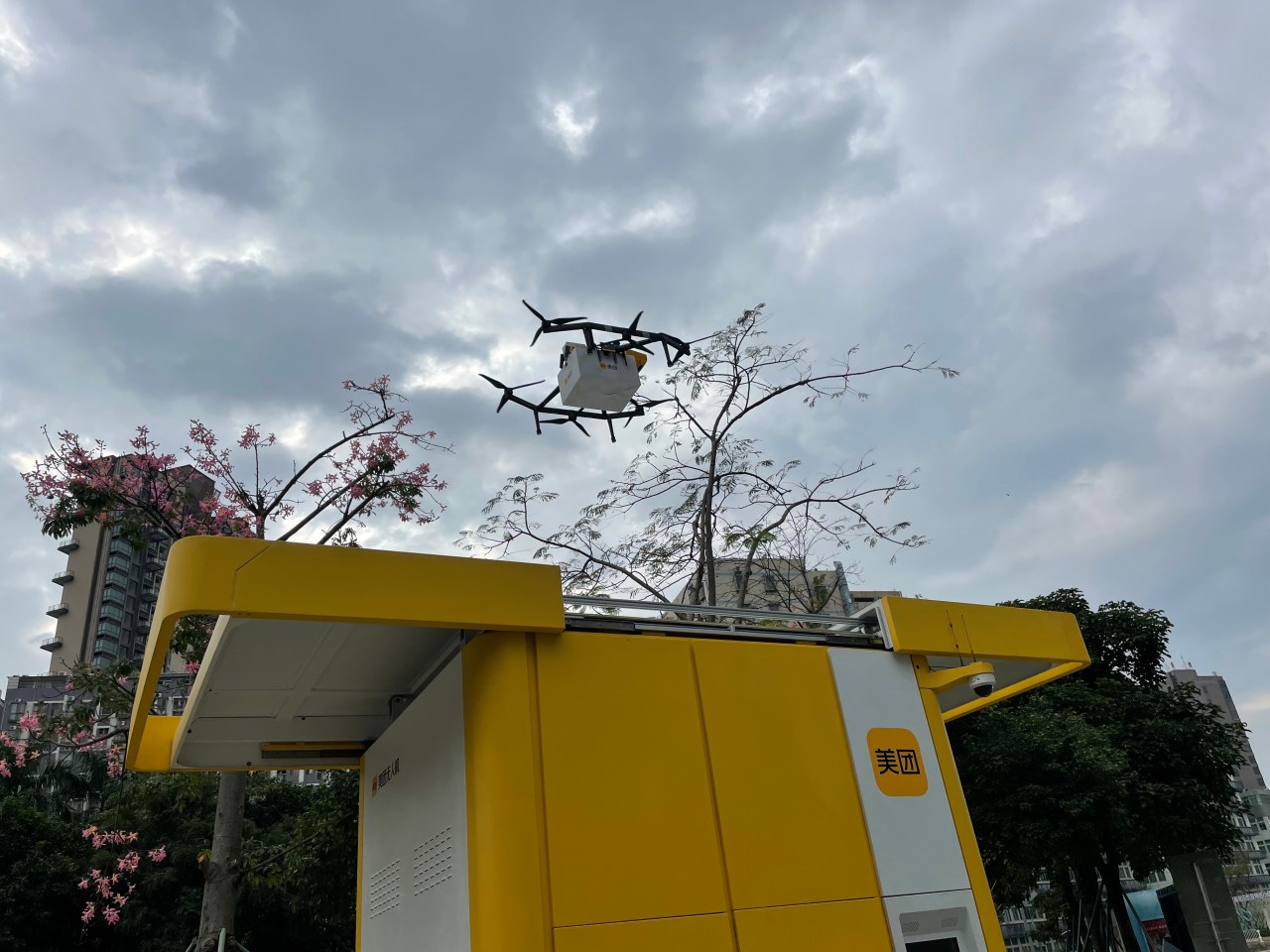
In the bustling metropolis of Shenzhen, a woman ordering her favorite milk tea through an app is encountering a scene straight out of a futuristic novel—her drink is delivered not by a courier on a bicycle but descending from the sky in a sleek, drone-enabled cardboard box. This unique glimpse into the future represents a significant step forward in urban logistics and marks just one of the ambitious initiatives taken by Meituan, one of China’s leading food delivery companies. This blog post delves deeper into how Meituan is redefining food delivery through drone technology, the challenges it faces, and the broader implications for urban logistics worldwide.
The Rise of Drone Delivery in Urban China
Meituan has taken massive strides since launching its pilot drone delivery program, transporting over 19,000 meals to approximately 8,000 customers within just a few selected neighborhoods in Shenzhen. The strategy employs drones to deliver meals to designated roadside kiosks rather than aiming directly at customers’ windows, an approach more practical for urban settings. As urban populations increase, the company’s innovative initiative presents a potential solution to alleviate traffic congestion caused by traditional delivery vehicles.
Strategic Collaborations and Competitors
Meituan isn’t alone in pursuing this transformative technology. Tech giants like Alibaba and JD.com are equally vested in advancing drone delivery services. The mutual interest in aerial logistics indicates a budding market ripe for competition among major players, aiming to capture the Chinese consumer’s appetite for speed and convenience.
- **Meituan** has already submitted an application for a commercial drone delivery service across all of Shenzhen, a pivotal move that could set the standard for mass drone logistics in urban settings.
- **Alibaba** is enhancing its rival Ele.me with drone capabilities, echoing the growth in consumer demand for quicker food delivery methods.
- **JD.com** is also making notable investments in drone technology, highlighting an era where droids might dominate our skies.
Technical Innovations and Operational Challenges
The journey of a single bubble tea through Meituan’s drone delivery service is both fascinating and complex. Initially, human couriers retrieve the drinks from merchant locations to drone takeoff pads and hand them over for aerial journey. While the company’s operational capabilities are expanding, they still rely significantly on human logistics management.
One of the key challenges for Meituan is the economic feasibility of using drones for food delivery. Each of their drones transport only a limited amount of food, roughly equivalent to two meals, raising concerns about efficiency, especially when one order may leave excess capacity unutilized. Moreover, environmental considerations are at play, as the drones generate waste from delivery boxes, necessitating the establishment of recycling initiatives alongside kiosks.
Comparative Insights from Global Drone Development
Examining drone delivery in the U.S. provides enlightening comparisons, including the differences in consumer behavior and population density. While U.S. companies prioritize long-distance delivery networks suited for suburban landscapes, Meituan’s focus on urban environments calls for innovative designs capable of navigating through densely populated cityscapes.
Companies like Amazon Prime Air are also grappling with their set of challenges, including deadlines and effective strategies for operational deployment. Meituan has drawn valuable lessons from these larger rivals, understanding the importance of clearly defined strategic positions in a competitive landscape.
Safety, Regulations, and Future Prospects
Safety and regulatory compliance are paramount in Meituan’s operations. The company diligently follows the rules dictated by China’s civil aviation authority, with each drone registered and continually monitored during flight to avoid populated areas. The company aims for noise levels to remain within acceptable limits to comply with safety regulations while maintaining a user-friendly experience.
Looking ahead, Meituan envisions a future of human-robot collaboration, not displacement. According to company representatives, integrating drones with existing human labor will address workforce challenges while enhancing efficiency in the food delivery sphere.
Conclusion: A New Chapter in Food Delivery
As Meituan embarks on this aerial journey of transforming food delivery in urban landscapes, the implications extend far beyond mere convenience. Groundbreaking technologies promise to redefine logistics, urban transport, and even consumer expectations. Companies that embrace these advancements can find pathways to optimize their delivery systems, ensuring that they meet modern demands while navigating the complexities that come with innovation.
At **[fxis.ai](https://fxis.ai/edu)**, we believe that such advancements are crucial for the future of AI, as they enable more comprehensive and effective solutions. Our team is continually exploring new methodologies to push the envelope in artificial intelligence, ensuring that our clients benefit from the latest technological innovations.
For more insights, updates, or to collaborate on AI development projects, stay connected with **[fxis.ai](https://fxis.ai/edu)**.