
In the ever-evolving landscape of industrial operations, staying updated on the state and health of warehouses and factories is paramount. Traditional inspection methods can prove time-consuming and labor-intensive, raising the question: why not embrace aerial technology? Enter Vtrus, a pioneering startup leveraging drone technology coupled with sophisticated computer vision to redefine indoor inspections.
The Power of Drones in Industrial Settings
Drones have cemented their utility in various sectors, particularly for outdoor security and aerial imaging. However, Vtrus breaks new ground by focusing on the intricacies of indoor environments. Warehouse spaces, unlike expansive outdoor areas, demand precision—every inch matters. Traditional inspection methods often place workers at risk, making drone technology a safer and more efficient alternative.
A Cutting-edge Solution: ABI Zero
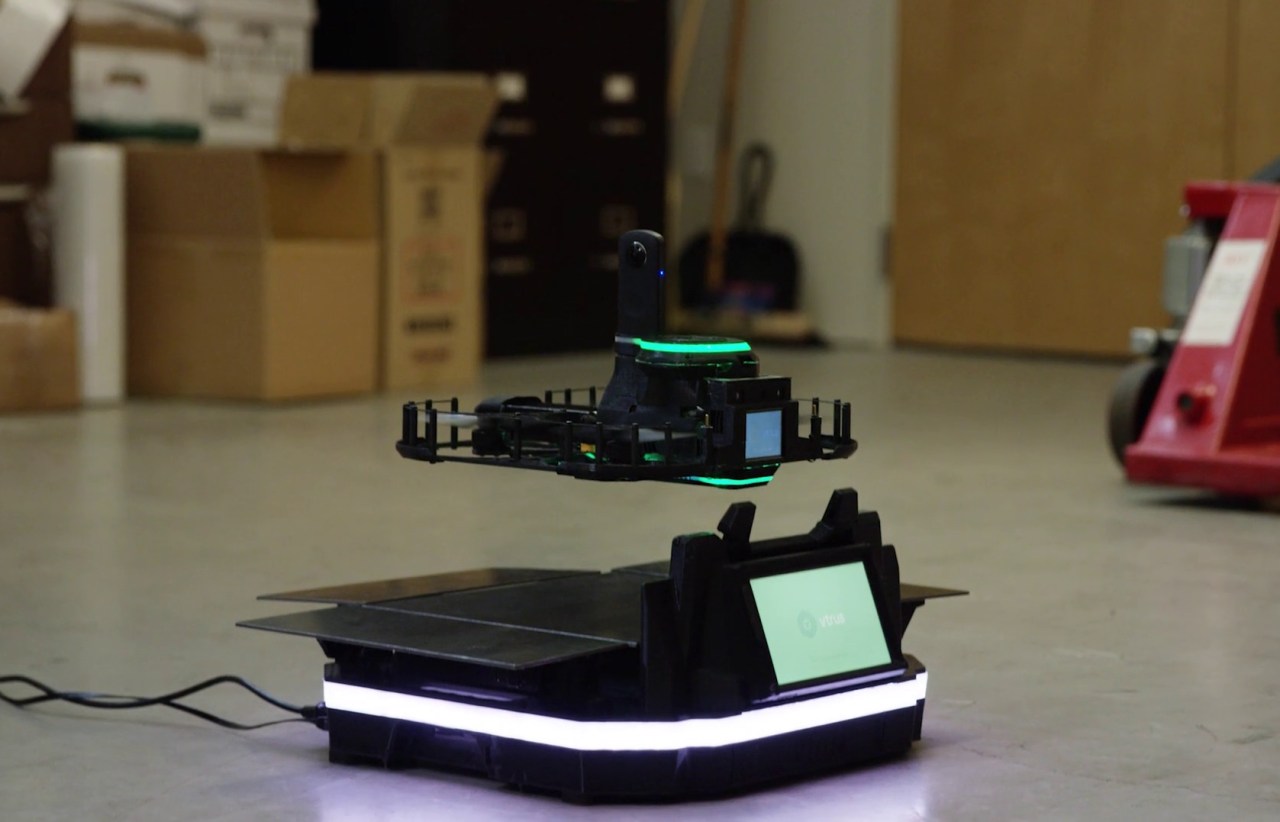
Vtrus has developed the ABI Zero, a compact drone prototype designed to autonomously navigate and map its surroundings in real time. Equipping it with an array of advanced sensors, such as RGB cameras, 360-degree cameras, and structured-light depth sensors, this drone can capture detailed information rapidly. Upon takeoff, ABI Zero collects approximately 300,000 depth points every second, generating high-fidelity 3D maps that are instantly accessible.
The Advantage of Real-Time Data
- Immediate Access: Data is streamed via Wi-Fi to a base station and Vtrus’s cloud service, allowing inspections to be conducted remotely by qualified personnel.
- Proactive Maintenance: The detailed, frequent updates allow for timely interventions, reducing the risk of equipment failures and enhancing overall operational efficiency.
- User-Friendly Interface: Even non-experts can operate the drone or access its 3D mappings, democratizing technology in industrial settings.
Innovative Charging Mechanism
The ABI Zero stands out not just for its inspection capabilities but also its unique charging mechanism. When the drone’s battery is low, it returns to a compact docking station, which employs a patented contact-based charging process. This innovative method allows the drone to be airborne again within roughly half an hour, effectively enabling it to operate for up to six hours a day. This workflow drastically increases the frequency of inspections, ensuring that potential issues are detected and addressed sooner rather than later.
The Secret Sauce: Advanced Software Solutions
While the drone’s hardware is impressive, it’s the proprietary software that truly sets Vtrus apart. Developed in-house, the software is engineered to facilitate high-resolution mapping along with seamless data streaming and recording. The dedicated team of experts has imbued the platform with functionality that not only meets but exceeds industry standards.
The Future of Inspections
Vtrus is actively collaborating with major companies across the nation, demonstrating their product in practical environments and gathering valuable feedback. The concept of a “pilotless” program hints at an ambitious future where drone-assisted inspections become the norm rather than the exception. As industries continue to evolve towards automation and efficiency, tools like Vtrus’s ABI Zero are more critical than ever.
Conclusion
With technologies like the ABI Zero, Vtrus is paving the way for a safer, more efficient approach to warehouse inspections. By transforming inspections from a daunting task into a streamlined process, they are not only enhancing safety but also driving down operational costs. As industrial sectors continue to embrace innovation, the potential for such technologies to reshape the landscape is immense. For more insights, updates, or to collaborate on AI development projects, stay connected with fxis.ai. At fxis.ai, we believe that such advancements are crucial for the future of AI, as they enable more comprehensive and effective solutions. Our team is continually exploring new methodologies to push the envelope in artificial intelligence, ensuring that our clients benefit from the latest technological innovations.