
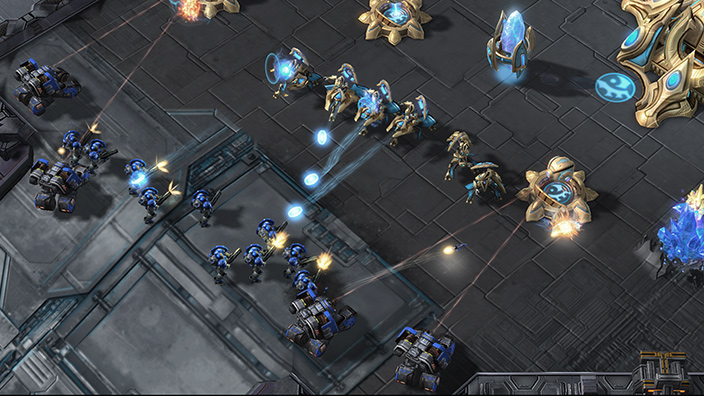
In the ever-evolving landscape of artificial intelligence, there are few environments as rich and complex as Blizzard’s StarCraft II. This sci-fi strategy game has become a beacon for researchers at DeepMind, a subsidiary of Alphabet, who aim to pioneer advancements in AI through the medium of gaming. With the recent announcement of their collaborative initiative to transform StarCraft II into a dedicated AI research lab, the stage is set for unprecedented contributions from both seasoned researchers and enthusiastic amateurs alike.
The Collaborative Revolution
DeepMind and Blizzard have taken a bold step by creating an open AI research environment, inviting external contributions to develop an AI capable of outperforming the best human players in StarCraft II. What makes this collaboration particularly exciting is the array of tools being made available. Here’s a breakdown:
- Machine Learning API: Designed to facilitate AI training and experimentation.
- Game Replay Dataset: Initially comprising 65,000 anonymized matches, this dataset aims to provide ample training material and is expected to grow to over 500,000.
- Open Source Toolset: Offering resources to enhance AI-building capabilities.
This collaborative ecosystem is not just about competition; it’s about nurturing a community of developers who can contribute ideas, skills, and experimentation towards a shared goal.
The Complexity of StarCraft II
Why choose StarCraft II as the battleground for AI development? The answer lies in its multifaceted gameplay. Players must juggle resource management, unit strategy, and battlefield tactics—all while contending with imperfect information about the opponent’s moves. This complexity mirrors real-world decision-making challenges, making it a prime candidate for AI exploration. The game encourages strategy and prediction under the pressure of time and competition, giving AI a multifarious challenge akin to interacting with unpredictable real-world scenarios.
Mini-Games: Breaking Down Challenges
To facilitate the training of these AI agents, the project includes “mini-games”—segments that isolate specific tasks, simplifying AI learning. For instance, agents can be designed to:
- Build specific military units
- Gather resources efficiently
- Navigate the map within a strategic context
This compartmentalization allows researchers to test and refine individual skills. Such structured learning could lead to superior overall performance when these sub-skills are combined into more sophisticated agents capable of mastering the entire game.
The Future is Collaborative
The ultimate goal behind all these efforts is not merely to create an unbeatable StarCraft II player but to propel AI research itself. By opening this initiative to the larger research community, DeepMind is fostering an environment where collaboration breeds innovation. Just as AlphaGo changed perspectives on AI in the realm of board games, the successful development of AI for StarCraft II could redefine strategies for advanced AI applications.
Conclusion: The Frontier Awaits
The collaborative endeavor between Blizzard and DeepMind represents a vital step forward in the field of AI research. With the tools and datasets now at the disposal of researchers and hobbyists alike, the potential for discovery and innovation within the StarCraft II framework is limitless. Not only do these advancements promise exciting developments within AI, but they also have far-reaching implications for the way we may leverage intelligent systems in the future.
At fxis.ai, we believe that such advancements are crucial for the future of AI, as they enable more comprehensive and effective solutions. Our team is continually exploring new methodologies to push the envelope in artificial intelligence, ensuring that our clients benefit from the latest technological innovations. For more insights, updates, or to collaborate on AI development projects, stay connected with fxis.ai.