
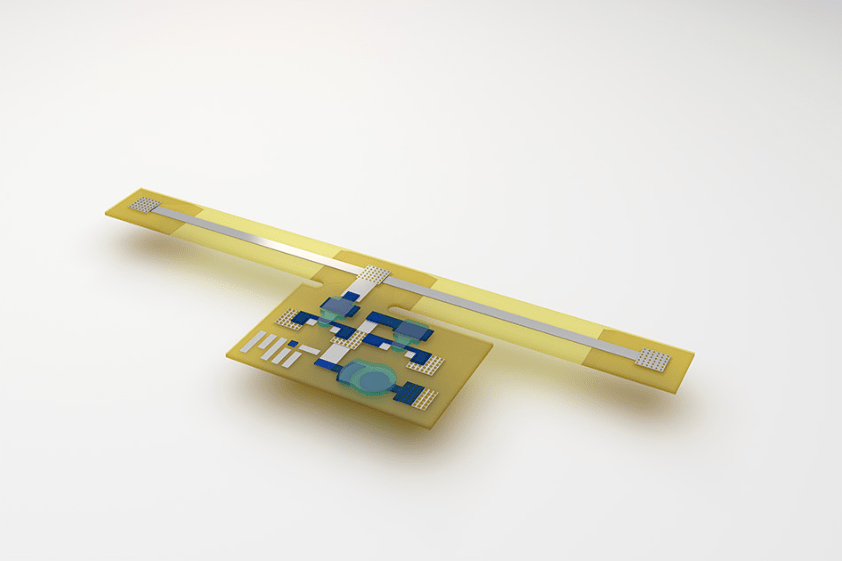
In the ever-evolving landscape of robotics, researchers are continually drawn to the wonders of nature. A fascinating instance of this biomimicry can be found in the recent endeavors of a team at MIT, led by Subramanian Sundaram. By channeling the remarkable properties of the golden tortoise beetle, they aim to innovate in the realm of 3D-printed robotic skin. This venture not only highlights the potential of nature-inspired design but also unveils the challenges and triumphs of engineering in robotics.
The Golden Tortoise Beetle: A Model of Adaptation
The golden tortoise beetle, native to North America, has captivated scientists with its extraordinary ability to camouflage. Under threat, this beetle’s brilliant gold surface transforms into a subtle reddish-brown hue, showcasing a self-preserving mechanism that serves as a powerful reminder of nature’s ingenuity. By studying such phenomena, Sundaram and his team aspire to replicate similar functions within a synthetic realm, sparking the creation of an innovative flexible membrane.
Sundaram acknowledges the immense challenges that accompany such an undertaking, likening their journey to “looking at the moon and trying to get to a tree top.” This metaphor underscores the vast distance between human-engineered materials and the complex capabilities found in biological entities. Despite this, the team’s commitment to drawing inspiration from nature remains unwavering.
From Concept to Creation: The 3D Printing Process
At the heart of this research lies a sophisticated 3D printing process utilizing the MultiFab printer. The process deftly blends multiple materials, allowing the creation of components that mimic the optical properties of the beetle’s shell. This fusion of copper and ceramic elements results in a semiconducting plastic that can be manipulated during the printing stage, ultimately leading to a remarkable feat: the development of a unified, 3D-printed circuit board that embodies the beetle’s optical transformation.
- Sensing: The capability to detect environmental changes.
- Processing: Integrating signals for data interpretation.
- Actuation: The response mechanism to sensed stimuli.
Sundaram emphasizes that while producing a functional actuator remains a significant challenge, the team’s progress in optical actuation marks a promising leap forward. The manipulation of light and color through printed materials offers a pathway to create sensors that respond to their surroundings, marking a milestone in the journey toward fleshing out robotics with responsive skin-like features.
Applications and Future Prospects
The implications of this research reach beyond the immediate scope of robotics. The possibility of 3D-printed robots equipped with sensors opens doors to a myriad of applications, including adaptive technologies in healthcare, environmental monitoring, and advanced manufacturing. Moreover, the developments could align with other MIT initiatives aiming at creating robots that exhibit shape-shifting behaviors upon exposure to heat—a testament to the diverse applications of 3D printing in robotics.
A Journey Inspired by Nature’s Wisdom
MIT’s foray into the world of biomimicry, particularly through the lens of the golden tortoise beetle, encapsulates the essence of innovation. As Sundaram’s team forges ahead with their research, they remind us that true progress often comes with inspiration from the natural world. Their ongoing work highlights the importance of interdisciplinary collaboration and determination as they strive to translate biological marvels into robotic functionality.
At **[fxis.ai](https://fxis.ai/edu)**, we believe that such advancements are crucial for the future of AI, as they enable more comprehensive and effective solutions. Our team is continually exploring new methodologies to push the envelope in artificial intelligence, ensuring that our clients benefit from the latest technological innovations.
For more insights, updates, or to collaborate on AI development projects, stay connected with **[fxis.ai](https://fxis.ai/edu)**.