
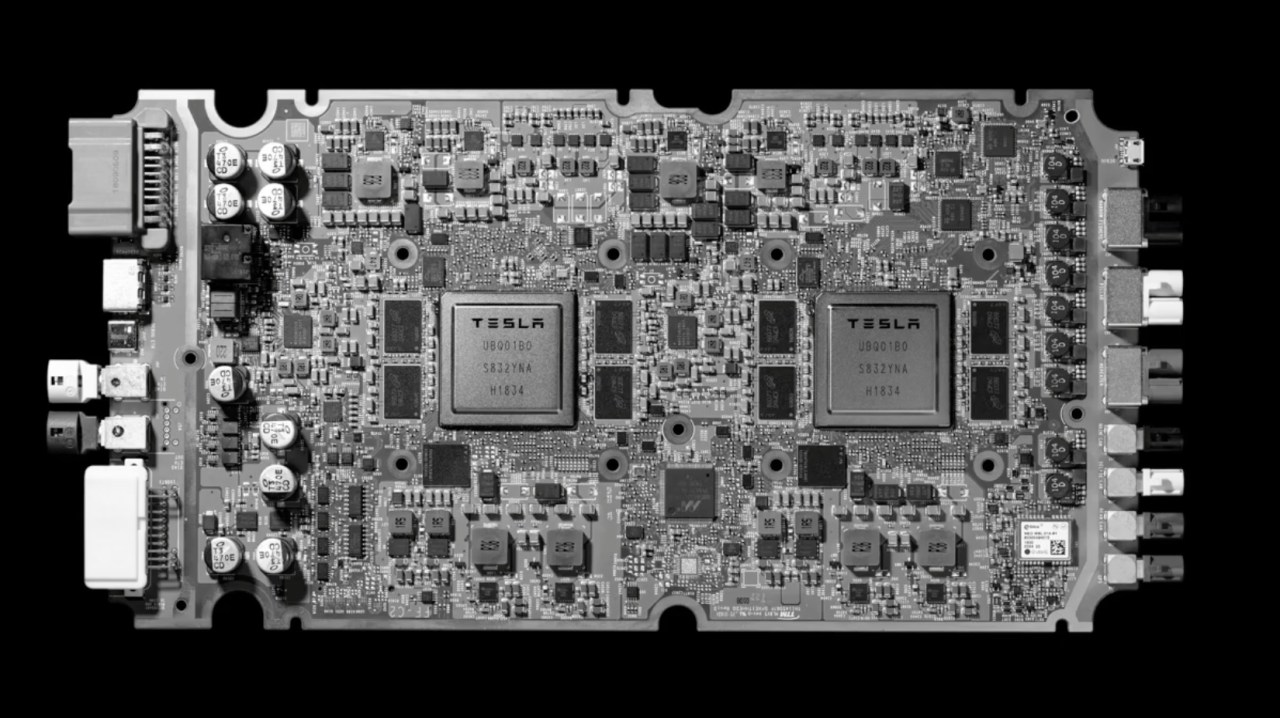
In the ever-evolving landscape of technology, the intersection between artificial intelligence and automotive engineering is gaining momentum, particularly in the domain of autonomous vehicles (AVs). Tesla, under the dynamic leadership of Elon Musk, has made significant strides in this field, recently unveiling its highly-anticipated “Full Self-Driving Computer” (FSDC) during its “Autonomy Day”. Musk boldly proclaimed it to be “the best chip in the world,” setting the stage for a fascinating discussion on what this innovative platform means for the future of self-driving cars.
The Birth of a New Era in Chip Design
The FSDC is more than just a computer; it represents a paradigm shift in designing chips tailored for autonomous driving. Developed in collaboration with Samsung in Texas, this custom chip was constructed with the singular goal of enhancing safety and performance on the road. With ambitious claims surrounding its capabilities, it raises the bar considerably in terms of what AV technology can achieve.
Redundancy: The Safety Net for Autonomous Driving
One of the groundbreaking features of the FSDC is its integrated redundancy system. Featuring two identical systems that operate in parallel, this design approach is crucial for ensuring that any potential faults are immediately isolated. Imagine if one computer system experiences an error; the other system could seamlessly step in, effectively shielding the vehicle’s operations from failure. This fail-safe mechanism reflects an understanding that safety is paramount when navigating the complexities of human-driven environments.
Power Meets Efficiency
Power consumption is often a major concern in high performance computing, especially in mobile platforms like cars where battery longevity is crucial. The FSDC boasts a surprisingly low power consumption of about 100 watts, outperforming many traditional desktop systems and GPUs. This efficiency not only underscores Tesla’s engineering prowess but also sets a competitive advantage as they seek to optimize performance without draining the vehicle’s energy source.
Advanced Computing Techniques for Neural Networks
At the heart of the FSDC is a strong emphasis on neural network computing. Unlike general-purpose CPUs, the FSDC leverages specialized processing units designed to execute specific mathematical operations more efficiently. This design decision translates to a significant performance enhancement in processing data essential for self-driving functionalities. It paves the way for Tesla vehicles to make quicker, more informed decisions, ultimately contributing to smoother rides and enhanced safety.
Security: A Non-Negotiable Aspect
As we increasingly integrate technology into our lives, vulnerabilities to hacking and data manipulation can have dire consequences. To counteract these threats, the FSDC is equipped with robust security protocols. The chip scrutinizes all commands and data cryptographically, ensuring that no unauthorized input can interfere with the vehicle’s operational integrity. By scrutinizing imagery and data output, it prevents potential manipulations that could jeopardize passenger safety.
Affordability Meets Innovation
What’s remarkable about Tesla’s FSDC is not just its technology, but also its accessibility. The chip is backward-compatible with existing Tesla models, ensuring that current owners can upgrade without feeling left behind. Moreover, its fabrication process strikes a balance between performance and cost, hinting that cutting-edge technology doesn’t have to come with exorbitant price tags.
The Road Ahead
As Tesla continues to push boundaries in the automotive sector, there’s no denying that the FSDC is a pivotal step forward. The automotive industry is ripe for disruption, and Tesla’s commitment to safety, performance, and innovation positions it at the forefront of this movement. While discussions such as Nvidia’s rebuttal highlight the competitive nature of the market, Tesla’s advancements will continue to shape the future of self-driving cars.
In conclusion, the unveiling of the FSDC is emblematic of Tesla’s relentless pursuit of excellence within the autonomous vehicle space. With an impressive blend of redundancy, efficiency, advanced computing, and rigorous security mechanisms, the FSDC is poised to redefine what we consider possible in self-driving technology. In a world where every second counts, having a reliable and effective computational brain behind the wheel could very well be the key to transforming the future of transportation.
At fxis.ai, we believe that such advancements are crucial for the future of AI, as they enable more comprehensive and effective solutions. Our team is continually exploring new methodologies to push the envelope in artificial intelligence, ensuring that our clients benefit from the latest technological innovations. For more insights, updates, or to collaborate on AI development projects, stay connected with fxis.ai.