
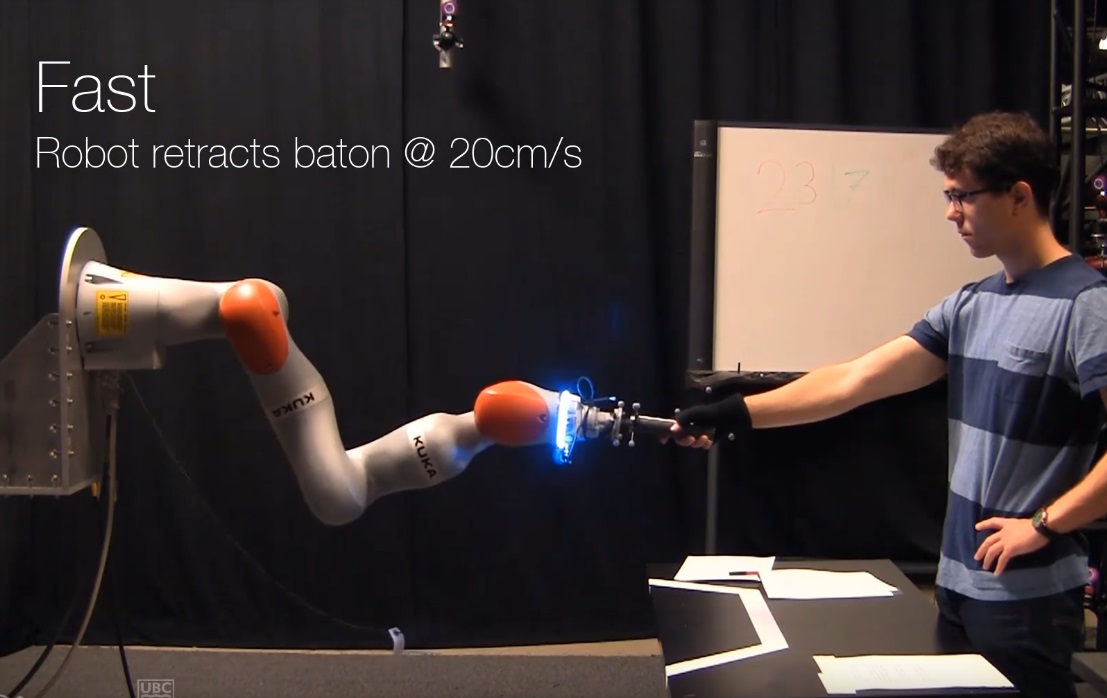
The world of robotics is at the intersection of technology and human experience. As robots are increasingly integrated into our daily lives, their ability to interact smoothly and naturally with humans becomes paramount. A recent study by Disney Research delves into the fascinating realm of human-robot interaction, specifically investigating how the posture and movement style of robots influence people’s feelings of safety and comfort. This exploration is vital, as it sets the stage for how successfully robots will perform tasks that require cooperation with humans, from automated waitstaff in restaurants to collaborative robots on factory floors.
The Interaction Experiment: Setting the Stage
The study designed a scenario in which participants were required to pass a baton to a robotic arm using a magnetic mechanism. The researchers manipulated various factors in the robot’s behavior to evaluate how those factors influenced both the efficiency of the interaction and the humans’ emotional responses.
- Movement Into Position: Two styles were tested—robots that began in a resting, inert state versus those that were already partly raised. The latter made it easier for participants to comfortably place the baton into the expected position.
- Grasping Technique: The robot either quickly grasped the baton or did so more deliberately. Surprisingly, while participants didn’t show strong emotional preferences here, the controlled movement displayed less opposing force, suggesting ease of interaction.
- Retracting the Object: Lastly, the robot either retracted the baton slowly or quickly. Most participants preferred the gradual retraction, equating it with a gentler, more considerate approach, rather than a sudden yank that would evoke discomfort.
Implications for Human-Robot Interaction Design
The findings from this experiment are not merely academic; they carry significant implications for future robot design in practical environments. As robots are designed to interact with people, understanding these nuances can greatly enhance user experience. For instance:
- In hospital settings, where robots may be delivering medications or assisting staff, it is crucial that they adopt a posture that feels friendly and accommodating, ensuring that patients and healthcare workers feel safe.
- In service industries, such as restaurants, a robot designed to clear tables should move in a way that feels natural and intuitive, facilitating seamless interaction and minimizing any feelings of anxiety among diners.
- In manufacturing environments, deploying collaborative robots, or cobots, that exhibit predictable and gentle grasping behaviors can enhance worker comfort and productivity.
The Road Ahead: Building Rapport with Robots
One fascinating observation from the study was how participants began to anticipate the robot’s movements, suggesting the possibility of developing a rapport even within a short set of artificial interactions. This points to a promising future where humans may naturally adapt to robotic counterparts, thus fostering collaboration and improving workplace efficiency.
This research is a small yet significant step towards establishing best practices for human-robot interaction, clearly underscoring the importance of designing robots that not only perform tasks but do so in a way that promotes comfort and understanding. At fxis.ai, we believe that such advancements are crucial for the future of AI, as they enable more comprehensive and effective solutions. Our team is continually exploring new methodologies to push the envelope in artificial intelligence, ensuring that our clients benefit from the latest technological innovations.
Conclusion
As we usher in an era increasingly defined by robotics, it is essential that their designs reflect an understanding of human psychology and behavioral nuances. The way a robot poses itself and moves towards us directly impacts our comfort level, shaping how we choose to engage. Thus, incorporating these insights into the robotics design phase is not just desirable; it is essential for creating harmonious human-robot partnerships.
For more insights, updates, or to collaborate on AI development projects, stay connected with fxis.ai.