
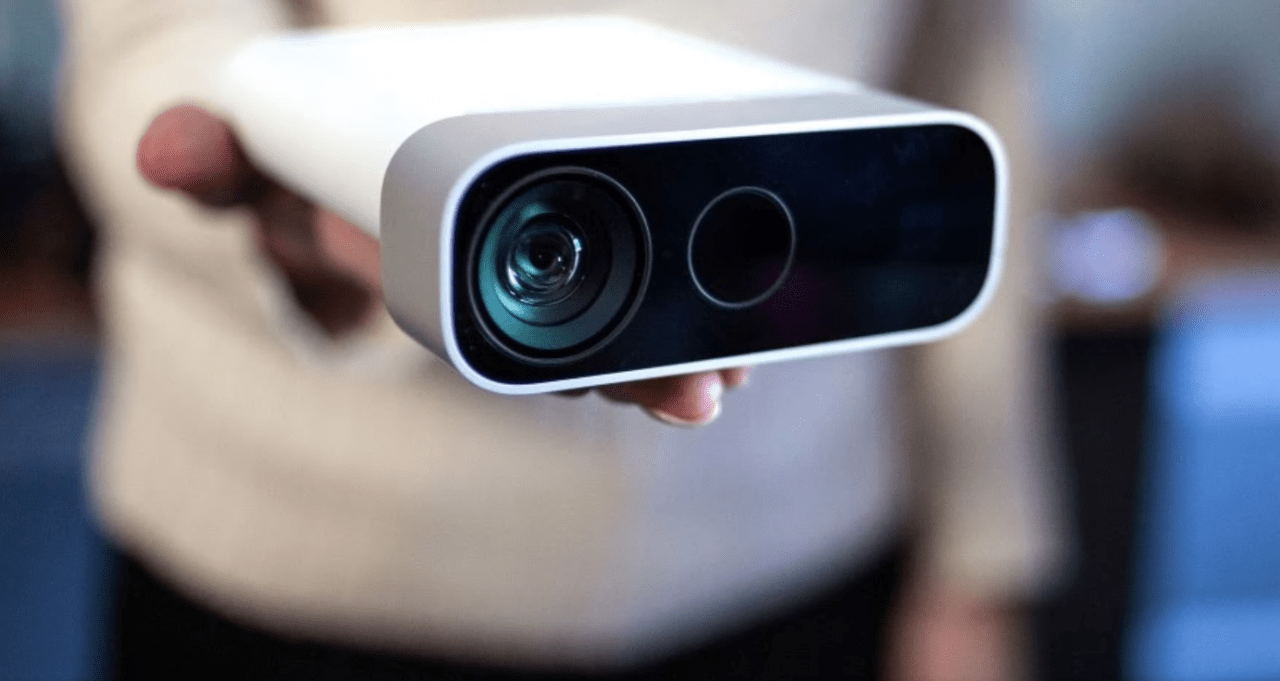
In a world increasingly driven by artificial intelligence and machine learning, the launch of Microsoft’s Azure Kinect AI camera is a pivotal moment for developers. Launched as a hardware solution built for innovative minds, this device aims to combine casual tech experimentation with serious applications across various industries. With a price tag of $399, it integrates cutting-edge technology as part of a developer kit, or DK, that encapsulates a world of potential. But what exactly makes the Azure Kinect a noteworthy technological leap compared to its predecessors? Let’s delve deeper.
A Fusion of Advanced Technologies
The Azure Kinect DK is not just a rehash of the original Kinect, which mainly revolved around gaming. Instead, it brings forth a fusion of capabilities tailored for enterprise solutions. Featuring a 1MP depth camera, a 12MP RGB camera, a 360-degree microphone, and an orientation sensor, this sleek package is finely tuned for real-world applications rather than casual home entertainment.
Understanding the Technical Features
- Depth Sensing: At the heart of the Azure Kinect is its time-of-flight depth sensing technology, which is inherited from Microsoft’s own HoloLens. This advanced capability allows for accurate depth perception, making it ideal for developing innovative applications in fields such as healthcare and logistics.
- High-Quality Imaging: Beyond merely capturing depth, the 12MP RGB camera enhances imaging capabilities, allowing developers to create rich applications that require detailed visual data processing.
- Audio Capabilities: The 360-degree microphone ensures that audio captures are as robust as visual feedback. This opens doors to sophisticated speech solutions, enabling voice-activated interfaces across applications.
Empowering Developers with SDKs
To cultivate a vibrant development culture, Microsoft has released various SDKs, including a body-tracking SDK reminiscent of the original Kinect experience. This API access not only allows developers to interact with hardware but to experiment and push the boundaries of AI integration. The Azure platform is not a requirement, but the integration benefits can lead to powerful machine learning applications.
Industry Impact and Potential Use Cases
Microsoft is targeting broad enterprise sectors including health, retail, logistics, and robotics. For instance:
- Healthcare: Developers can create applications that monitor patient movements, which could then improve rehabilitation procedures.
- Smart Retail: Facial recognition and customer tracking features can enhance user experiences while ensuring data-driven insights to improve product placements and service delivery.
- Logistics: With the integration of AI, businesses can use the Azure Kinect to optimize warehouse operations through real-time inventory tracking and assessment.
Final Thoughts: The Road Ahead
The Azure Kinect promises to be more than just a trendy gadget; it represents a practical tool that developers can leverage to create innovative solutions facilitated by highly versatile AI capabilities. As organizations continue to seek out ways to integrate AI into their standard operations, devices like the Azure Kinect will spearhead this transformation.
For more insights, updates, or to collaborate on AI development projects, stay connected with fxis.ai.
At fxis.ai, we believe that such advancements are crucial for the future of AI, as they enable more comprehensive and effective solutions. Our team is continually exploring new methodologies to push the envelope in artificial intelligence, ensuring that our clients benefit from the latest technological innovations.