
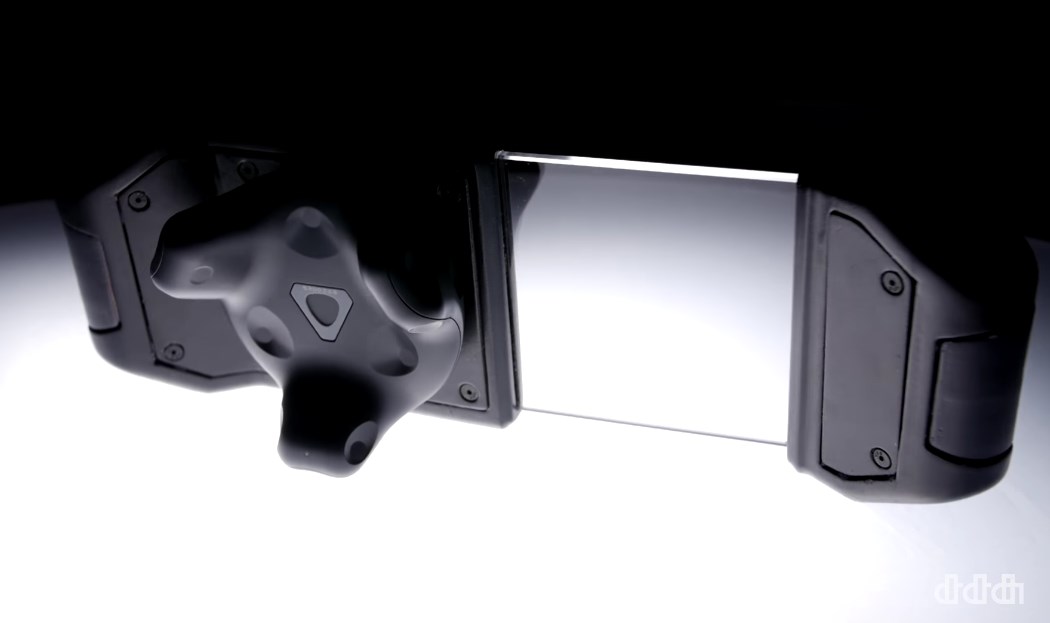
As the realms of Virtual Reality (VR) and Augmented Reality (AR) continue to evolve, they are becoming increasingly intertwined, each borrowing elements from the other. A particularly intriguing example of this convergence is the D3-U, a cutting-edge VR camera designed to operate in a virtual environment while being an actual physical device in your hand. Created by the innovative design agency dotdotdash in partnership with Vive, the D3-U stands as a proof of concept rather than a retail product, sparking excitement about the future of how we interact with immersive technologies.
The Problem with Virtual Photography
Capturing moments within a VR space poses quite a challenge. Traditionally, users resort to simple screen captures that feel disconnected from the immersive experience. Balancing your head and keeping an eye on framing demands focus that detracts from enjoying the virtual environment. The D3-U addresses this issue by integrating real-world mechanics with virtual functionality. This unique approach changes the way we perceive photography in VR.
How the D3-U Works
At the heart of the D3-U’s innovative design is the Vive Tracker. This device tracks the motion of real-world objects, which the D3-U utilizes to transform an ordinary camera into a virtual tool. The tracker employs embedded IR beacons, akin to those in VR headsets, enabling it to mirror real-world movements in virtual space. Developer Zach Krausnick noted, “It’s simply a matter of calibrating the puck to the model of the 3D camera and then making sure the size matches up perfectly in space.” This level of precision enhances the user’s experience, allowing them to feel as if they are genuinely holding a camera.
A New Way to Capture Virtual Moments
Within the virtual environment, the D3-U provides users with controls similar to a physical camera, featuring a shutter release button, joystick for adjusting exposure modes, and a live preview of their shots. Users embark on a mission to photograph alien creatures, adjusting wavelengths and angles, further blurring the line between virtual and physical photography. In a delightful touch, a printer is simulated to provide hard copies of the shots taken, bringing a tactile element to the virtual experience.
- Versatility: Future iterations could potentially include advanced features like shutter speed settings, aperture control, and more.
- Learning and Exploration: This tool could serve as an educational platform for budding photographers to experiment with photography in a controlled, immersive setting.
The Future of VR and AR Integration
While the D3-U is currently an experimental prototype and not available for purchase, it illustrates the exciting potential of integrating real-world tools into virtual settings. This prototype shines a light on how the future of immersive technologies could reshape artistic expression and user interaction. Who knows? We could soon see even more sophisticated features such as physically accurate aperture blade simulation that would provide an unparalleled realism for virtual photographers.
Conclusion
The D3-U exemplifies the innovative spirit emerging at the intersection of VR and AR. It is not just a concept but a glimpse into a future where technology enhances our connectivity to immersive experiences while retaining the tangible feel of real-world tools. While it may not be a must-have item today, its existence prompts us to rethink how we document experiences in digital realms. At fxis.ai, we believe that such advancements are crucial for the future of AI, as they enable more comprehensive and effective solutions. Our team is continually exploring new methodologies to push the envelope in artificial intelligence, ensuring that our clients benefit from the latest technological innovations.
For more insights, updates, or to collaborate on AI development projects, stay connected with fxis.ai.