
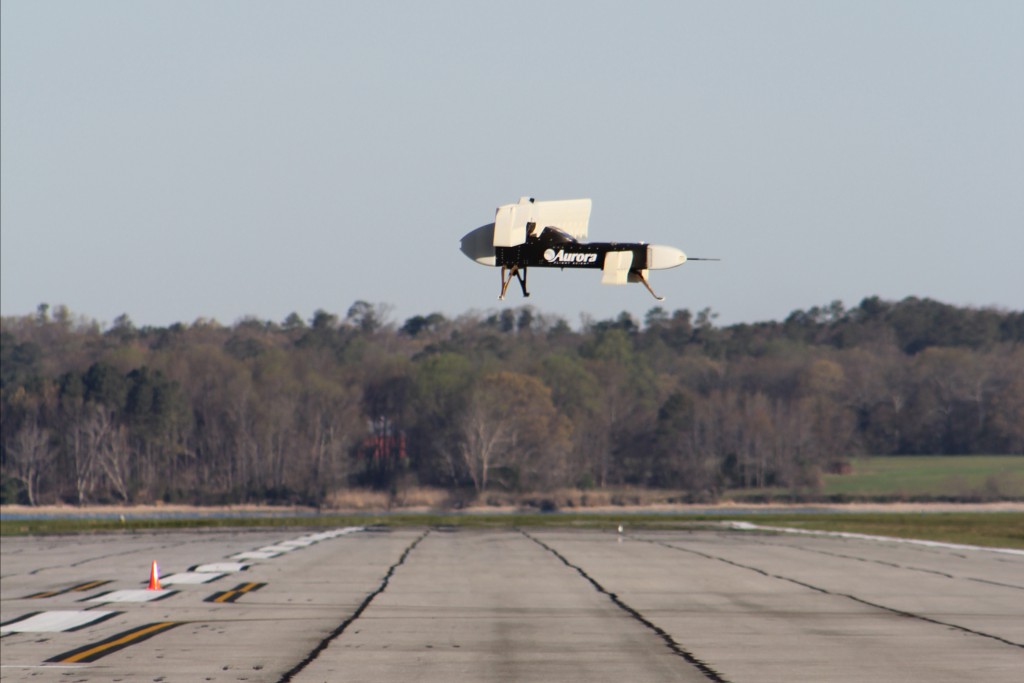
The world of unmanned aerial vehicles (UAVs) has reached an exhilarating junction with the development of advanced vertical take-off and landing (VTOL) systems. Among these, Aurora Flight Sciences has created waves with their LightningStrike XV-24A, a UAV that is designed to redefine aerial combat capabilities. This amazing leap from science fiction to actual test flights brings us a step closer to a future in which military operations could be transformed dramatically by technology. Let’s delve into the innovative features and the future potential of this marvel of engineering.
The Testing Journey Begins
The LightningStrike XV-24A recently completed its initial phase of flight testing, showing promising results that are setting the path for full-scale flight evaluations set to commence in the coming year. Although the currently deployed model weighs merely 325 pounds, the anticipated full-scale version will tip the scales at an impressive 12,000 pounds, boasting a wingspan of 61 feet. This subscale vehicle demonstrator (SVD) is not an anomaly but a fundamental step in the aircraft development process, allowing engineers to validate crucial design elements without yet undertaking the expense of a full-sized craft.
Innovative Design and Functionality
- Transitioning Flight Modes: One of the standout performances of the XV-24A during testing was its ability to switch between outbound and inbound flight states. Using advanced rotor technology, this UAV can initially launch its rotors in a vertical position for lift-off, transitioning to a horizontal format for greater speed akin to conventional jets.
- Performance Goals: Aurora is ambitiously targeting sustained speeds between 300 and 400 knots for the final craft, a significant leap compared to traditional helicopters, which typically max out below the 200-knot range. Furthermore, it aims to improve hover efficiency by up to 15% over existing UAV designs.
- Pilotless Operation: The XV-24A is designed as a fully autonomous machine, intended to operate without onboard pilots. This opens up possibilities for missions in more dangerous environments that would be too risky for human operators.
- Hybrid-Electric Drive System: Imagine a world where UAVs, powered by cutting-edge hybrid-electric technology, can optimize fuel consumption while maximizing performance. The Rolls-Royce AE 1107C turboshaft engine reinforces this vision, as it drives an array of 24 rotor fans.
A Step Toward the Future of Military Aviation
The implications of the XV-24A stretch far beyond mere technical specifications; they align with strategic military needs and future operational principles. Leveraging its capacity to outperform conventional rotorcraft dramatically changes the landscape of combat scenarios, opening avenues for superior reconnaissance, surveillance, and tactical operations. Such advancements have the potential to shift power dynamics and redefine engagement strategies in multi-domain operations.
Conclusion: A New Frontier in UAV Development
The journey of Aurora’s LightningStrike XV-24A is just beginning, but it marks a significant milestone in the evolution of unmanned aerial vehicles. As we stand on the brink of a revolutionized approach to aerial combat, it’s clear that the future is brimming with possibilities that were once confined to the pages of science fiction. Aurora Flight Sciences continues to be a trailblazer in this emergent field, paving the way for innovations that could shape military aviation for years to come.
At fxis.ai, we believe that such advancements are crucial for the future of AI, as they enable more comprehensive and effective solutions. Our team is continually exploring new methodologies to push the envelope in artificial intelligence, ensuring that our clients benefit from the latest technological innovations. For more insights, updates, or to collaborate on AI development projects, stay connected with fxis.ai.