
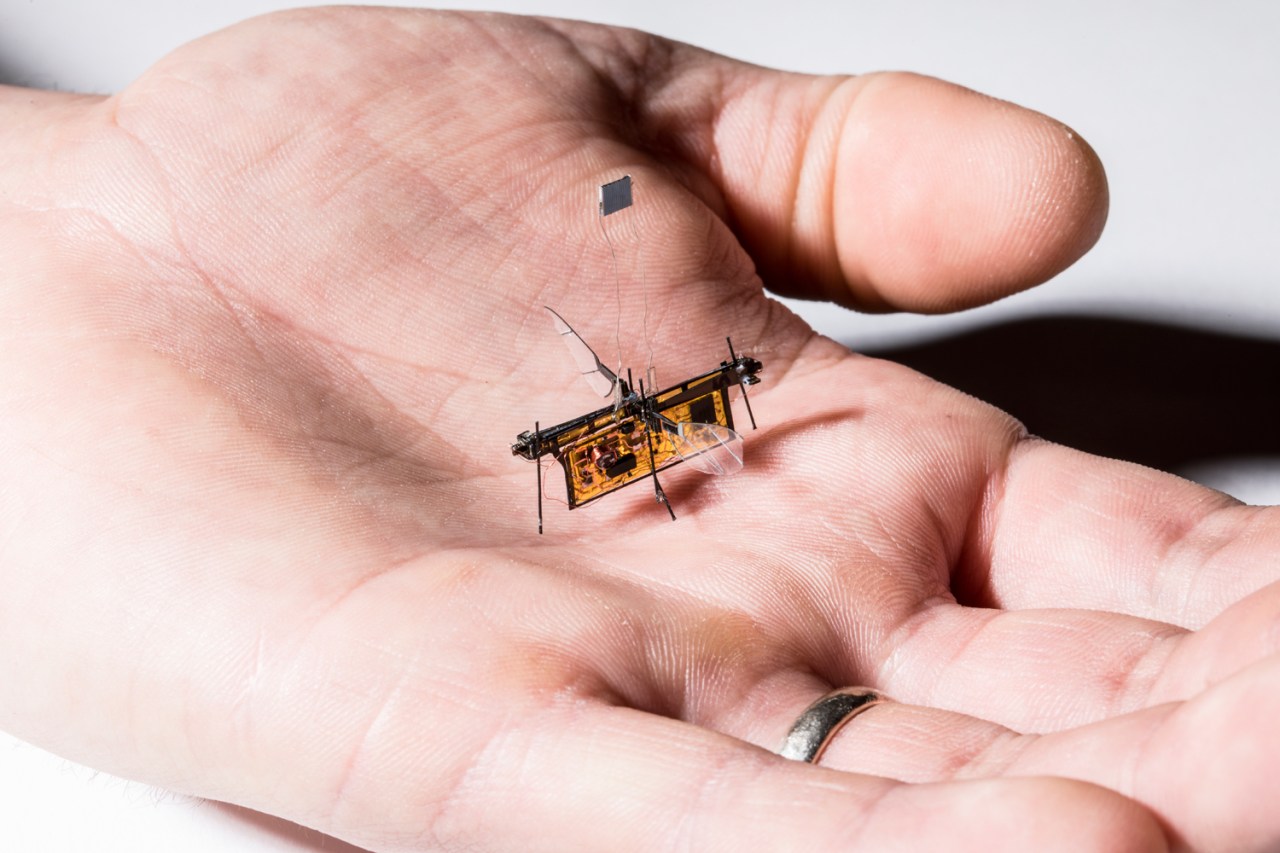
Imagine a future where tiny, insect-sized drones buzz through the air, performing complex tasks without the burden of heavy batteries or unwieldy wires. Enter the RoboFly, a trailblazing invention from the University of Washington that has taken its first flaps into the skies, powered by lasers! This innovative approach signifies not just a remarkable feat of engineering, but also illustrates the potential for future technologies that could revolutionize how we think about aerial robotics.
The Power Challenge in Small Aerial Robotics
The delicate balance between weight, power source, and functionality has always been a significant challenge in the design of small flying robots. Larger drones can carry larger batteries, allowing for extended flight times; conversely, tiny drones struggle with power supply due to the limitations of both battery capacity and weight. Historically, researchers have faced a dilemma: how to create a lightweight drone that can fly effectively without being tethered to a cumbersome power source.
RoboFly: A Leap into the Future
The RoboFly embraces an innovative solution by harnessing the power of lasers to operate its wings. Unlike its predecessor, the RoboBee, which relied on physical wires for power, RoboFly operates wirelessly. Its sophisticated design includes a photovoltaic cell that captures energy from a laser beam aimed at it, achieving incredible efficiencies in power transfer.
- Harnessing Laser Technology: The beauty of using lasers lies in their ability to transmit large amounts of energy without adding significant weight to the drone. The RoboFly achieves this via a carefully calibrated laser beam that focuses on the photovoltaic cell.
- Smart Power Management: RoboFly utilizes an integrated circuit and microcontroller to regulate the energy it receives, adjusting the voltage to allow for varied wing movements. This ensures both rapid flapping for takeoff and controlled, smooth motions during flight.
From Concept to Prototype: The Journey Ahead
Currently, the RoboFly has successfully demonstrated its ability to take off, hover briefly, and land—essentially proving the concept of wireless powered flight at such a miniature scale. However, this is just the beginning. The research team, led by the brilliant Johannes James, aims to enhance the RoboFly’s capabilities.
- Onboard Telemetry: The next phase focuses on improving the robot’s self-control system, enabling it to navigate autonomously.
- Laser Steering Mechanisms: Future iterations of RoboFly will include the development of directed laser beams that can follow the drone, ensuring a continuous power supply regardless of its movement.
The Bigger Picture: Applications and Implications
The potential applications of such a technology are immense. Imagine RoboFly-like drones being utilized in search-and-rescue operations, environmental monitoring, crop surveying, or even surveillance tasks, all while being lightweight and efficient. This raises exciting possibilities for future scenarios where drones can function in challenging environments where traditional batteries might fail.
Conclusion: Soaring to New Heights
As the RoboFly takes its initial flights, it signifies not only a technical achievement but also a glimpse into the future of aerial robotics. With further refinement and capabilities, the RoboFly could pave the way for a new generation of smart, efficient drones that seamlessly integrate into various sectors. This innovative leap reflects a broader trend in technology: the pursuit of solutions that balance power efficiency, weight, and functionality.
At fxis.ai, we believe that such advancements are crucial for the future of AI, as they enable more comprehensive and effective solutions. Our team is continually exploring new methodologies to push the envelope in artificial intelligence, ensuring that our clients benefit from the latest technological innovations. For more insights, updates, or to collaborate on AI development projects, stay connected with fxis.ai.