
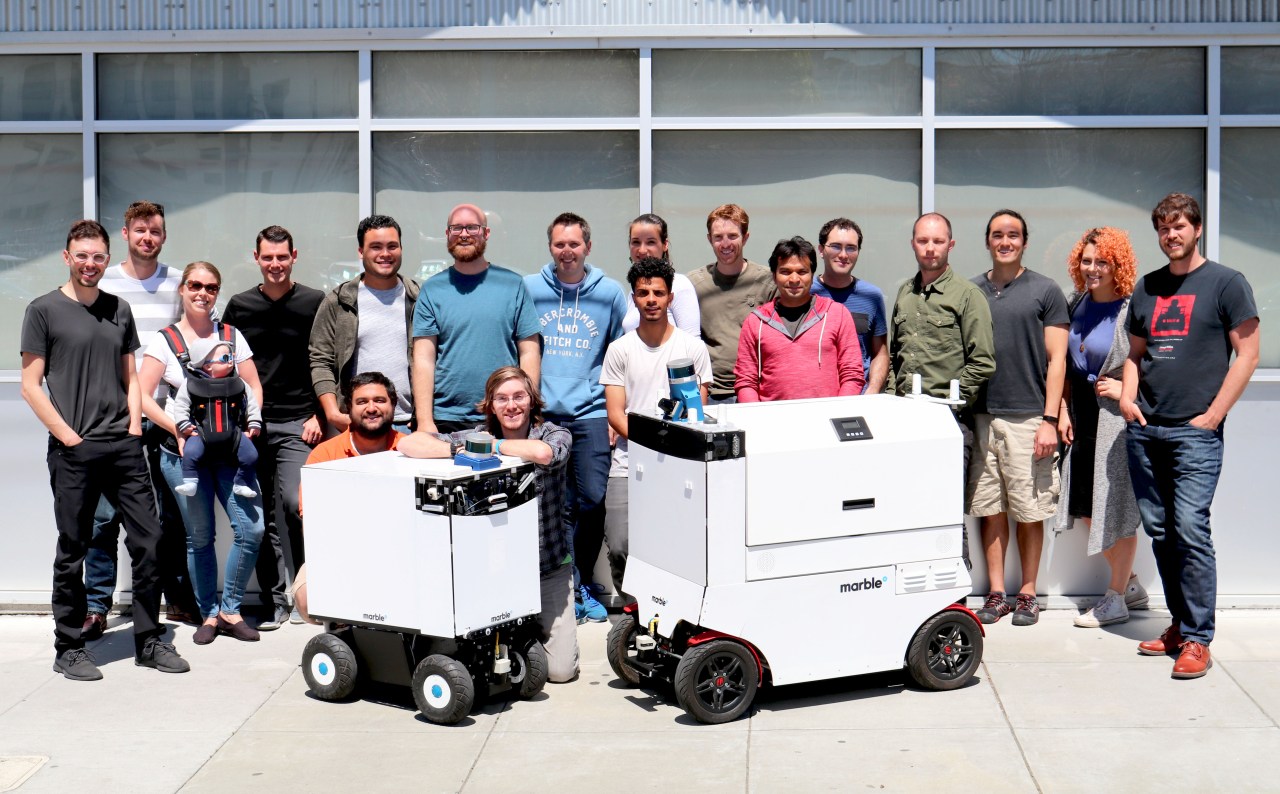
In an ever-evolving landscape of logistical services, the role of technology in optimizing last-mile delivery is paramount. Marble, a robotics company based in San Francisco, recently made headlines by securing a significant $10 million in Series A funding, bringing its total funding to $15 million. This backing from notable investors, including Tencent, Lemnos, Crunchfund, and Maven, is not just a financial endorsement; it signals a shift in how we view delivery systems as a whole. It’s time to explore what Marble’s forward-thinking approach might mean for consumers and the industry at large.
Beyond Food Delivery: A New Perspective
Marble has historically been pigeonholed as a food delivery service, but the company is keen to redefine its narrative. As articulated by CEO Matthew Delaney, the term “last-mile logistics company” encapsulates their ambition to meet growing consumer expectations in the e-commerce sector. Customers today are accustomed to the rapid delivery services popularized by giants like Amazon, which are pushing the boundaries of consumer demand.
- Changing Expectations: With trends leaning toward faster and more cost-effective delivery solutions, Marble sees itself as a key player in this space, emphasizing that two-day delivery is just the beginning.
- Technology-Driven Solutions: Using advanced on-board LIDAR sensors, Marble’s robots navigate complex urban landscapes, ensuring safe and efficient delivery, whether for food or other goods like groceries and prescriptions.
The Inclusivity Factor
One of the standout elements of Marble’s vision is its commitment to accessibility. Delaney emphasizes that their services are designed to cater to individuals who may not have convenient access to traditional delivery methods—be it parents managing large households, or the elderly and disabled who face mobility challenges.
This inclusive approach not only defines the company’s ethos but also extends their potential market base. Marble is effectively saying, “If we can democratize logistics, we can empower a larger portion of the population.” It’s a poignant reminder that in our push for innovation, we shouldn’t overlook the essential need for accessibility.
Navigating Regulatory Waters
However, not all is smooth sailing. The company faces significant challenges as it attempts to navigate the maze of regulations that govern robotic delivery systems in urban spaces. San Francisco, Marble’s home base, has paused trials under the pretension of public safety, a challenge that’s had many robotics companies grappling with local laws. “If we don’t value our society,” City Supervisor Norman Yee expressed, “we do not want to compromise the safety of our pedestrians.”
While this may seem like an obstacle, Marble is optimistic. They have garnered interest from other cities and states willing to experiment with their technology, demonstrating that the desire for cutting-edge delivery solutions is not confined to one municipality. Their continued efforts to engage with local government suggest a commitment to ensuring that regulatory frameworks evolve in tandem with technological advancements.
Conclusion: Shaping the Future of Delivery
The world of delivery logistics is on the brink of transformation, with innovative companies like Marble at the forefront. Their $10 million investment is not just a financial boost; it’s a call to action for the industry to embrace a more inclusive and efficient delivery ecosystem. With aspirations well beyond food delivery, Marble’s innovative solutions could redefine urban logistics for everyone.
At fxis.ai, we believe that such advancements are crucial for the future of AI, as they enable more comprehensive and effective solutions. Our team is continually exploring new methodologies to push the envelope in artificial intelligence, ensuring that our clients benefit from the latest technological innovations.
For more insights, updates, or to collaborate on AI development projects, stay connected with fxis.ai.