
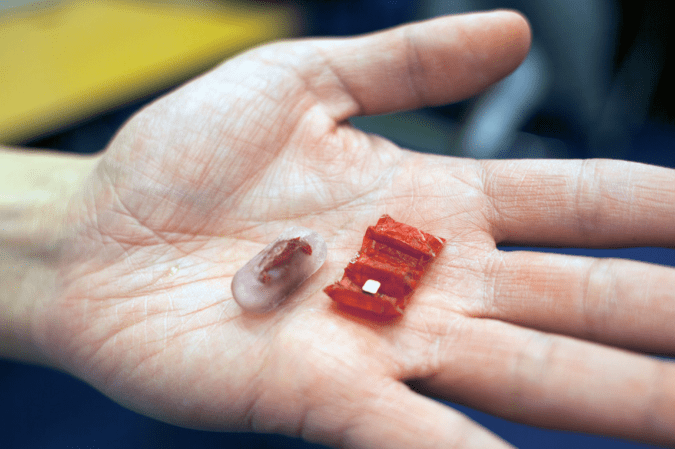
Imagine a world where biomedical solutions are crafted from unconventional materials and form factors, such as a folding robot made from pig intestines, designed to perform life-saving tasks in the body. This might sound like a scene from a surrealist novel, but researchers from MIT, the University of Sheffield, and the Tokyo Institute of Technology are turning fiction into reality with their groundbreaking work on a unique origami robot that operates within the human digestive system.
The Concept Behind the Tech
The origins of this inventive robot stem from a pressing medical issue: the problem of swallowed batteries. According to MIT’s data, about 3,500 watch batteries are ingested annually in the United States alone. While some are expelled naturally, many pose a serious health risk by burning tissue along the digestive tract. To combat this, the researchers hypothesized a pig-derived robot could facilitate safe extraction with minimal invasiveness.
Design and Functionality
At its core, the origami robot is engineered to hatch from a swallowed capsule and unfold like an accordion, utilizing a method known as “stick-slip” motion to navigate the esophagus and stomach. Here’s how it works:
- Material Selection: The team chose dried pig intestines for their durability and biocompatibility. This decision highlights an innovative approach to material selection in biomedical engineering.
- Movement Technique: The robot propels itself using friction with its surroundings, ensuring that it can maneuver effectively through the curves and contours of the digestive tract.
- Magnetic Mechanism: Equipped with magnets, the robot not only navigates but also actively retrieves swallowed batteries. This dual capability makes it a powerful tool in emergency medical situations.
Results of Initial Testing
The journey of discovery involved notable experiments. Researcher Shuhei Miyashita demonstrated the robot’s potential by testing it on a ham, placing a battery inside it to simulate realistic conditions. Fellow researcher Daniela Rus noted, “Within half an hour, the battery was fully submerged in the ham.” This pivotal moment underscored the urgency of the problem they were addressing: when a battery enters the body, timely retrieval is essential to avoid damage.
Building a Fake Stomach
To conduct rigorous testing on their robotic design, the team constructed a model replicating the human stomach. Initially utilizing a real pig stomach for mechanical property analysis, they opted for a silicone model infused with water and lemon juice. This blend mimicked the acidic environment of human digestion, allowing for a more accurate examination of how the robot would perform in real-world scenarios.
Implications for the Future of Medical Technology
The potential of this folding robot extends well beyond battery retrieval. Its design principles might inspire further innovations in targeted medical intervention, including:
- Drug Delivery: Robots that can navigate the body to deliver medication directly where needed, reducing side effects and improving treatment efficacy.
- Minimally Invasive Diagnosis: Devices that can travel within the digestive system to diagnose conditions without requiring invasive procedures.
- Smart Materials: The use of biological materials in robotics could revolutionize the field, leading to solutions that are both effective and biocompatible.
Conclusion: Pushing the Boundaries of Biomedical Engineering
The creation of a folding robot made from pig parts is a testament to the incredible feats achievable in the realm of biomedical engineering. It highlights a bright future for medical technologies that leverage organic materials to solve pressing health issues. As researchers continue to innovate, we can anticipate a host of exciting developments that will transform patient care.
At fxis.ai, we believe that such advancements are crucial for the future of AI, as they enable more comprehensive and effective solutions. Our team is continually exploring new methodologies to push the envelope in artificial intelligence, ensuring that our clients benefit from the latest technological innovations.
For more insights, updates, or to collaborate on AI development projects, stay connected with fxis.ai.