
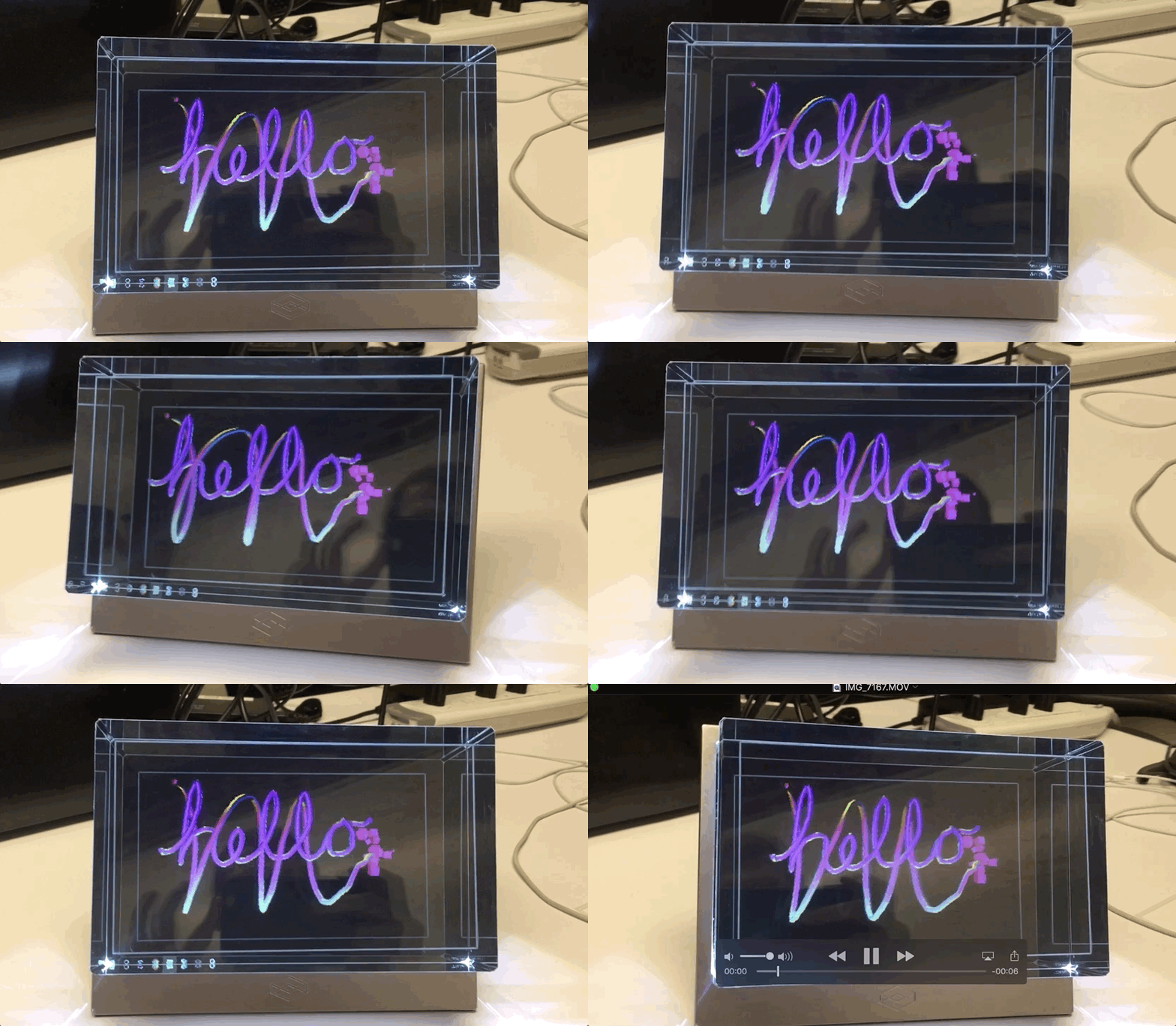
The world of technology is constantly evolving, and with it, our expectations of how we interact with digital content. One of the most captivating developments in recent years has been the emergence of 3D displays. These aren’t just your run-of-the-mill screens; they offer an immersive experience that could redefine how we perceive visual information. Among the frontrunners in this realm is Looking Glass Factory, whose volumetric display, aptly named the Looking Glass, promises to elevate the 3D experience beyond traditional flat interfaces.
Understanding Volumetric Displays
At the core of the Looking Glass display is a fascinating technology that produces what can best be described as a “fishbowl of pixels.” By generating 45 different perspectives of a single object at 60 frames per second, it allows viewers to see 3D images from multiple angles, simply by moving around it. This approach not only breaks away from the traditional confines of 2D displays but also fosters a communal experience; multiple observers can engage with the digital content simultaneously, no headsets or special glasses required.
The Appeal of Depth in User Interfaces
This leads to an essential question: what does depth add to our interaction with digital interfaces? Immersion is often touted as a key metric in user experience design, but does plunging into a 3D environment provide tangible benefits? The answer lies in the kind of content being visualized. When it comes to 3D modeling, animation, or even educational content like anatomy simulations, the added dimension helps users grasp complex concepts much more intuitively.
Target Audience and Use Cases
Looking Glass Factory is well aware that their audience extends beyond mere tech enthusiasts. Their displays are tailored for 3D creators, designers, and engineers who need to visualize their work in a richer context. Imagine a designer being able to present their latest product prototype to clients without needing to put on a bulky headset. In environments like these, the Looking Glass offers not just a tool, but a creative assistant that amplifies collaboration.
Potential Applications
- Education: Imagine teaching complex subjects such as biology through interactive 3D models. Volumetric displays can make boring textbooks come alive, fostering a greater understanding of the material.
- Design and Prototyping: Architects and product designers can present their ideas more effectively, allowing stakeholders to interact with a 3D representation before committing to a final design.
- Entertainment: Games and storytelling can reach new heights as developers leverage volumetric displays for an unparalleled user experience. Think about narrative experiences unfolding around you in multidimensional space.
Crowdfunding Success and Market Potential
Looking Glass Factory has raised over $775k through its crowdfunding campaign, evidencing a solid interest among backers. This enthusiasm signals not just a curiosity about the technology, but an eagerness to integrate volumetric displays into various sectors. The availability of two distinct product sizes—a $450 8.9-inch variant and a higher-end $2,500 15.6-inch model—also speaks to the strategy of catering to different needs within the market.
Concluding Perspectives
While I find myself grappling with the broader implications of volumetric technology, one thing is clear: the Looking Glass offers an intriguing glimpse into the future. It doesn’t necessarily solve a pressing problem, but it opens up new avenues for creativity and interaction that existing technologies can’t provide. The road ahead for volumetric displays will be fascinating to watch, as it challenges conventional interfaces and invites us to rethink how we engage with digital content.
At fxis.ai, we believe that such advancements are crucial for the future of AI, as they enable more comprehensive and effective solutions. Our team is continually exploring new methodologies to push the envelope in artificial intelligence, ensuring that our clients benefit from the latest technological innovations.
For more insights, updates, or to collaborate on AI development projects, stay connected with fxis.ai.