
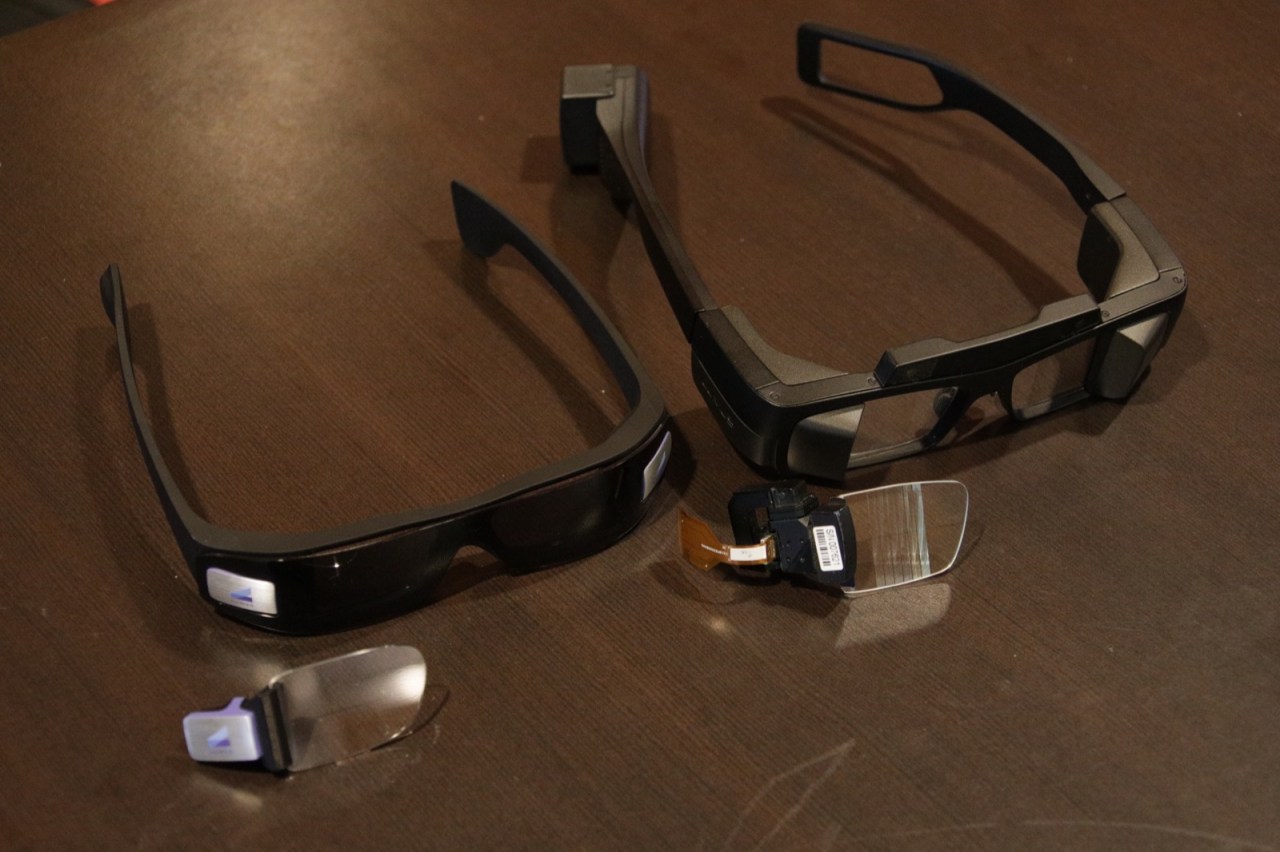
The quest for the perfect augmented reality (AR) glasses has become a hotbed of competition among leading tech giants like Apple, Microsoft, Google, and Facebook. Despite their prowess in miniaturizing complex technologies, they all confront a common hurdle—creating AR displays that are not only immersive but also compact enough to wear comfortably. At the forefront of this challenge is Lumus, an Israeli company that has been making significant strides in developing miniature AR displays, positioning itself as a key player in the AR revolution.
Understanding the Challenge of Miniaturization
With various tech competitors investing heavily in AR, the primary bottleneck remains the optics. As Ari Grobman, the CEO of Lumus, articulately explains, the essence of AR lies in how light is manipulated and presented to the user’s eye. Traditional methods struggle with delivering high-quality visual experiences while keeping the form factor small enough for everyday use. Lumus, however, tackles this issue head-on through their innovative use of reflective waveguides.
What Are Reflective Waveguides?
Reflective waveguides are Lumus’s secret sauce—these advanced optical systems use microscopic etchings within transparent glass lenses to catch and direct light. This ground-breaking technology allows for exceptionally compact displays that can still deliver sharp and vibrant visuals. They have showcased their latest iteration, which boasts a significant improvement: a 40-degree top-down field-of-view in a substantially smaller package, paired with a crisp 1080p resolution, which is a noteworthy advancement over prior models.
Strategic Partnerships and Market Positioning
Lumus is not going at it alone; they made headlines recently by partnering with Quanta, a major player in the manufacturing sector associated with Apple. This partnership fuels Lumus’s expansion ambitions, allowing them to leverage resources and expertise to manufacture AR displays at scale. With a solid funding base of $57 million from major investors like Quanta, Alibaba, and HTC, Lumus is poised to seize upcoming opportunities in the AR space.
Immersive Experience: The Binocular Solution
Looking ahead, Lumus is not just focused on making displays smaller—they’re elevating the user experience by developing a “binocular” solution that employs dual displays for each eye, thereby enabling a three-dimensional effect. This approach is a significant shift from legacy products like Google Glass, which relied on a single display. By adopting this binocular method, Lumus caters to the rising demand for depth perception in augmented reality, making experiences more immersive and realistic.
Powerful Impressions and Future Directions
During a hands-on experience with Lumus’s technology, users noted the remarkable brightness and clarity of the display, even in moderately sunny environments. This impressive performance could revolutionize how individuals interact with their surroundings through AR. Although currently, the fields-of-view remain limited compared to what users might expect, the roadmap appears promising. Grobman has indicated plans for wider fields-of-view and even more diminutive form factors, driving the innovation cycle forward.
Conclusion: Paving the Way for Consumer AR
As Lumus continues to refine its technology and expand its partnerships, it stands as a beacon of hope in the augmented reality landscape. Their commitment to improvement—with Grobman stating they are “tirelessly trying to obsolete our own technology”—is characteristic of a company that seeks to define the future of AR. As we watch these developments unfold, it’s clear that nuanced and powerful AR displays are not just a possibility, but an impending reality.
For more insights, updates, or to collaborate on AI development projects, stay connected with fxis.ai.
At fxis.ai, we believe that such advancements are crucial for the future of AI, as they enable more comprehensive and effective solutions. Our team is continually exploring new methodologies to push the envelope in artificial intelligence, ensuring that our clients benefit from the latest technological innovations.