
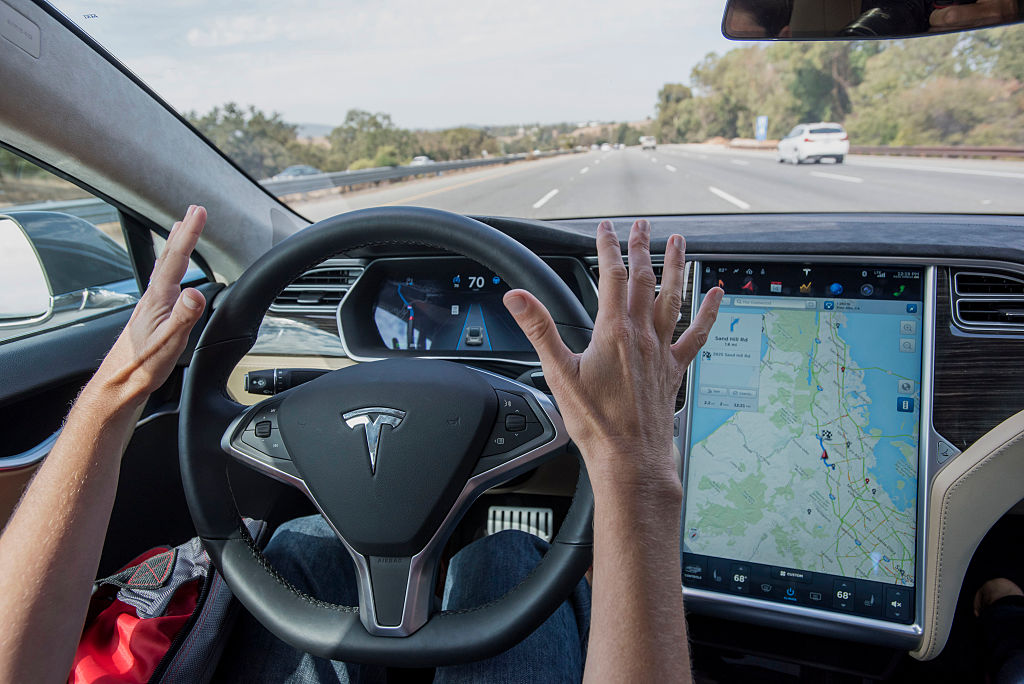
As the race toward fully autonomous vehicles accelerates, industry leaders are tackling an important element often overlooked: the interior monitoring of vehicles. Researchers at Fraunhofer are spearheading efforts to integrate in-car cameras that track not just the external environment but also what goes on within the vehicle itself. This technological leap is designed to enhance safety and create a more intuitive driving experience. But what exactly does this entail, and how promising is this innovation?
A New Dimension of Awareness
Traditionally, autonomous vehicles have relied heavily on powerful sensors and algorithms to observe and navigate their external surroundings — detecting obstacles, pedestrians, and other vehicles in their path. However, the development of in-car cameras expands the scope of awareness to include internal metrics, crucial for making informed decisions during driving.
Capturing the Interior Landscape
Michael Voit, head of the research group at Fraunhofer, underscores the importance of understanding vehicle occupants. By employing depth-perception cameras, their technology can identify:
- The number of passengers
- Their sizes
- Their postures
Such data can be vital in various scenarios. For instance, in an emergency situation, the vehicle could determine how long it may take for a driver to regain control if needed. Moreover, it can detect if a child has unbuckled their seatbelt, allowing the car to issue a timely warning.
Enhancing Safety Features
In collisional situations, the data gathered from these cameras can inform the vehicle’s actions. For example, it could guide the car to position itself to minimize impact by steering toward a less occupied area. Furthermore, airbag deployment systems could be adjusted based on the size and placement of the passengers, offering a tailored response that optimizes safety for occupants.
Promising Future Applications
While existing technologies, such as weight sensors, can provide basic insights into passenger occupancy, the enhanced monitoring capabilities offered by in-car cameras represents a significant progression. Additional research efforts are aimed at identifying common movements and objects, which could include recognizing a person reaching for the sun visor or setting up a child seat.
Real-World Testing Ahead
The current iteration of this technology resides within a driving simulator, but plans are underway to implement it in a modified minivan for real-world trials. Collaborating with partners like Volkswagen Group Research, Bosch, and Visteon, Fraunhofer’s “Intelligent Car Interior” project is fostering innovations funded by support from the German government.
Conclusion: Redefining the Car Experience
The integration of in-car cameras signifies a monumental shift in how autonomous vehicles will interact with their passengers. Not only will this technology offer greater safety and awareness, but it will also contribute to a more interactive and responsive driving environment. As research progresses and real-world applications begin, the focus will remain on creating vehicles that are not just smart on the outside, but equally aware and responsive on the inside.
At fxis.ai, we believe that such advancements are crucial for the future of AI, as they enable more comprehensive and effective solutions. Our team is continually exploring new methodologies to push the envelope in artificial intelligence, ensuring that our clients benefit from the latest technological innovations.
For more insights, updates, or to collaborate on AI development projects, stay connected with fxis.ai.