
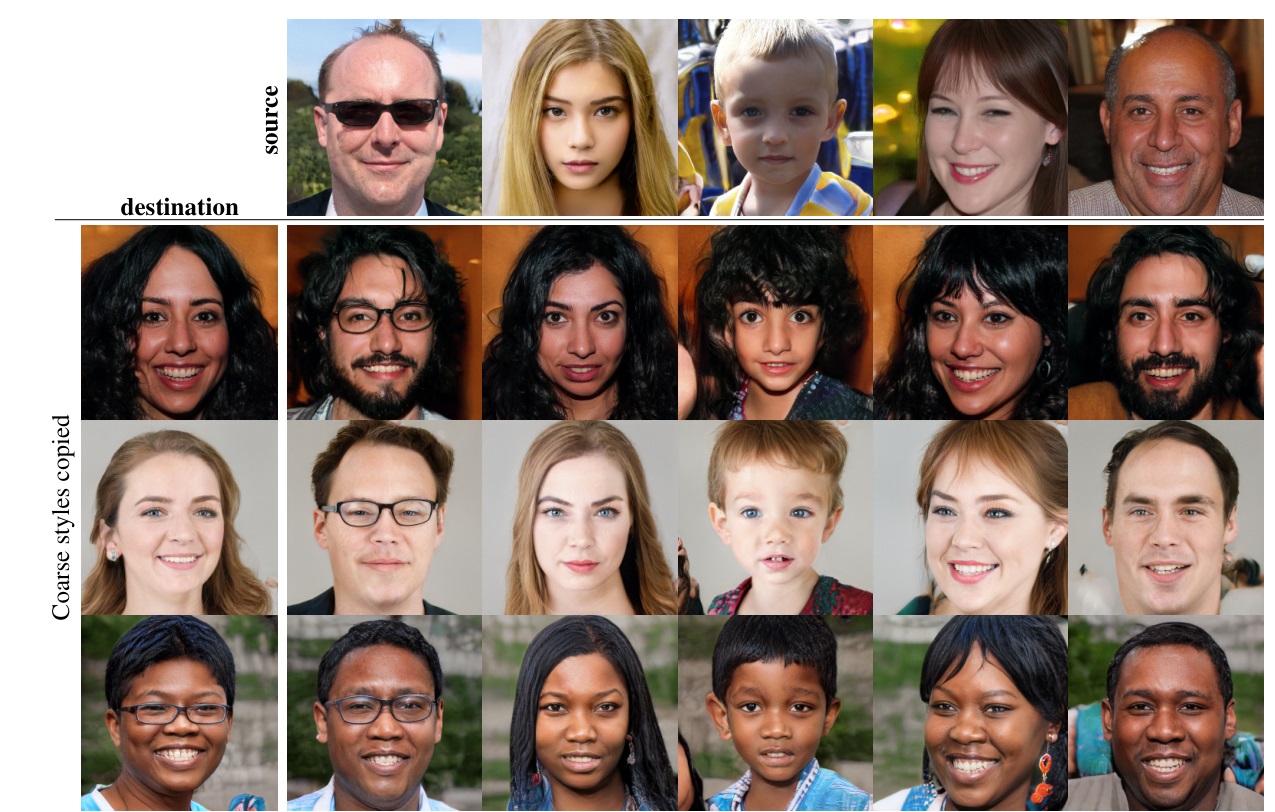
In the rapidly evolving landscape of artificial intelligence, one field stands out for its perplexity and profound implications—face generation. With advancements reaching levels that blur the line between reality and fabrication, it’s hard not to feel a twinge of unease. Nvidia’s latest research on generating hyper-realistic human faces has raised both eyebrows and questions: How far can we go in creating images that appear strikingly real?
Disentangled Face Generation: A Leap Forward
The latest architecture presented by Nvidia is designed to enhance the generation and blending of facial images through a sophisticated model that separates various levels of detail. By disentangling these factors—essentially allowing for a granular assessment of features—you can adjust facial characteristics in unique ways. This means that rather than generating two faces that differ only by minor attributes, the model can now create distinctly unique identities based on important variations.
How Does This Work?
- Style Transfer Inspiration: The model builds on the concept of style transfer, where essential stylistic elements from one image can alter the appearance of another. Yet, here, the “style” is derived from facial characteristics and image composition.
- Multi-level Manipulation: The integration of features at varied scales allows for changes that impact individual facial attributes, overall composition, or even broad color palettes.
- Intelligent Variation: The system is more sophisticated in identifying what constitutes meaningful change—whether it be skin tone, facial hair, or the direction someone’s gaze is oriented.
As a result, observers are presented with faces that could easily fool anyone into believing they might be actual profiles. Such is the realistic quality of the images, which allow for both tangible variations and imaginative creations.
The Eerie Realism of Artificial Faces
Upon glancing through some of the generated imagery, one might find it eerie how uncanny these digitally forged identities appear. In an age where digital media influences public perception, this technology poses significant ethical questions. For instance, how do we discern what is authentic in a world flooded with artificial visuals? The prospect of an “infinite profile picture generator” can sound enticing, but it also invites the potential for misuse and deception.
A Look Beyond Faces
Interestingly, the methodologies underpinning Nvidia’s algorithm extend beyond just human faces. The same principles can be effectively applied to generate images of various subjects, including animals, vehicles, and landscapes. Imagine an endless supply of visually unique cats or even picturesque sunsets—understanding how this creative technological capability transcends traditional boundaries broadens the imagination for its potential applications.
An Expanding Dataset for Greater Diversity
As part of this revolutionary work, Nvidia is also releasing a new dataset comprising 70,000 images of faces sourced from Flickr. This collection will capture a more diverse array of expressions and characteristics than what has previously been available. With meticulous processes implemented to remove non-human subjects, this dataset promises to serve as a valuable resource for further research and innovation in face generation.
Conclusion: Embracing the Dual-Edged Sword of Innovation
The advancements made in face generation by Nvidia signify a pivotal moment in digital creativity and fidelity. While the potential for collaboration and innovation seems boundless, we must also remain vigilant. As we integrate these systems into the fabric of our digital lives, the ethical implications of artificial identities and the veracity of visual media must remain at the forefront of the conversation.
At fxis.ai, we believe that such advancements are crucial for the future of AI, as they enable more comprehensive and effective solutions. Our team is continually exploring new methodologies to push the envelope in artificial intelligence, ensuring that our clients benefit from the latest technological innovations. For more insights, updates, or to collaborate on AI development projects, stay connected with fxis.ai.