
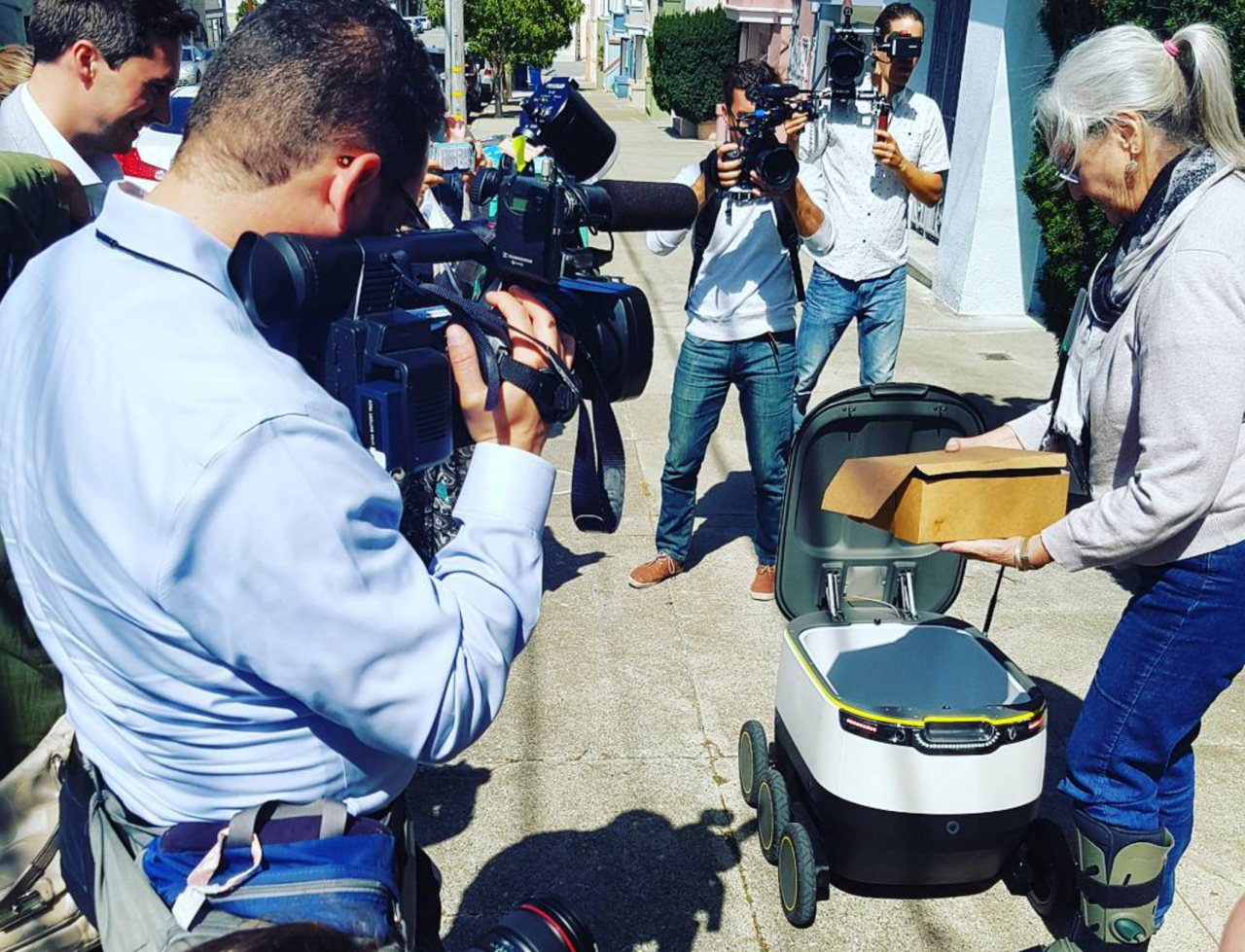
As technology marches forward, it transforms the way we interact with everyday tasks, and grocery shopping is no exception. This fall, residents of Washington, D.C. will witness a groundbreaking shift in grocery delivery as Starship Technologies pilots its rolling drone service right on their sidewalks. These innovative machines represent a fascinating intersection of convenience, technology, and urban logistics that could redefine food delivery as we know it.
A Revolutionary Approach to Delivery
Starship Technologies, co-founded by notable figures Janus Friis and Ahti Heinla, originally made waves with expertise in technology through Skype. This time, however, they pivot to solving entirely different challenges: urban delivery using compact, wheeled robots. These futuristic machines, reminiscent of wheeled coolers on six wheels, come equipped with a host of features, including the ability to keep items cool—perfect for grocery deliveries.
How Do These Robots Work?
- Design and Speed: Starship’s drones are designed to travel at a modest speed of 10 mph, akin to a brisk jog, making them well-suited for navigating city sidewalks.
- Capacity: Each drone carries about 40 pounds of groceries, ensuring that they can adequately serve small households or those looking for quick, last-minute shopping trips.
- Autonomous Operation: Equipped with sensors and cameras, these robots can autonomously navigate through pedestrian traffic and manage to avoid obstacles—although they still require a human operator during the testing phase.
Regulatory and Public Acceptance Challenges
The rollout of these delivery drones isn’t merely a technological feat; it also requires navigating regulatory mazes. Washington, D.C. officials have paved the way for these robots to legally traverse the urban landscape, setting a precedent for future technological integration in cities. While the initial trials in the U.K., Germany, and Switzerland have shown promise, the American public’s acceptance remains a pivotal question. The robots have not faced any significant incidents during tests abroad, but real-world deployment poses unforeseen challenges in a crowded urban environment.
The Road Ahead: A New Era for Logistics
The introduction of Starship’s robots marks an exciting development in urban logistics. With the increasing demand for convenience, especially in densely populated cities, these drones may bring significant benefits if they can scale effectively while maintaining safety and efficiency. Residents can look forward to a more flexible and environmentally friendly grocery shopping experience as these robots roll into town.
Conclusion
As Starship Technologies prepares to launch this innovative grocery delivery system, we stand on the brink of witnessing a transformation in how we obtain our daily necessities. The success of these robots could serve as a model for other cities and businesses aiming to revolutionize their delivery mechanisms. At fxis.ai, we believe that such advancements are crucial for the future of AI, as they enable more comprehensive and effective solutions. Our team is continually exploring new methodologies to push the envelope in artificial intelligence, ensuring that our clients benefit from the latest technological innovations. For more insights, updates, or to collaborate on AI development projects, stay connected with fxis.ai.