
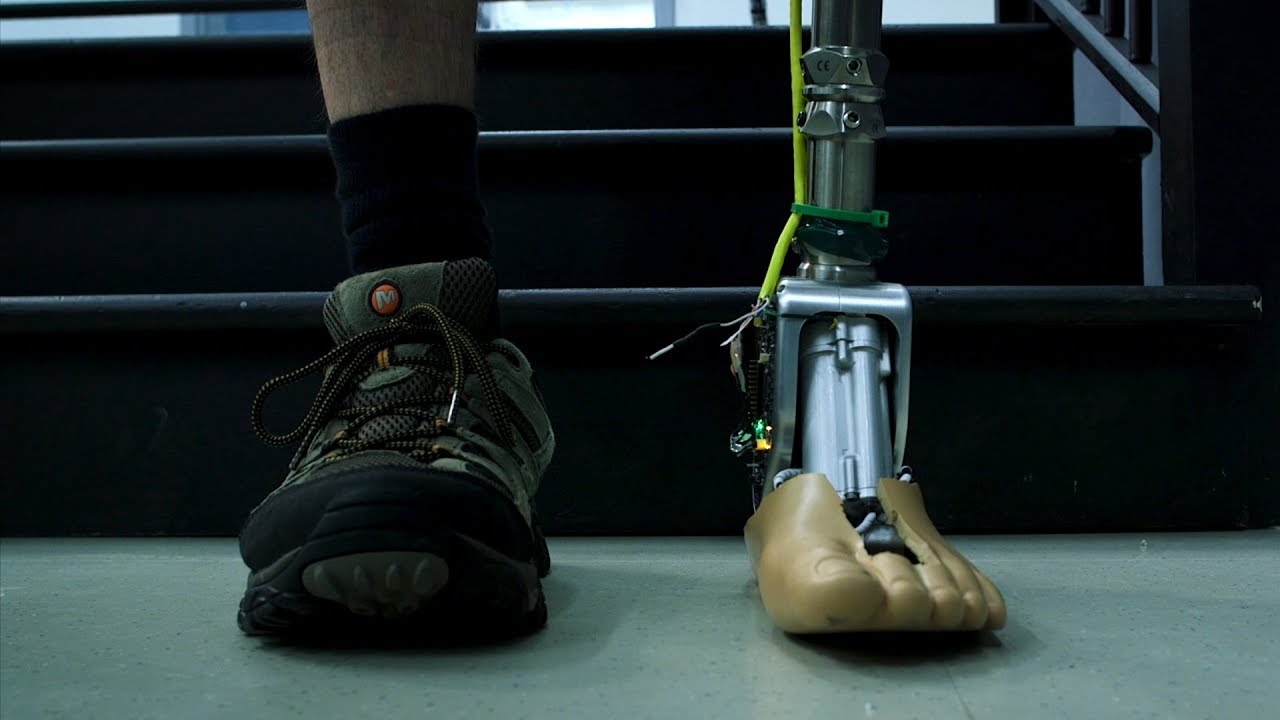
As we move into an era where technology intertwines seamlessly with healthcare, the evolution of prosthetic limbs stands out as a remarkable testament to human ingenuity. The recent advancements in adaptive prosthetic ankles showcase a leap towards a more natural and responsive movement, crucial for enhancing the quality of life for amputees. The latest innovation, developed by Michael Goldfarb at Vanderbilt University, takes significant strides in mimicking the fluid mechanics of a natural ankle, setting a new standard in support for those who rely on prosthetics.
The Mechanics Behind Adaptive Movement
The enhanced functionality of this prosthetic ankle lies in its ability to adapt dynamically to various terrains and user movements. Unlike traditional prosthetics that often rely on simple mechanisms like springs or pads, this design incorporates a sophisticated motor and actuator within the joint. The clever integration of motion-sensing technology allows the device to classify different walking conditions and adjust accordingly.
- Terrain Adaptation: Whether navigating slopes, stairs, or uneven surfaces, the ankle autonomously modifies its movements, ensuring a smoother transition and minimizing the risk of tumbles.
- Responsive Motion: By analyzing pressure from both above and below, the prosthetic predicts the user’s intention to step, lifting the toe at the right moment and allowing for a natural roll through each step.
- Real-life Testing: Mike Sasser, a veteran prosthesis user, praised its responsiveness, noting the stark contrast to previous models that lacked finesse and were often cumbersome.
The Path Towards Commercialization
While the prototype exhibits promising capabilities, the current iteration is lab-bound and relies on wired power, limiting its practicality for day-to-day activities. However, the ultimate goal is to bring this innovative technology to market over the next few years, with efforts in developing a more user-friendly power source, such as rechargeable batteries.
The Impact on Quality of Life
The implications of adaptive prosthetic ankles extend beyond movement. They encompass emotional and physiological aspects that contribute significantly to a user’s overall well-being. The potential for improved mobility, independence, and the capacity to engage in diverse activities can dramatically enhance life quality for amputees. As our society strides towards inclusivity and accessibility, advancements such as these address the ongoing challenges faced by individuals with mobility impairments.
Looking Ahead: The Promise of Personalization
As we look towards the future, the need for personalization in prosthetics becomes increasingly clear. No two amputees are the same, and solutions must cater to individual needs. Innovations like 3D printing for custom prosthetic hands serve as a complementary approach to the adaptable ankle technology discussed, paving the way for comprehensive solutions that cater to specific lifestyles and physical requirements.
Conclusion: A New Era in Prosthetics
The development of the smart prosthetic ankle signifies more than a mere technical achievement; it embodies hope and renewed possibilities for countless individuals. As research and development continue to advance, we stand on the threshold of a new era where the boundaries of mobility are no longer constrained. At fxis.ai, we believe that such advancements are crucial for the future of AI, as they enable more comprehensive and effective solutions. Our team is continually exploring new methodologies to push the envelope in artificial intelligence, ensuring that our clients benefit from the latest technological innovations.
For more insights, updates, or to collaborate on AI development projects, stay connected with fxis.ai.