
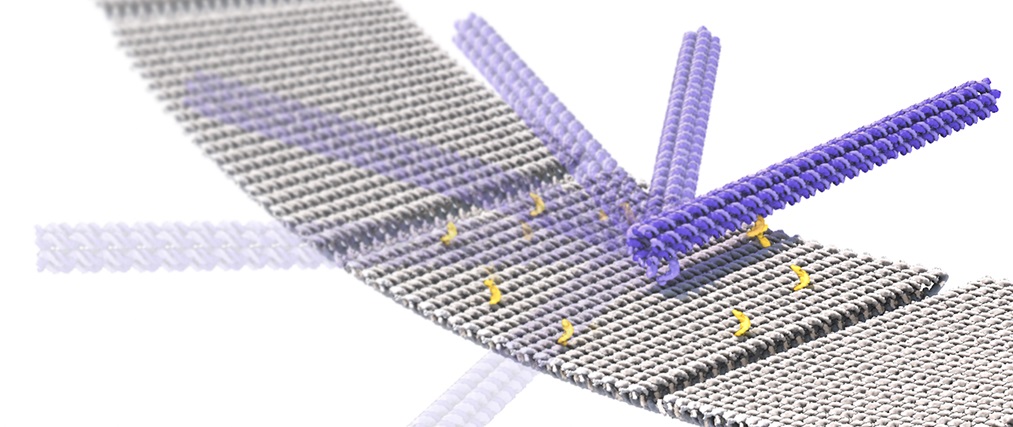
In the rapidly evolving field of nanotechnology, the latest developments are pushing the boundaries of what we thought was possible. Imagine tiny cranes at the molecular level, orchestrating complex tasks with the precision of a symphony conductor. Researchers at the Technical University of Munich have taken a bold leap by introducing these “nano-cranes,” miniature machines that could form the backbone of next-generation manufacturing processes.
Understanding Nano-Cranes: Molecules with a Mission
At their core, nano-cranes are made from strands of DNA about 400 nanometers long, standing proudly from a substrate like a delicate finger. Unlike traditional machines, these structures leverage the unique properties of DNA, particularly its negative charge, to move in response to electric fields. This novel approach marks a significant departure from the previous reliance on chemical signals, which are often slow and imprecise.
The Breakthrough: Harnessing Electric Fields
Friedrich Simmel and his team realized that by applying electric fields, they could induce movement in these nano-cranes with remarkable speed and accuracy. By attaching fluorescent pigments to the tips of the cranes, they were able to visually track the precise movements in real time, revealing a choreography of rotation, lateral movement, and even spinning. This newly discovered method can achieve speeds that are 100,000 times faster than traditional biochemical processes.
Why This Matters
- Speed: In an industry where time equals money, the ability to manipulate molecular machines in milliseconds opens doors for massive scalability.
- Precision: Enhanced control over these nano-structures means tighter integration of components, ideal for industries like pharmaceuticals and electronics.
- Energy Efficiency: Utilizing electric fields for movement could mean less energy consumption compared to existing methods, promoting more sustainable practices.
Imagining a Future with Nano-Cranes
Picture a molecular assembly line bustling with nano-cranes efficiently transporting and assembling drug compounds, tiny electronic components, or even other nanomachines. The implications are staggering—this technology could revolutionize how we approach manufacturing at the smallest scales, addressing challenges currently faced in various sectors including healthcare, technology, and materials science.
Next Steps: From Theory to Practice
While the initial experiments have been promising, there is still much work to be done. The researchers have yet to demonstrate the ability to utilize these cranes to push and manipulate other molecules actively. However, the potential applications in chemical reactions or the assembly of complex structures are tantalizing and merit further exploration.
Conclusion: The Dawn of a New Era
The advent of nano-cranes is not just a victory in the lab; it represents a paradigm shift in how we conceive of manufacturing at the molecular level. With the potential to create a fleet of miniature machines that can work in unison, we could see a future where production processes are faster, cheaper, and more efficient than ever before.
At fxis.ai, we believe that such advancements are crucial for the future of AI, as they enable more comprehensive and effective solutions. Our team is continually exploring new methodologies to push the envelope in artificial intelligence, ensuring that our clients benefit from the latest technological innovations. For more insights, updates, or to collaborate on AI development projects, stay connected with fxis.ai.