
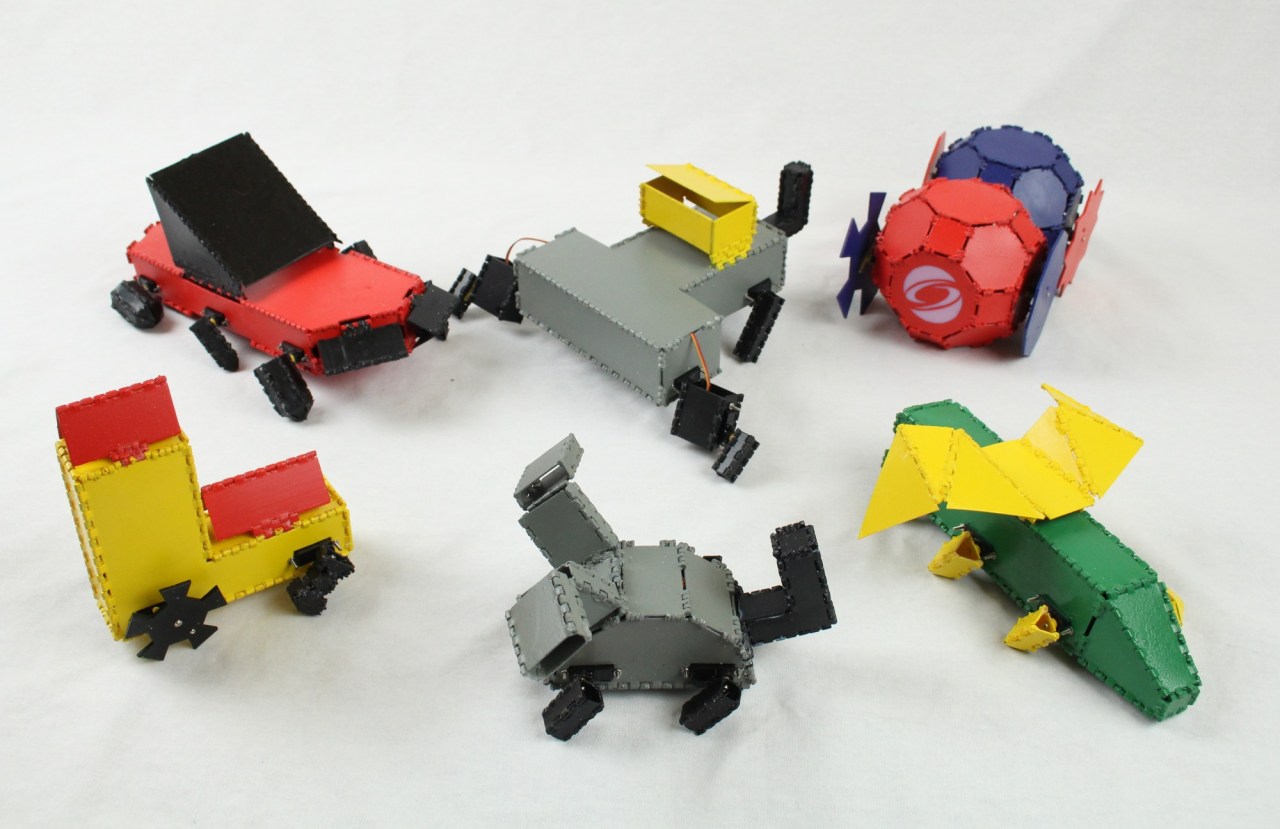
The world of robotics is rapidly evolving, bringing innovations that democratize technology and make it accessible for everyone. One such groundbreaking initiative is MIT’s Robogami, a project that allows users to create custom, 3D-printable robots from an innovative library of folding parts, resembling origami. This ingenious approach echoes the flat-pack furniture concept that has turned IKEA into a household name, making it easier for creators to assemble complex structures with ease and efficiency.
Turning Concepts into Reality
Robogami aims to break down the barriers of robot design. As Adriana Schulz, a PhD student at MIT and co-leader of the project, noted, “The goal is to make the process of designing robots accessible.” This accessibility is vital in a realm usually reserved for seasoned engineers and designers. The Robogami system encapsulates expert knowledge so newcomers can focus on the imaginative aspects of design without getting bogged down by the intricate engineering details.
A Playground for Creativity
The platform is remarkably user-friendly, featuring a graphical user interface (GUI) reminiscent of a gaming app more than a traditional CAD tool. Users can drag and drop pieces like puzzle components, customizing them according to their vision. This interface allows for the intuitive combination of various leg types, wheel placements, and additional features, providing endless possibilities to aspiring roboticists.
Simultaneous Design and Motion Calculation
One of the standout features of Robogami is its ability to simultaneously design geometry and motion, a significant improvement over conventional robotic design. While a user arranges parts, the software performs complex calculations behind the scenes. For example, if a designer decides to reposition the front legs, the software instantaneously assesses how those changes might impact movement dynamics like speed, timing, and stability.
- Parametric Structure Management: The system organizes motor actions and timing without needing the user to synchronize them manually.
- Integrated Fabrication Plans: The software constructs a complete plan to guide everything from 3D printing to motor coding, relieving creators of the technical burdens.
A Tool for Learning and Innovation
While Robogami may seem like an introductory robot kit, it undeniably serves as a versatile platform for users of all skill levels. Tests conducted revealed a delightful surprise: participants produced a remarkably diverse range of robot designs within an impressively short time frame. From conception to assembly, users spent approximately 15-30 minutes designing, a few hours printing, and an additional 30-90 minutes assembling their creations—making it an excellent fit for educational environments.
A Gateway to Hands-On Engineering Courses
Imagine high school or college students engaging in two weeks of focused engineering exploration, designing and building their robotic creations. This hands-on experience provides valuable lessons about mechanical design, motor functions, and the integration of parts. After the design phase, students could race their robots or program them to navigate through obstacles—practical applications that reinforce theoretical learning.
Expanding Future Possibilities
Currently, Robogami is in the research phase, highlighted in a paper published in the International Journal of Robotics Research. However, Schulz envisions applications that extend beyond locomotion. The overarching goal is to empower casual users, enabling them to craft complex designs and tackle various robotics tasks.
As Daniela Rus, director of MIT’s CSAIL and a collaborator on the project, commented, “These tools enable new approaches to teaching computational thinking and creating.” Robogami not only allows students to engage with coding and robotics but also encourages them to visualize and actualize their conceptual ideas.
Conclusion: The Growing Ecosystem of DIY Robotics
MIT’s Robogami is redefining the landscape of robotics by enabling users to become creators rather than just consumers. This approach fosters creativity, encourages engineering skills, and makes robotics accessible to a broader audience. As technology continues to evolve, tools like Robogami are essential for democratizing design and innovation, allowing everyone to participate in the robotics revolution.
For more insights, updates, or to collaborate on AI development projects, stay connected with fxis.ai.
At fxis.ai, we believe that such advancements are crucial for the future of AI, as they enable more comprehensive and effective solutions. Our team is continually exploring new methodologies to push the envelope in artificial intelligence, ensuring that our clients benefit from the latest technological innovations.