
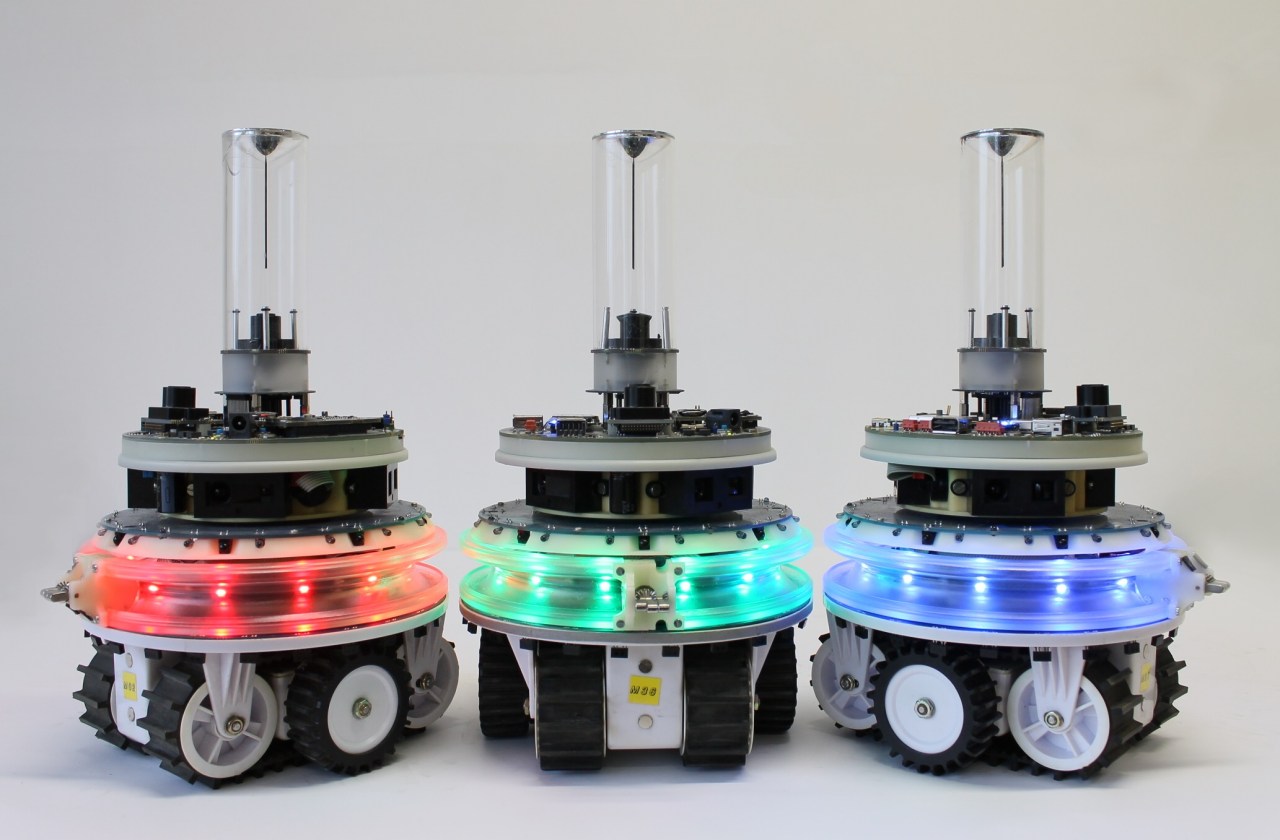
The realm of robotics is undergoing a revolutionary transformation, reminiscent of the vision laid out in classic sci-fi narratives where machines evolve beyond their origins. The idea of modular, self-healing robot swarms presents a promising paradigm shift that does not merely replicate human capabilities but enhances them in unfathomable ways. This post dives into the potential of these robotic systems, inspired by a visionary paper titled “Mergeable nervous systems for robots,” exploring how they can evolve from being mere tools to entities that can adapt, collaborate, and redefine efficiency.
Rethinking Robot Intelligence
Traditionally, robotics has operated under a model where a central authority (often a powerful computer) governs subordinate machines—think of a conductor orchestrating a symphony. However, this centralized approach is vulnerable; take out the ‘conductor’, and the entire orchestra falters. The new concept flips this dynamic on its head by allowing each robot in a swarm to function independently while also collaborating with each other based on need. This synchrony transforms them from simple drones into a harmonious ensemble of entities, each capable of adapting its role based on environmental cues and tasks at hand.
The Mechanics of Self-Healing Swarms
At the heart of this innovative robotics model is the ability of each robot to possess not just individual intelligence but also collective autonomy. Here’s how it works:
- Individuality Meets Collectivity: Each robot comes equipped with its own CPU, sensors, and operational components, allowing it to function independently.
- Dynamic Control: When robots join forces, they can designate a “brain” robot that coordinates tasks. If that brain robot is compromised, another can easily assume control, ensuring that the swarm remains functional.
- Modular Design: Robots can swap out components on-the-fly, making repairs simple and maintaining optimal performance. This modular approach allows for scalability in operations; whether it’s a small team or a hundred-robot formation, the possibilities are drastically enhanced.
- Task Adaptability: Robots can merge with utility modules to perform specific tasks, be it lifting heavy objects or executing complex transports, easily augmenting their capabilities as the situation demands.
Practical Applications of Swarm Robotics
The envisioned future is not just theoretical; numerous practical applications can emerge from modular, self-healing robots. Imagine a construction site where:
- Swarm robots autonomously manage supplies, removing debris and aiding in efficiency.
- When tasked with heavier services, robots seamlessly combine to execute difficult maneuvers, ensuring optimal use of their collaborative strength.
- They provide surveillance at night, enhancing site safety and workflow without human intervention.
Philosophical Implications on AI and Robotics
The implications of such advancements force us to reconsider our relationship with technology. What happens when robots can not only execute commands but autonomously adapt to a wide range of roles? It encourages a vision where robots are not mere extensions of human capabilities but partners capable of evolving their functionalities. However, as we delight in the capabilities of these swarmbots, we must also tread cautiously, given the accelerating push towards fully autonomous systems.
Conclusion: The Path Ahead
As Marco Dorigo and his international team illustrate, the future is set to revolutionize how we think about robotic systems. The shift towards modular, intelligent swarms presents a plethora of opportunities, fostering environments where robots can mend, merge, and maneuver with a level of adaptability that mirrors the complexity of nature itself. The key takeaway? Robotics is poised to move beyond task-oriented design, offering a range of adaptable units ready to meet evolving challenges.
At fxis.ai, we believe that such advancements are crucial for the future of AI, as they enable more comprehensive and effective solutions. Our team is continually exploring new methodologies to push the envelope in artificial intelligence, ensuring that our clients benefit from the latest technological innovations.
For more insights, updates, or to collaborate on AI development projects, stay connected with fxis.ai.