
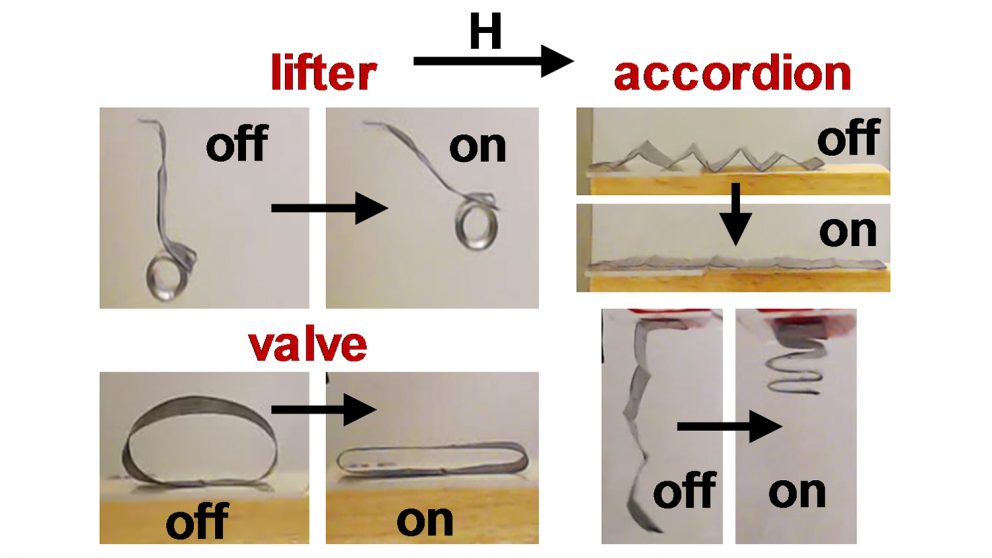
In the vibrant and fast-evolving world of robotics, a remarkable shift is bubbling to the surface. The exploration of soft robotics offers ingenious alternatives to traditional rigid machines, providing solutions that are not only innovative but also inherently safe for human interaction. Notably, scientists at North Carolina State University (NCSU) have opened new avenues by utilizing magnetic fields to steer these biologically inspired wonders, bringing us one step closer to the futuristic applications we have long imagined.
Redefining Movement: Magnetic Fields in Action
This groundbreaking research allows for the manipulation of soft robots without the constraints of tethering or conventional power sources. Instead of inflating and deflating bladders like traditional models, these new soft robots harness magnetic forces. The magic begins with magnet chains embedded within a flexible polymer. When a magnetic field is applied, it induces a torque that aligns these chains with the field, enabling the robots to bend and respond in a pre-determined manner.
Complex Tasks from Simple Designs
What’s particularly fascinating is how simple in design yet complex in functionality these robots are. With integrated magnetic particles, the team can command these soft wonders to perform intricate tasks. In videos released by the research team, we witness mesmerizing movements reminiscent of organisms found in nature, such as bacteria obediently responding to an unseen force. These robots, with their accordion-like motions and coiling structures, exhibit the potential for responsiveness that could revolutionize various applications.
Biomimicry: Nature’s Blueprint for Innovation
Biomimicry serves as a cornerstone in the development of soft robotics. As Associate Professor Joe Tracy rightly points out, much of their inspiration arises from the natural world. By observing how plants and animals operate, scientists are striving to replicate these mechanisms within engineered systems. This alignment with nature does not only make for more innovative designs but also results in practical benefits. For instance, soft robots are economically advantageous, pliable, and present a lower risk during human interaction, fostering a safer environment.
Strength in Simplicity
- Each NCSU robot is capable of lifting up to 50 times its own weight.
- The robots can expand and contract seamlessly, functioning effectively as makeshift pumps.
- While currently designed for singular tasks, their inherent flexibility provides potential for multi-functional applications in the future.
Vision for the Future
While these soft robots are still in their infancy, the basis formed by the NCSU team heralds exciting prospects for the medical field and beyond. Imagine a future where embedded pumps can administer medication without invasive procedures, or soft robotic arms that adapt to various tasks on command. The potential extends beyond medicine, reaching areas such as search and rescue operations or precise manipulation in delicate environments.
Conclusion: Embracing the Potential of Soft Robotics
The utilization of magnetic fields in soft robotics not only illustrates the innovators’ ingenuity at NCSU but also serves as an invitation for more advanced exploration and development in the field. The intersection of technology and biology opens up a world of opportunities, allowing us to contemplate our collaboration with machines that reflect the elegance of nature. At fxis.ai, we believe that such advancements are crucial for the future of AI, as they enable more comprehensive and effective solutions. Our team is continually exploring new methodologies to push the envelope in artificial intelligence, ensuring that our clients benefit from the latest technological innovations.
For more insights, updates, or to collaborate on AI development projects, stay connected with fxis.ai.