
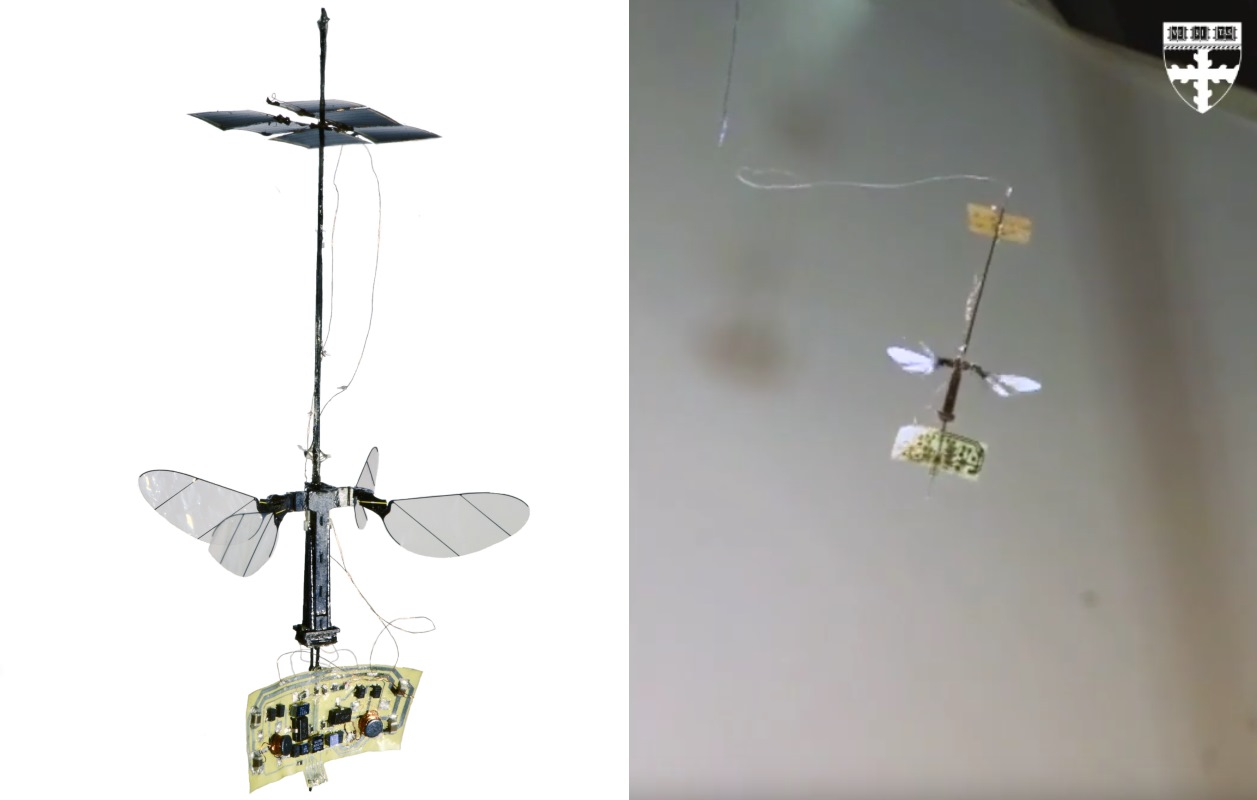
Innovations in robotics continue to captivate our imagination, especially when they mimic the wonders of nature. One of the most recent marvels hails from Harvard’s Microrobotics Laboratory, where researchers have taken their Robobee technology to new heights—quite literally. Enter the Robobee X-Wing, a flying robot that harnesses the power of light to soar through the skies, defying the perception of what small-scale engineering can achieve.
The Evolution of Flight
The journey of the Robobee has been nothing short of extraordinary. Starting off as a machine that could simply fly, it successfully learned to swim in 2015 and even jump out of water in 2017. The introduction of the Robobee X-Wing marks another monumental milestone—it can now achieve flight powered solely by light, ushering in possibilities previously reserved for the realm of science fiction.
Challenges of Miniature Flight
One might assume that flying diminutive creatures like the Robobee would be a straightforward endeavor. However, the reality is quite the opposite. With smaller sizes, the engineering complexities multiply exponentially. Insects have evolved to overcome such hurdles, presenting a baffling puzzle for aerospace scientists and engineers. Prior attempts at creating tiny flying robots relied on tethered power sources, showcasing how difficult self-sustained flight becomes as the size diminishes.
The Robobee X-Wing’s Achievements
What sets the Robobee X-Wing apart? It’s achieved a groundbreaking feat: sustained untethered flight entirely through onboard solar power. This innovation allows it to remain airborne indefinitely under conditions of ample natural light, defying previous limitations of battery-operated systems. Specifically, the X-Wing utilizes a four-wing design that maximizes efficiency, consuming a mere 110 to 120 milliwatts of power—comparable to the energy some small bees require for flight.
Technical Marvels: Weight and Design
One of the Robobee X-Wing’s striking features is its remarkably light composition, weighing in at just a quarter of a gram. A complete overview of the engineering behind its lightweight structure is essential to grasp the significance of this robot’s capabilities. Every component has been meticulously crafted to ensure energy efficiency while retaining the ability to generate thrust akin to that of nature’s finest fliers.
- Solar Cells: These are critical for converting light into usable energy, empowering the Robobee to sustain its flight.
- Mechanical Systems: Designed with minimal weight, their advanced engineering allows the wings to flutter effectively without overly taxing the energy supply.
Looking Ahead: The Future of Robobees
As researchers continue to refine this technology, several challenges remain, particularly regarding flight control systems. The potential for including advanced control mechanisms could eventually allow the Robobee X-Wing to hover in place, much like a dragonfly, giving it enhanced maneuverability and productivity in real-world applications. The integration of such systems isn’t trivial and could fundamentally alter its flight profile.
Conclusion: The Possibilities Are Endless
The Robobee X-Wing is a remarkable testament to human ingenuity, merging the elements of biology and technology in a way that offers numerous possibilities for the future. The notion of a tiny robot flying with the power of light invites questions ranging from environmental monitoring to potential applications in search and rescue operations. As we continue to explore what’s achievable through robotics, we’re only beginning to tap into the potential of these flying wonders. At **[fxis.ai](https://fxis.ai/edu)**, we believe that such advancements are crucial for the future of AI, as they enable more comprehensive and effective solutions. Our team is continually exploring new methodologies to push the envelope in artificial intelligence, ensuring that our clients benefit from the latest technological innovations. For more insights, updates, or to collaborate on AI development projects, stay connected with **[fxis.ai](https://fxis.ai/edu)**.