
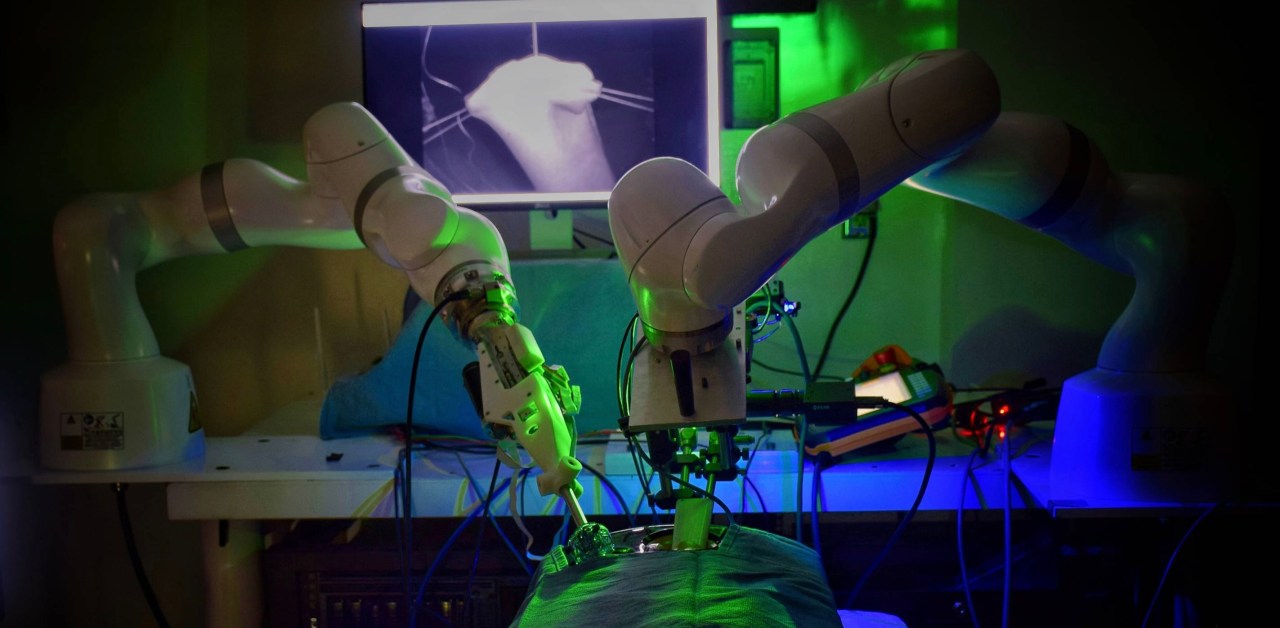
In a groundbreaking advancement that may redefine the landscape of surgical practices, researchers at Johns Hopkins University have unveiled the Smart Tissue Autonomous Robot (STAR). This innovation performed laparoscopic surgery on pig tissue entirely autonomously, marking a significant leap towards the future of robot-assisted surgeries. Imagine a world where complex surgical procedures are executed with unmatched precision, reliability, and efficiency—this vision is becoming more tangible thanks to STAR.
Breaking New Ground in Surgical Procedures
The recent report highlights STAR’s successful completion of a laparoscopic procedure that involved connecting two ends of the intestine of a pig without any human guidance. Not only did STAR navigate this intricate task, but it did so with results that were noted to be “significantly better” than those achieved by human surgeons. This monumental development opens up a conversation about the potential of autonomous robotics in healthcare.
The journey to this point has not been without challenges. The dynamic and complex nature of soft tissues—like that of humans and pigs—poses a significant hurdle for robotic systems. Unlike rigid materials which provide predictable responses, soft tissues require a nuanced approach. However, the advancements achieved by STAR indicate that these obstacles can be overcome, paving the way for a new era in surgery.
Innovative Technology and Methodology
Built on a previous robotic framework that required human assistance and larger incisions, STAR has leveraged three-dimensional machine vision to enhance its operational capabilities. This sophisticated algorithm allows the robot to plan, adapt, and execute a surgical strategy autonomously. As Hamed Saeidi, lead author of the study, notes, “What makes the STAR special is that it is the first robotic system to plan, adapt, and execute a surgical plan in soft tissue with minimal human intervention.”
Potential Benefits and Future Implications
- Higher Accuracy: With the integration of machine learning and adaptive algorithms, STAR could set a new standard for surgical accuracy, minimizing human error.
- Increased Availability: Particularly for specialized procedures, robotic systems have the potential to democratize access to healthcare by offering consistency and reliability traditionally limited to certain geographic or institutional settings.
- Reduced Recovery Time: With smaller incisions usually associated with laparoscopic surgery, patients undergoing robotic-assisted procedures may experience shorter recovery periods.
Challenges Still to Overcome
Despite these promising developments, there are still significant hurdles to full automation in surgery. The ability to handle the unpredictable nature of biological tissues remains a core challenge. To truly harness the potential of autonomous surgical robots, ongoing research and development must focus on enhancing their adaptability and fine-tuning their responses to real-time changes during procedures.
Conclusion: A Vision for the Future
The implications of the STAR system extend far beyond just advancing robotic surgery; they represent the amalgamation of technology and patient care in ways we are only beginning to understand. As robotic systems like STAR demonstrate improved functionality and outcomes, the medical community will need to embrace these innovations, adapting to the continually evolving landscape of surgical practices.
At fxis.ai, we believe that such advancements are crucial for the future of AI, as they enable more comprehensive and effective solutions. Our team is continually exploring new methodologies to push the envelope in artificial intelligence, ensuring that our clients benefit from the latest technological innovations.
For more insights, updates, or to collaborate on AI development projects, stay connected with fxis.ai.