
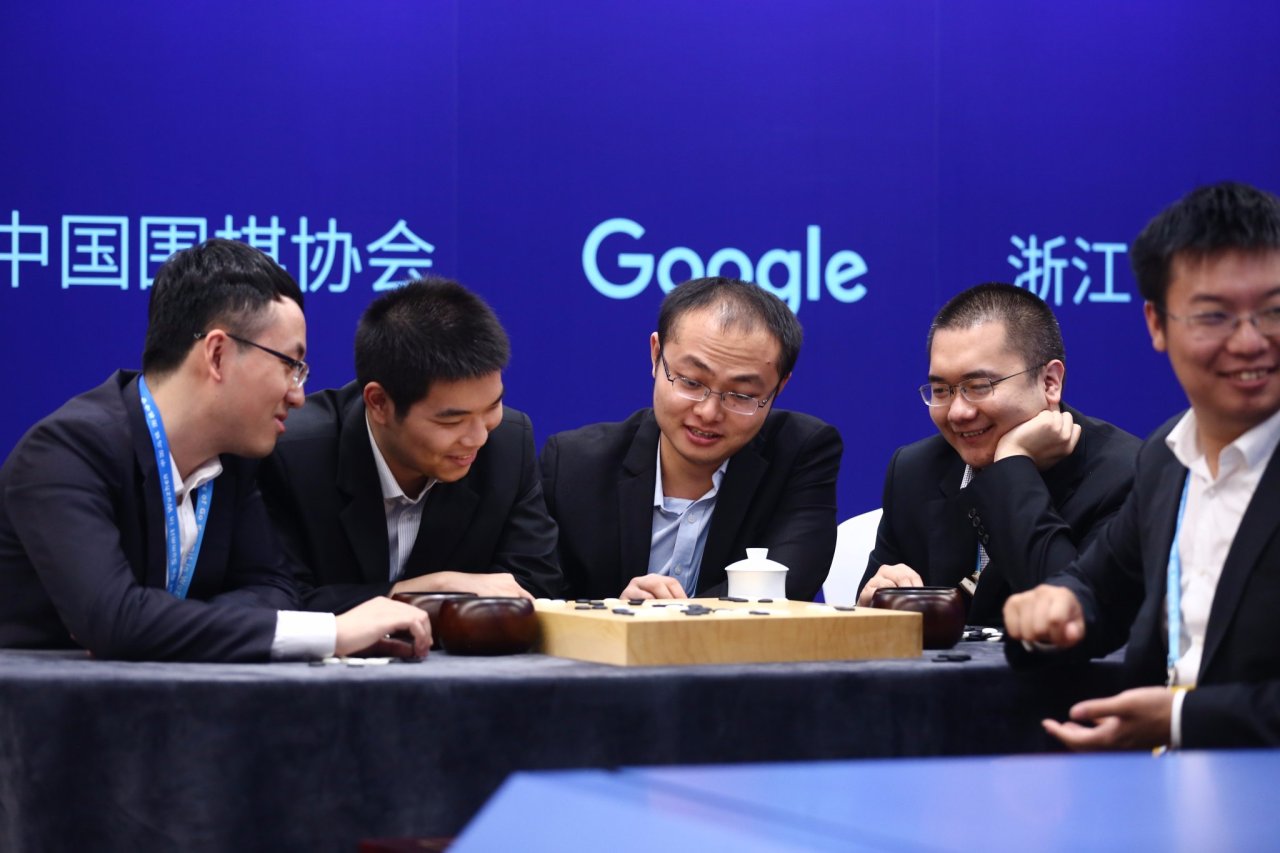
In June 2017, the world witnessed a remarkable event that blurred the lines between human intuition and artificial intelligence prowess. Google’s AlphaGo, a groundbreaking AI designed to play Go, stood against a team composed of five renowned Go champions. The outcome was not just a victory for the machine but a pivotal moment in the evolution of AI in strategic games and beyond. Let’s take a closer look at this iconic battle and the implications it holds for our future with AI.
AlphaGo vs. The League of Champions
The match featured an elite team that included some of the most esteemed players in the world: Chen Yaoye, Zho Ruiyang, Mi Yuting, Shi Yue, and Tang Weixing. Despite being a collaboration of talents, their combined experience was no match for the single entity that was AlphaGo. The human team faced uncertain defeat, and in an unexpected turn, they chose to resign, recognizing the formidable strategy AlphaGo had unfolded before them.
Innovation in Play
What made this event fascinating was not only the victory itself but also how the human players engaged with the AI. While they battled against AlphaGo, they observed its strategies, using the match as an opportunity to learn and adapt on the fly. During a second demo, the roles shifted slightly, showcasing a human and AI pair against their counterparts. This competition illustrated not just the capabilities of AlphaGo, but the potential for synergistic relationships between human players and AI.
The Implications of AI in Strategy Games
- A New Era of Learning: This match symbolized a shift in how players approach learning within complex games. By analyzing AlphaGo’s moves, human players were able to reconsider their strategies and improve their gameplay. This kind of collaboration suggests a future where AI becomes a mentor rather than just a competitor.
- Rethinking Human Contribution: The idea that a team of talented individuals could be outperformed by a single AI prompts an essential question: What is the role of human intuition in an age dominated by machine intelligence? Perhaps rather than diminishing our capabilities, AI can enhance and refine our intuition.
- Beyond Go: The implications of this monumental match extend beyond the board. The strategies employed by AlphaGo can inform larger applications in various fields such as healthcare, logistics, and even environmental science, where complex decision-making is key.
Concluding Thoughts: Bridging Intelligence
The demonstration of AlphaGo’s prowess highlighted a pivotal moment in the relationship between humans and AI. While the defeat of five champions might evoke fears of obsolescence, it also opens avenues for collaboration and skill enhancement unparalleled in prior decades. As we continue to explore this frontier, one thing remains clear: rather than a threat, AI like AlphaGo can serve as both a challenger and a teacher to humanity.
At fxis.ai, we believe that such advancements are crucial for the future of AI, as they enable more comprehensive and effective solutions. Our team is continually exploring new methodologies to push the envelope in artificial intelligence, ensuring that our clients benefit from the latest technological innovations.
For more insights, updates, or to collaborate on AI development projects, stay connected with fxis.ai.