
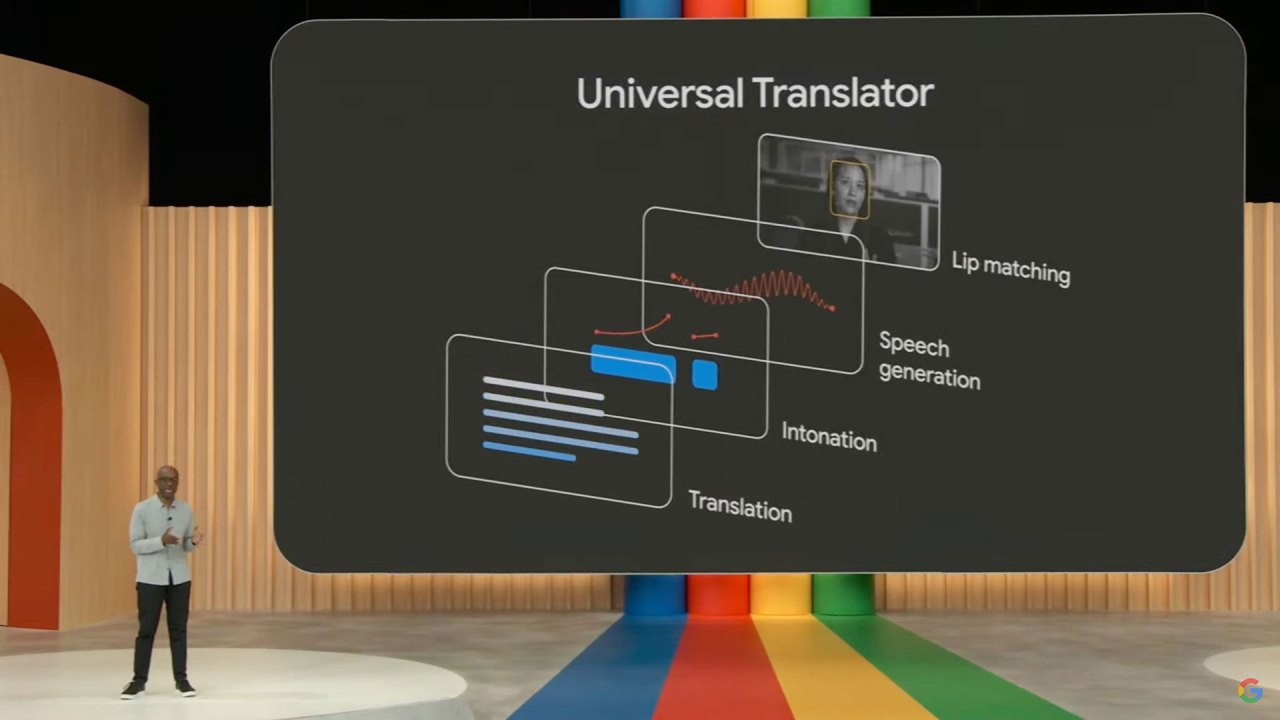
In an era where connectivity knows no bounds, the need for an effective communication bridge is more critical than ever. Enter Google’s revolutionary “Universal Translator,” unveiled during the 2023 Google IO, an experiment that takes a bold leap into the realm of language translation and lip synchronization. While the promise of instant, language-agnostic communication tantalizes tech enthusiasts and businesses alike, the underlying implications of this technology provoke a necessary dialogue on its potential misuse.
How Universal Translator Works
Google’s innovative service operates through a sophisticated process. It begins with a video—a lecture from an online course, for instance. The system transcribes the original speech, translates it into the target language, regenerates the audio in that language (while maintaining the speaker’s distinctive style and tone), and ultimately tweaks the video to synchronize the speaker’s lip movements with this newly generated audio. The result is a seamless translation experience, allowing audiences from various linguistic backgrounds to absorb content as if it were originally produced in their language.
The Balancing Act: Benefits vs. Risks
While the advancements in AI have opened doors to fantastic educational tools, they also carry a cloak of responsibility. James Manyika, who leads Google’s Technology and Society department, highlighted this “tension between boldness and safety.” The potential for enhancing global learning by making online courses available in up to 20 languages with high-quality audio and visual fidelity cannot be overlooked. Aimed at improving engagement and comprehension, early testing has shown promising increases in course completion rates.
- Educational Access: Imagine a world where a student in Brazil can attend a university lecture from an esteemed professor in Europe—all without the need for subtitles.
- Content Localization: Creators can easily adapt their videos for different markets, significantly broadening their audience reach.
Guardrails Against Misuse
However, with great power comes great potential for misuse. The same technology that can amplify learning can also be repurposed by malicious actors to create disinformation or deepfakes. The fundamental concern is: How do we safeguard against these risks while reaping the benefits? Google aims to mitigate this challenge through several protective measures.
Manyika stated that the service will be available only to authorized partners, implying curated access to prevent indiscriminate usage. Additionally, Google plans to integrate innovations in watermarking technology within their generative models, a strategy that holds promise but is not foolproof. Past experiences have shown that ingenious individuals can often sidestep such protective barriers through simple edits, leaving a lingering question on the sustainability of these solutions.
The Path Forward: A Collaborative Approach
As Google navigates this new terrain, it recognizes the importance of transparency and active dialogue. Manyika’s candid approach at the Google IO was refreshing, acknowledging both the capabilities and the challenges of this emerging technology. It’s a reminder of the necessity for collaboration among technologists, policymakers, and society as a whole. Having these conversations early can pave the way for the establishment of ethical standards and usage guidelines.
The advent of the Universal Translator marks a significant milestone in AI development, but the onus is on the community to foster an environment where technology can flourish without compromising integrity. At **[fxis.ai](https://fxis.ai/edu)**, we believe that such advancements are crucial for the future of AI, as they enable more comprehensive and effective solutions. Our team is continually exploring new methodologies to push the envelope in artificial intelligence, ensuring that our clients benefit from the latest technological innovations.
Conclusion: Embracing Opportunities with Caution
The Universal Translator stands at the intersection of innovation and ethical responsibility. Its potential to transform learning and communication is undeniable, but it also serves as a reminder of the responsibilities that accompany such transformative technology. The collaborative efforts to prioritize safety and mitigate risks will determine the trajectory of this exciting development. The future may be filled with rich, multilayered interactions, but only if we tread thoughtfully.
For more insights, updates, or to collaborate on AI development projects, stay connected with **[fxis.ai](https://fxis.ai/edu)**.