
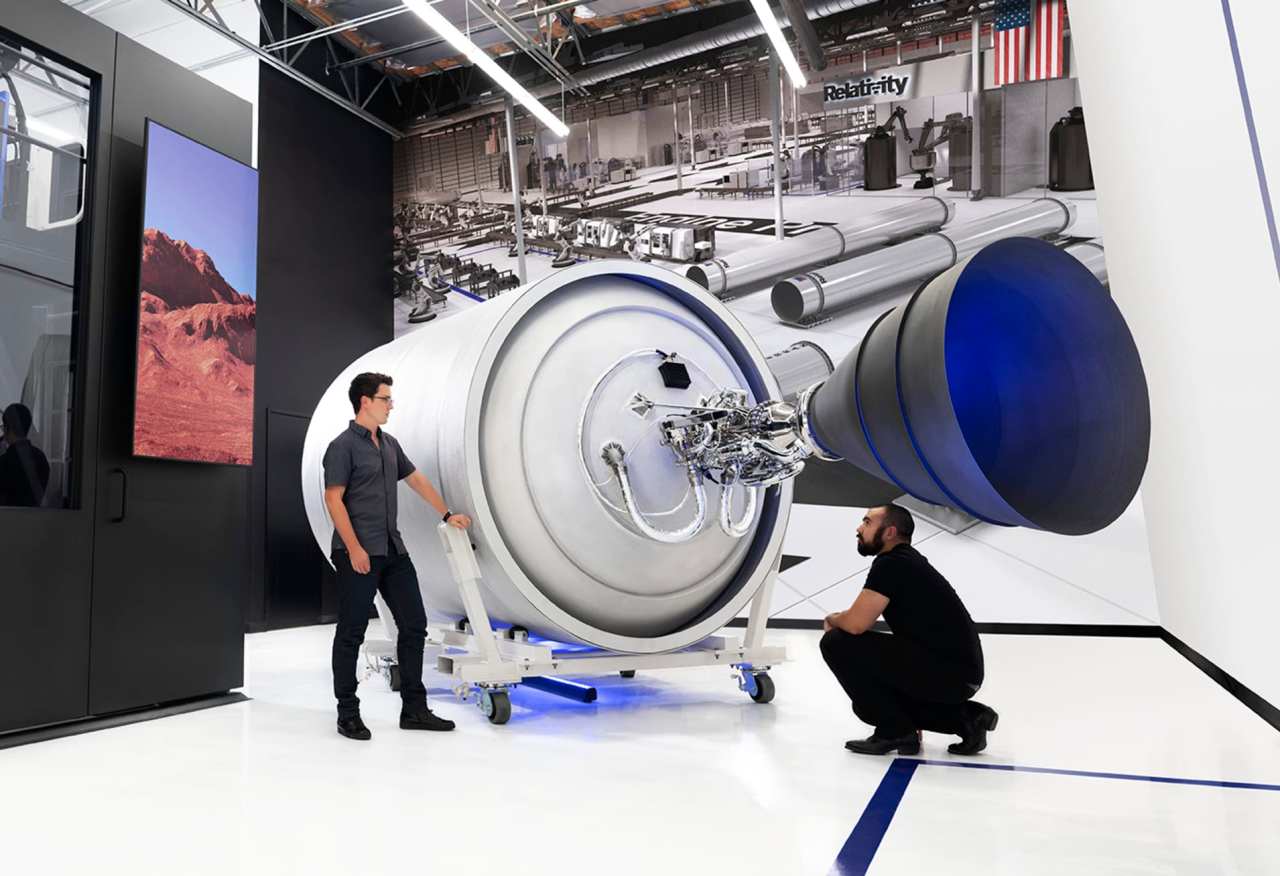
In the ever-evolving landscape of aerospace innovation, few companies have ignited the imagination quite like Relativity Space. Recently achieving a significant financial milestone, this 3D-printed rocket startup has raised a staggering $500 million in Series D funding. As the company gears up to reshape not just the skies above us, but potentially even the surface of Mars, it continues to capture the attention of investors and enthusiasts alike.
Funding a New Frontier
Led by Tiger Global Management and supported by an impressive lineup of investors such as Fidelity Management & Research Company and General Catalyst, this funding marks a pivotal step in accelerating Relativity Space’s vision. With nearly $700 million raised to date, the company is now on the brink of launching its first fully 3D-printed orbital rocket, a testament to the growing viability of additive manufacturing in space exploration.
- Robust backing from notable investors
- Significant capital for expansion and innovation
- Aiming for pioneering space missions
A Robust Manufacturing Facility
In 2020, Relativity Space celebrated the completion of a 120,000-square-foot manufacturing facility in Long Beach, California. This state-of-the-art facility houses the largest metal 3D printers in existence, which play a crucial role in the company’s operations. What sets Relativity apart is its unique production process, heavily reliant on autonomous robotic systems and proprietary software, allowing for minimal human intervention during printing. This resilience proved beneficial throughout the challenges posed by the COVID-19 pandemic, enabling Relativity to maintain momentum in its projects.
Strategic Partnerships and Contracts
Relativity Space’s journey has also gained traction with partnerships that further solidify its market presence. Securing a contract with Lockheed Martin as part of NASA’s suite of Tipping Point contracts has added an exciting layer to their portfolio. The project involves launching a new experimental cryogenic fluid management system, showcasing Relativity’s capability to work alongside major players in the aerospace sector.
A Vision for Mars and Beyond
Looking ahead, CEO Tim Ellis has expressed ambitions that reach far into the cosmos. With an eye on Mars, Relativity Space envisions its 3D printing technology playing a crucial role in building sustainable operations on the red planet. Ellis points out that while the current focus is on rocketry, there are untold applications for their technology across other industries as 3D printing matures.
The Future of 3D Printing
The dawn of large-scale 3D printing heralds a new era in manufacturing, offering unprecedented opportunities for efficiency and innovation. Whether on Earth or Mars, Relativity Space is poised to capitalize on these trends, solidifying its status as a front-runner in the quest for next-generation space exploration.
Conclusion: Redefining Aerospace Manufacturing
As Relativity Space continues to break new ground with its pioneering approach, it stands at the forefront of a revolution in aerospace manufacturing. With its considerable funding, innovative technology, and ventures into partnership, the company is well-equipped to usher us into an exciting new chapter of space exploration. Indeed, their success may very well redefine how we look at both the skies above and the surfaces of celestial bodies.
At fxis.ai, we believe that such advancements are crucial for the future of AI, as they enable more comprehensive and effective solutions. Our team is continually exploring new methodologies to push the envelope in artificial intelligence, ensuring that our clients benefit from the latest technological innovations. For more insights, updates, or to collaborate on AI development projects, stay connected with fxis.ai.