
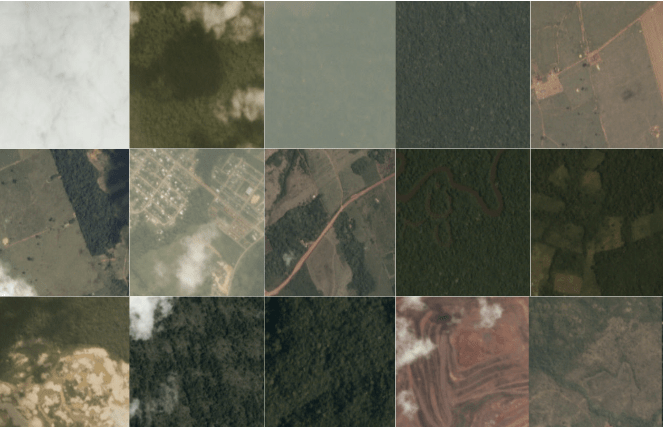
As the urgent cries for environmental protection grow louder, technological innovation steps up to answer the call. One of the most exciting developments in this realm comes from Planet, a leading satellite imaging company recognized for operating the largest commercial Earth imaging constellation in existence. With an ambitious aim to harness the power of machine learning to tackle pressing ecological issues, Planet is teaming up with data scientists on the Kaggle platform for a transformative competition focused on forestry research.
The Competition: An Overview
Planet’s latest initiative opens a treasure trove of data for participants, offering thousands of high-resolution image blocks each covering around one square kilometer. This competition boasts a hefty prize total of $60,000 for those who can devise innovative methods for analyzing these rich images, making it both a challenge and an opportunity for data enthusiasts and researchers focused on environmental conservation.
Addressing Deforestation: A Striking Challenge
Recent statistics underline a sobering reality: every minute, we lose an area of forest equivalent to approximately 48 football fields. This staggering rate of deforestation highlights the critical need for actionable insights and swift interventions. According to machine learning engineer Kat Scott from Planet, the objective of the competition is clear: “We’re putting together this competition as a way to get people excited about the kinds of data that Planet provides.” The hope is to leverage advancements from machine learning—ever effective in domains like facial recognition—and direct them toward monitoring and understanding forest ecosystems.
Unleashing the Power of Satellite Imagery
What sets this competition apart is the unique dataset available to participants. As Scott emphasizes, “Our satellites have these sort of superpowers.” Planet’s imaging capabilities far surpass traditional imaging methods by providing multiple spectral bands at high resolution and deep bit depth. Competitors will have the chance to delve into real-time monitoring of significant environmental changes, such as deforestation, agricultural development, and illegal mining practices. This multifaceted approach to sourcing and analyzing data allows participants to tackle diverse ecological challenges from various vantage points.
The Search for Innovative Machine Learning Solutions
With the daunting task of sorting through 37 million acres of imagery to identify subtle changes over time, the competition serves as a collective brainstorming session for creative problem-solving. Each participant will be tasked with crafting their machine learning models to sift through this vast expanse of data, searching for signs of environmental degradation and other critical phenomena. As Scott notes, it’s akin to finding “a needle in a haystack,” highlighting the necessity of developing sophisticated algorithms to tackle such intricate problems effectively.
Sharing Knowledge for Future Progress
While the competition encourages individual innovation, Planet also aims to foster collaborative growth within the scientific community. Planet retains ownership rights to any intellectual property generated during the challenge but will generously release the resulting datasets under a Creative Commons share-alike license. This approach ensures that findings can be disseminated widely, inspiring ongoing improvements in machine learning applications within the field of environmental monitoring.
Incentives for Innovation
The competition is structured to motivate participation through substantial monetary rewards: the first-place winner will receive $30,000, while the second and third places will earn $20,000 and $10,000, respectively. For aspiring data scientists, this represents not only an opportunity to make an impact in the field of environmental science but also a chance to garner recognition for their creativity and expertise.
Conclusion: Pioneering the Future of Environmental Monitoring
Planet’s collaboration with global data scientists signifies a crucial step toward harnessing technology to combat one of humanity’s most urgent challenges: environmental degradation. By unlocking the potential of high-level machine learning techniques, we can monitor and address the devastating effects of deforestation and other ecological crises. This competition encourages creativity and innovation while reinforcing the significance of collective action in safeguarding our planet’s resources.
At fxis.ai, we believe that such advancements are crucial for the future of AI, as they enable more comprehensive and effective solutions. Our team is continually exploring new methodologies to push the envelope in artificial intelligence, ensuring that our clients benefit from the latest technological innovations. For more insights, updates, or to collaborate on AI development projects, stay connected with fxis.ai.