
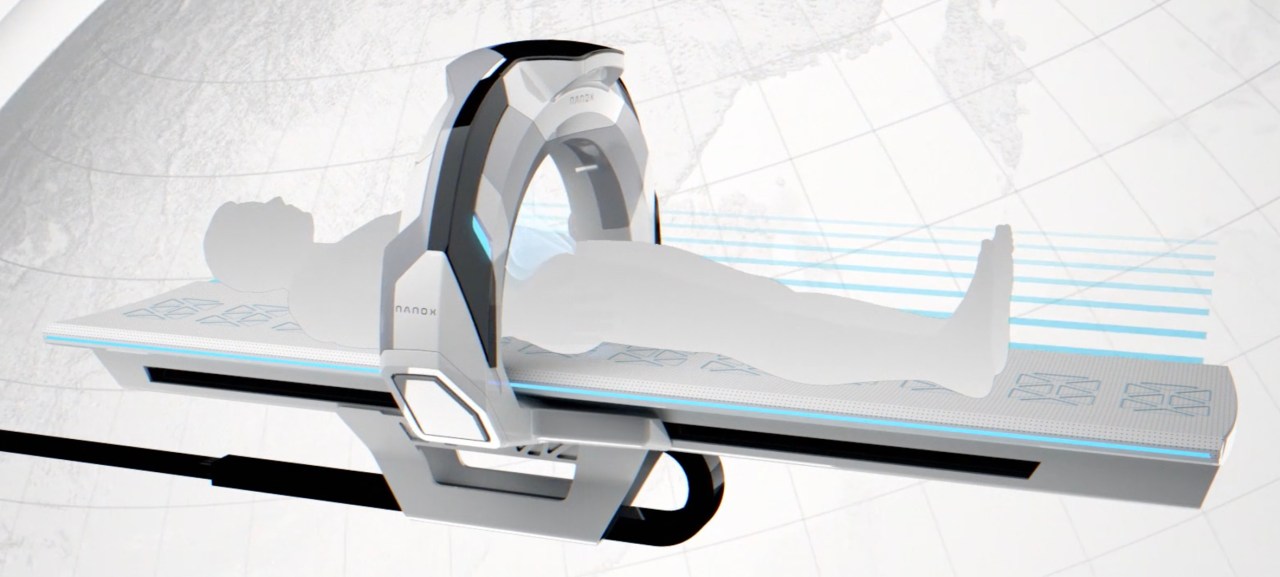
In an era where health technologies are becoming pivotal to overcoming global health crises, one startup is making waves with a groundbreaking innovation that could reshape medical imaging. Enter Nanox, the Israeli startup committed to bridging the gap in diagnostic imaging access. Just recently, they expanded their Series B funding to a remarkable $51 million, signaling a significant step forward in their mission.
The Game-Changing Technology Behind Nanox
Nanox is setting itself apart with its revolutionary scanning system—an innovative alternative to conventional X-ray and imaging machines. While traditional CT scanners can weigh up to 2,000 kg and cost between $1-3 million, Nanox’s device, the Nanox.Arc, weighs a mere 70 kg and comes with an impressively low production cost of around $10,000. This drastic reduction in size and expense means that healthcare providers can now incorporate imaging technologies in more diverse scenarios, especially in underserved regions.
Bridging the Gap: Accessibility and Safety
The core of Nanox’s mission revolves around enhancing accessibility to medical imaging services. Ran Poliakine, CEO and founder of Nanox, passionately highlights a critical issue—over two-thirds of the global population lack access to imaging services, subsequently delaying early cancer detection and other vital health assessments. The majority of today’s imaging systems require substantial time and resources, often leading to long waiting periods for scans.
The introduction of Nanox’s cloud-based imaging services, branded as Nanox.Cloud, coupled with their rapid scanning capabilities—resulting in images processed within seconds—promises to make diagnostic imaging safer and faster, significantly reducing radiation exposure for patients.
Strategic Partnerships and Future Prospects
Nanox’s growth trajectory is further buoyed by strategic partnerships. Their deal with SK Telecom not only secures an impressive cash injection but also plans to utilize the telecom giant’s 5G technology to enable real-time imaging in mobile settings, such as ambulances. This blend of telecommunications and healthcare presents a revolutionary potential for emergency responses and remote diagnostics, paving the way for immediate healthcare interventions.
In tandem, a recent partnership with Gateway Group aims to distribute 1,000 of their scanners across markets in Australia, New Zealand, and Norway, illustrating a dedicated effort to broaden their global footprint. With aspirations to deploy up to 15,000 scanners in the next few years, the company’s ambition is clear: to make high-quality imaging a standard part of healthcare across the world.
AI Collaborations: A Key to Data Utilization
While Nanox focuses on hardware distribution and the imaging process, they have acknowledged the significance of leveraging data generated by their scans. They are currently collaborating with three AI companies, tapping into their expertise to enhance medical insights derived from the imaging data. This collaborative model illustrates a shift in the healthcare landscape, where partnerships are crucial for innovation and service improvement.
Conclusion: A New Era in Healthcare Imaging
As we look to the future, the impact of Nanox on the healthcare industry cannot be overstated. By democratizing access to critical medical imaging, they are not only enhancing treatment possibilities but also enabling early detection of diseases that could save countless lives. The convergence of advanced imaging technology and 5G capabilities marks the dawn of a new era in healthcare, and Nanox is at the epicenter of this transformation.
At fxis.ai, we believe that such advancements are crucial for the future of AI, as they enable more comprehensive and effective solutions. Our team is continually exploring new methodologies to push the envelope in artificial intelligence, ensuring that our clients benefit from the latest technological innovations.
For more insights, updates, or to collaborate on AI development projects, stay connected with fxis.ai.