
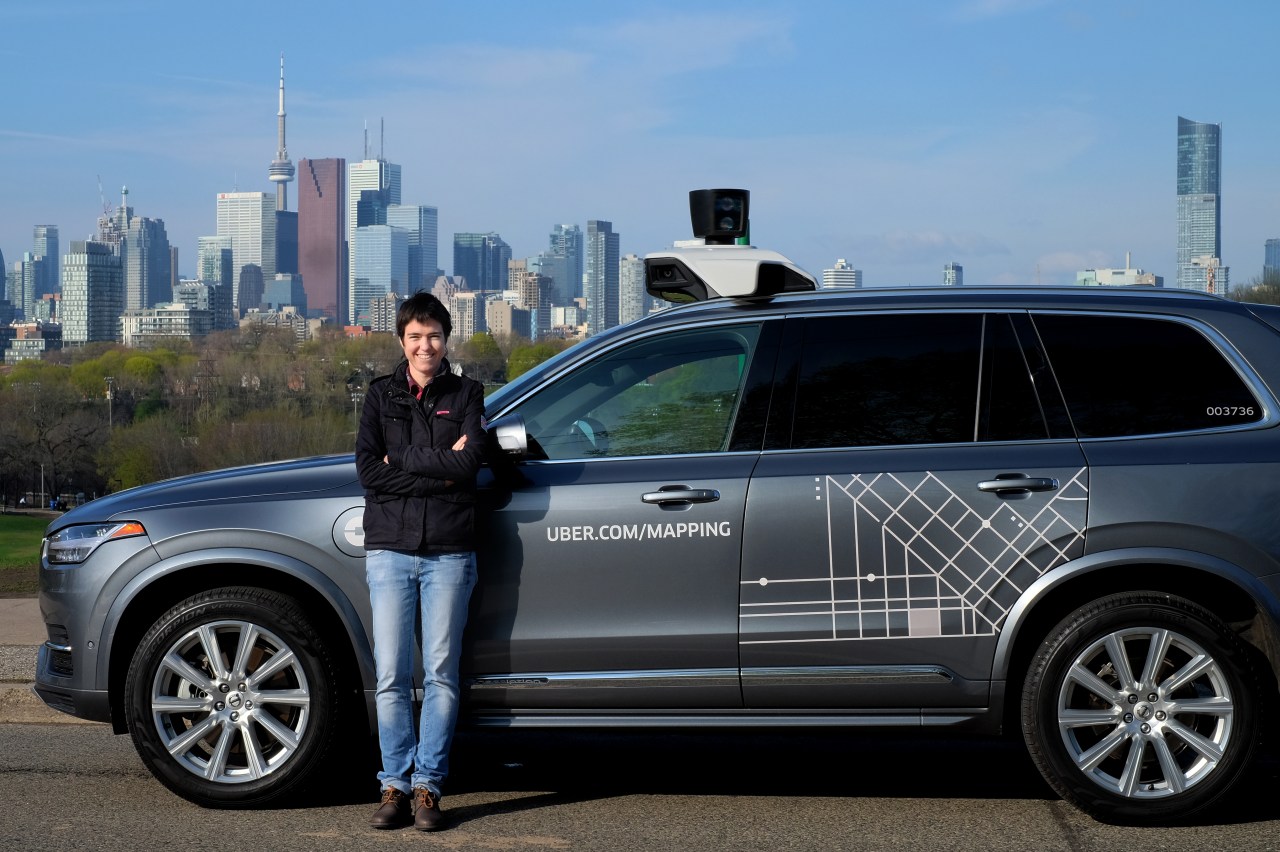
The self-driving vehicle technology landscape is rapidly evolving, and Uber is making a significant move by establishing a foothold in Toronto. Under the leadership of renowned AI researcher Raquel Urtasun, a professor at the University of Toronto, Uber’s Advanced Technologies Group (ATG) is poised to accelerate its innovations in autonomous driving. This strategic expansion not only underscores Uber’s commitment to ride-hailing services but also highlights the growing significance of Toronto as a pivotal center for AI research and development.
The Leadership of Raquel Urtasun
Joining Uber at a crucial time, Urtasun possesses the expertise and vision necessary to steer ATG through the complexities of self-driving technology. Her experience as a Canada Research Chair in Machine Learning and Computer Vision places her among a distinguished group of scholars leading the charge in autonomous vehicle systems. She has emphasized the limitations of academic environments for pushing the boundaries of self-driving research, articulating the essential need for collaboration with industry partners.
The Role of the Vector Institute
Integral to Toronto’s AI ecosystem is the Vector Institute, a collaborative endeavor between government, academia, and the tech industry. Urtasun, as a founding member, has indicated that the research conducted at Vector is not solely academic; it focuses on practical applications that can expedite the development of autonomous vehicle technology. By investing in Vector, Uber aims to contribute to this shared vision of fostering innovation while retaining top AI talent in Canada.
Fostering Talent Locally
With Uber committing to multi-year support for the Vector Institute, there’s a renewed hope for preserving Toronto’s reputation as a global AI powerhouse. Urtasun’s office will be located at MaRS Discovery District, an area known for incubating tech startups and renowned research organizations. The decision to hire current University of Toronto students means that Uber is not just attracting established talent but is also nurturing the next generation of engineers and researchers in the field.
Key Focus Areas for Urtasun and Her Team
As Urtasun steps into her new role, she will concentrate on three primary areas: perception, localization, and machine learning. Each of these domains plays a crucial role in enhancing the safety and efficacy of autonomous vehicles:
- Perception: Developing algorithms that process sensory data to interpret the surrounding environment effectively, which may involve both traditional sensors and AI-augmented analysis.
- Localization: Enabling vehicles to understand their precise position in relation to minimal map data, ensuring accurate navigation even in challenging terrains.
- High-Definition Mapping: Creating detailed maps that inform vehicle systems about its surroundings, facilitating smoother interactions with other road users.
Facing Challenges Head-On
Pursuing new innovations in autonomous driving is not without its challenges—especially given the recent turbulence within the ATG due to leadership changes and related legal issues. However, Urtasun has remained optimistic, refraining from commenting on ongoing litigation while affirmatively stating that her research focuses on facets outside of contentious areas like LiDAR technology.
The Bigger Picture
Uber’s operations in Toronto represent more than just an expansion of services; they signify an enduring commitment to leveraging local talent and advancing technological innovation in self-driving capabilities. The collaborative environment between academic institutions and large corporations can drive the autonomous vehicle revolution forward, inspiring further investment and research into safe, efficient, and responsible transportation technologies.
At fxis.ai, we believe that such advancements are crucial for the future of AI, as they enable more comprehensive and effective solutions. Our team is continually exploring new methodologies to push the envelope in artificial intelligence, ensuring that our clients benefit from the latest technological innovations.
Conclusion
As Uber embarks on this ambitious endeavor under Urtasun’s leadership, it heralds a new era in self-driving technology. With a focus on fundamental research and application, Toronto is set to become a crucial player on the global stage. For more insights, updates, or to collaborate on AI development projects, stay connected with fxis.ai.