
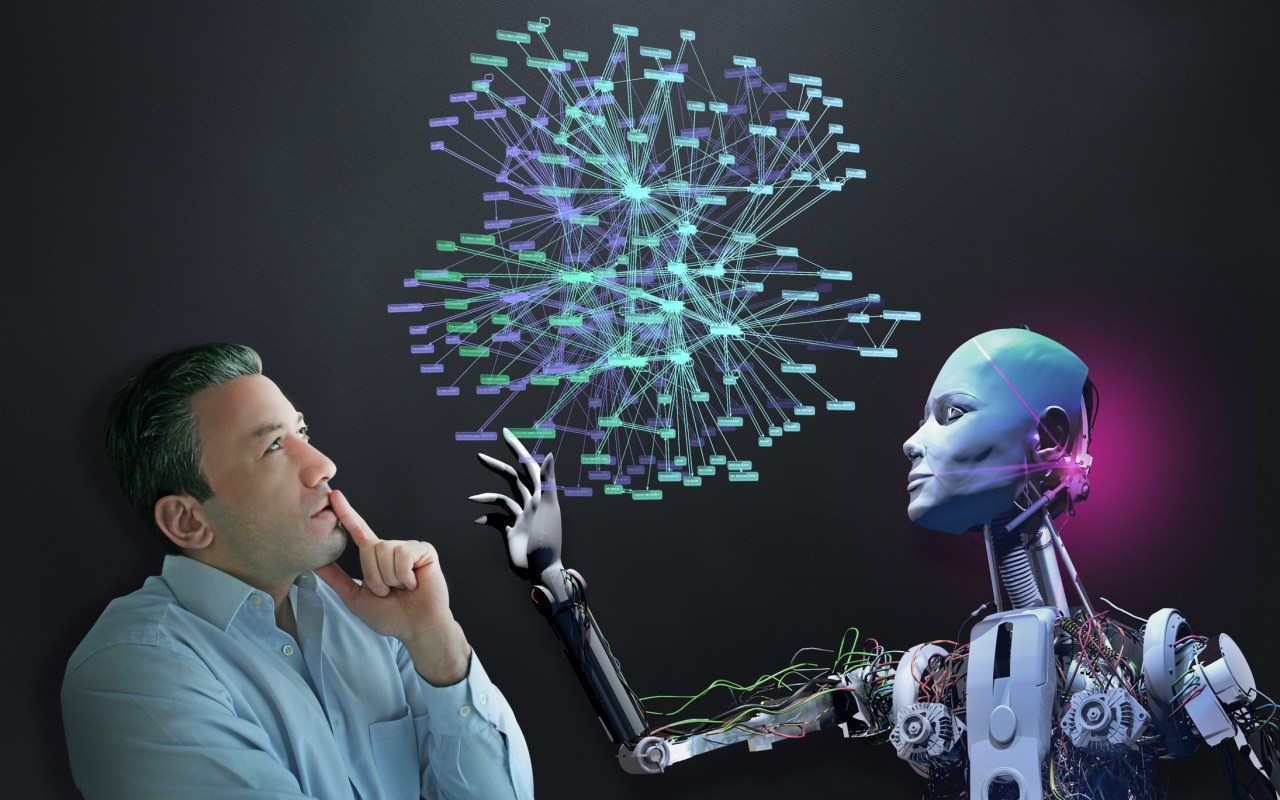
Artificial Intelligence (AI) has transcended its status as mere buzzword; it has become a transformative force that influences various aspects of our daily lives. However, the complexity of AI can be daunting, leaving many people wondering about its true potential, capabilities, and constraints. As we stand on the brink of a new technological era, it is essential to dissect the world of AI, explore its advancements, and understand the implications it brings to society and employment.
A Historical Perspective: From Deep Blue to Modern AI
The journey of AI isn’t as straightforward as one might assume. The milestone moment for AI was notably in 1997 when IBM’s Deep Blue defeated world chess champion Garry Kasparov. Though this was a monumental achievement, the technology at that time failed to generalize to other real-world applications. Fast forward to today, AI technologies have matured, largely due to leaps in machine learning.
Machine Learning (ML), a subset of AI, has leveraged vast amounts of data to develop algorithms that can learn and improve over time. This is markedly different from the rigid programming of the past, offering scalable solutions to increasingly complex tasks.
The Core of Machine Learning: Understanding Neural Networks
The heart of modern AI lies in neural networks, which were inspired by the neural structures of the human brain but operate on a fundamentally different mechanism. These networks consist of interconnected algorithms that process data in layers. When it comes to tasks like image recognition, for instance, deep learning techniques involve multiple layers where each layer abstracts higher-quality features from the input data.
- Input Layer: Initial data representation such as pixels in an image.
- Hidden Layers: These middle layers perform computations and allow the network to learn complex patterns.
- Output Layer: The final decision or classification based on the learned data.
This layered approach has enabled significant advancements in various applications, including voice recognition systems in smartphones and safety systems in autonomous vehicles.
AI’s Societal Impact: Echoes of the Industrial Revolution
To truly grasp the societal implications of AI, we can draw parallels with the Industrial Revolution. Just as steam power once redefined industry standards, AI is set to usher in a new wave of digital transformation. However, it is important to note that AI will not replace traditional software entirely; rather, it complements it by simplifying complex problem-solving tasks.
AI excels in automating repetitive mental labor, thereby increasing efficiency across countless sectors. Yet, this efficiency can come at the cost of traditional roles. As seen in the banking industry with the advent of ATMs, highly skilled jobs may not be directly replaced but rather transformed. Over time, the adoption of AI could lead to a similar dynamic in various fields, where the scope of work evolves to include more creative and strategic functions that machines cannot easily replicate.
The Challenges Ahead: Balancing Innovation with Ethical Concerns
Despite the benefits that AI brings, challenges remain, particularly surrounding employment and ethical implications. As AI systems become capable of performing more complex tasks, workers in those fields may feel a sense of insecurity regarding their roles and identities. The rapid advancement of technology might necessitate a cultural shift; society must work to adapt to these changes to mitigate disruption.
Moreover, AI systems are not equipped to handle creativity, emotional intelligence, or manual dexterity—skills that define human artisanship. This limitation poses questions of what roles humans will play in a future increasingly dominated by intelligent systems.
Conclusion: Embracing the Future of AI
AI has already altered the landscape of technology, and its potential is still unfolding. As we delve deeper into this revolution, it’s crucial to engage in discussions about the ethical use of AI and the necessity for workers to adapt. There’s no denying that AI is a powerful tool for enhancing productivity and innovation, but we must remain vigilant in understanding its limitations and impacts on society.
At fxis.ai, we believe that such advancements are crucial for the future of AI, as they enable more comprehensive and effective solutions. Our team is continually exploring new methodologies to push the envelope in artificial intelligence, ensuring that our clients benefit from the latest technological innovations. For more insights, updates, or to collaborate on AI development projects, stay connected with fxis.ai.