
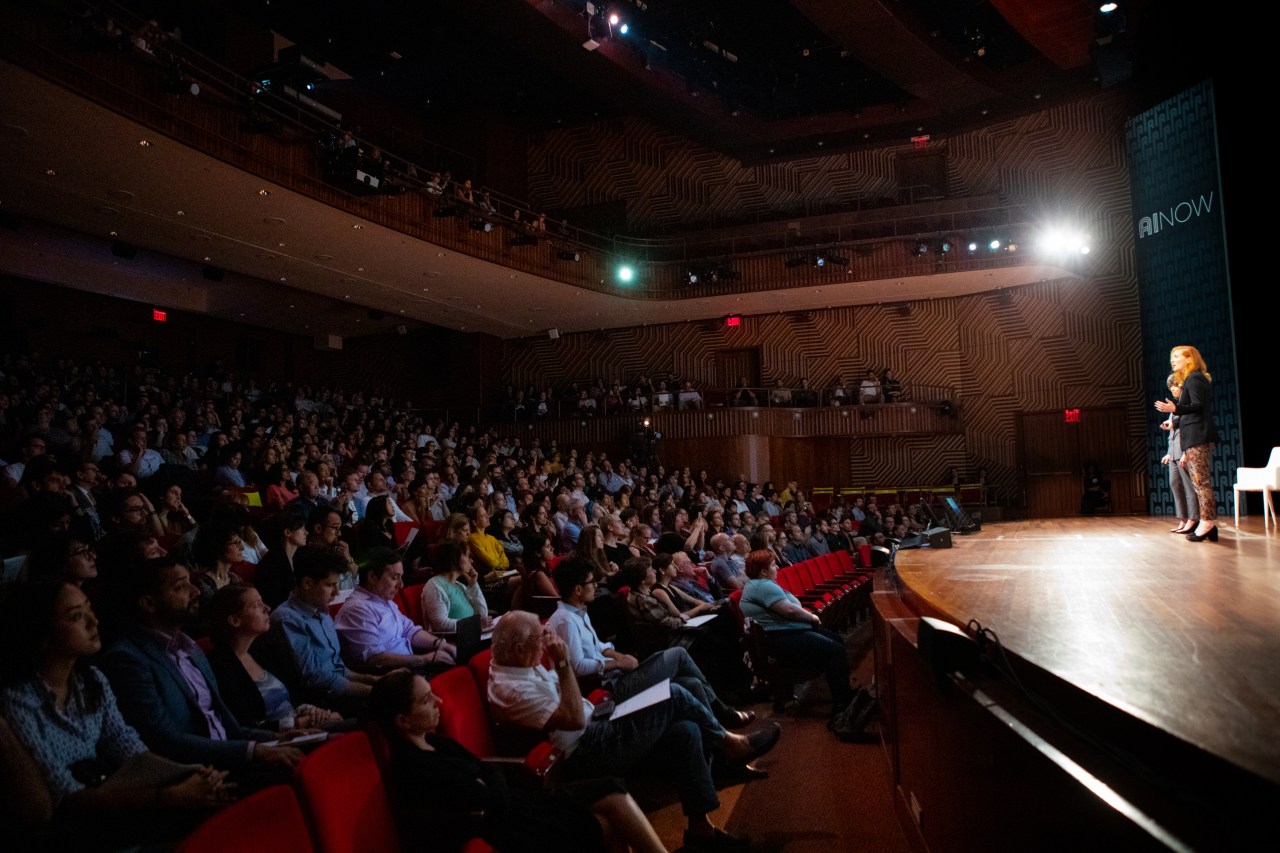
In an era where artificial intelligence (AI) is frequently heralded as the panacea for all societal ills, it is crucial to remember that behind every success story, there are real people tirelessly advocating for change. Veena Dubal, a legal scholar specialized in labor rights and a prominent voice in discussions surrounding the gig economy, embodies this spirit. Her work serves as a critical reminder that while technology evolves, it is people, not machines, who truly address the underlying issues in society.
The AI Now Institute: A New Wave of Tech Ethics
The AI Now Institute, founded at New York University, stands as a beacon in the crowded landscape of tech ethics discussions. Unlike other organizations that may skim the surface of ethical considerations, AI Now delves into the real consequences of technology on marginalized communities, prominently featuring voices from those often relegated to the periphery. The recent symposium, which gathered a diverse audience of approximately 800, exemplified this endeavor. Dubal’s participation frames her advocacy work not just as peripheral labor rights efforts but as integral to discussions on technology’s broader social impact.
Transforming Perceptions: From Labor to Tech Workers
Dubal’s narrative about taxi drivers highlights a fascinating evolution in perceptions of labor in the gig economy. Initially viewed as simply transient workers, taxi drivers gained newfound visibility once platforms like Uber began to dominate the landscape. Uber’s rise has forced society to reconsider who qualifies as a “tech worker.” Dubal explains that taxi drivers, previously marginalized in labor discussions, now share common ground with traditional tech professionals. This shift allows for a unique unification between blue-collar and white-collar workers, both of whom face exploitation under a shared corporate model.
- Creating Solidarity: The newfound alliances among workers illustrate a growing understanding of shared interests across class and industry lines.
- Shared Vulnerabilities: Surprisingly, a well-off engineer’s downward spiral after advocating for cafeteria workers has raised awareness among tech employees about their own precarious work conditions.
- Empowerment through Awareness: Examples like these encapsulate the changing tide of how workers perceive their roles and rights in the technological age.
The Fix Is In: People Over Tech
One of Dubal’s central arguments is a fundamental shift in focus—people, rather than technology, are the ones responsible for enacting real change. During her discussions at AI Now, she emphasizes this ethos, stating, “Tech doesn’t fix things; people fix things.” This perspective critiques the prevailing notion that technology alone will resolve societal issues. Instead, it’s the grassroots movements, and labor organizing like that seen among Uber drivers, which truly challenge the status quo and demand accountability from corporations.
New Challenges in an Old Framework
Despite recent successes like California’s AB5 legislation aimed at safeguarding gig workers, Dubal cautions that many underlying issues persist. Structural oppression remains a barrier that complicates the quest for justice and equity. Uber and similar companies have effectively splintered potential collective action among workers, creating environments where grievances become dispersed and difficult to articulate.
- Need for Accountability: The drive towards transparency and worker rights is a necessary condition for advancing labor justice within the gig economy.
- Examining the Regulations: Both legislative and organizational frameworks must evolve quickly to accommodate the realities faced by workers in the platform economy.
- Exposing Inequalities: Highlighting the disparity between those benefiting from the labor of others, and those who do the labor reveals the urgent need for solidarity.
A Cautious Optimism for the Future
Amidst her zealous advocacy, Dubal expresses a cautious optimism about the future of labor rights and technology’s role in society. Exciting legislation ballpark victories like AB5 bring hope for broader rights, yet fears about climate change and personal security loom large over these developments. “We are definitely making a turn with regard to privacy issues in this country with regard to workers’ rights…,” she states, projecting an imperative for a more equitable tomorrow.
Conclusion
The confluence of labor rights and technology ethics spurred by voices like Dubal’s brings much-needed scrutiny to the impact of AI and other technologies on real communities. As we tread deeper into the age of digitization, remembering that at the heart of our challenges are people yearning for justice ensures that tech does not overshadow the human experience. As a society, advancing this conversation may very well lead to holistic solutions, truly addressing the inequalities that linger in our modern world.
At fxis.ai, we believe that such advancements are crucial for the future of AI, as they enable more comprehensive and effective solutions. Our team is continually exploring new methodologies to push the envelope in artificial intelligence, ensuring that our clients benefit from the latest technological innovations. For more insights, updates, or to collaborate on AI development projects, stay connected with fxis.ai.