
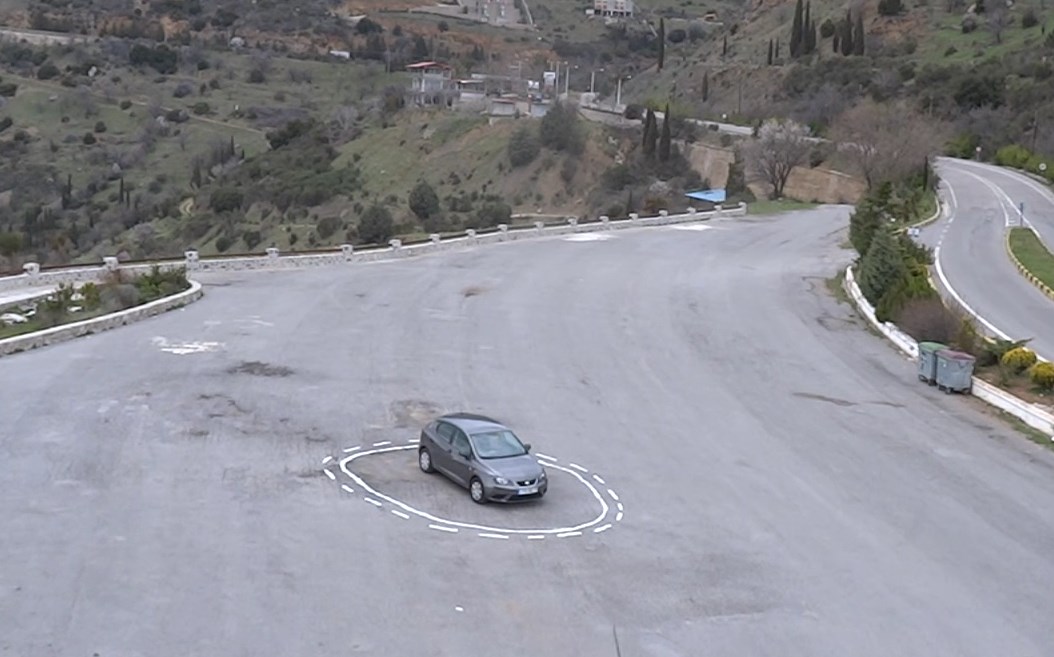
As we venture further into the age of autonomous vehicles, we often celebrate the remarkable capabilities these machines exhibit. However, a critical examination of what these self-driving cars cannot do might be equally illuminating. Artist James Bridle’s recent exploration, “Autonomous Trap 001,” sheds light on these limitations, raising thought-provoking questions about the nature of artificial intelligence and the inherent complexities of navigating our world.
The Unseen Challenges of Autonomous Navigation
In the realm of self-driving technology, understanding road markings is fundamental. Autonomous vehicles are programmed to interpret signals such as lane boundaries, crosswalks, and various traffic regulations. Yet, what happens when they encounter unfamiliar scenarios? Bridle’s artwork brings forth a striking illustration of this concept—a trap constructed of salt, which represents the constraints of an artificial mind devoid of contextual knowledge.
In Bridle’s performance art piece, a well-meaning car is directed into a cleverly designed trap. This visual and physical boundary poses a challenge for the vehicle’s autonomous systems. A driving algorithm honed to interpret a solid line will encounter confusion when faced with dashes, and this raises a crucial aspect of AI: its inability to think beyond programmed parameters.
- Concrete Examples: Cars might successfully navigate perfectly marked roads but could struggle with unconventional or ambiguous situations.
- Lack of Contextual Understanding: AI systems have a limited grasp of context, risking improper responses to new stimuli or road configurations.
Art as a Mirror to Technological Limitations
Bridle’s work deftly illustrates a broader philosophical question: how much can we rely on AI without understanding its limitations? The ‘salting’ technique—an age-old ritual for binding spirits—serves as a compelling metaphor for the existence of boundaries that these algorithms cannot or will not cross. In envisioning a future where autonomous machines dominate, it raises the critical query—what will our relationship be with these entities when their rules diverge from our human logic?
- Potential Conflicts: As AI systems engage more deeply with our daily lives, what misinterpretations could arise from their decision-making?
- Legal Quandaries: In a world where autonomous vehicles regularly misinterpret commands, how will legal systems adapt to address potential crimes against these sophisticated machines?
Preparing for the Uncertainty Ahead
The conversation surrounding self-driving cars extends far beyond their capabilities. It beckons us to consider the bigger picture—the systems of accountability, the ethical implications, and the necessity for robust frameworks guiding AI development. As Bridle’s work suggests, autonomous machines may face limitations that asset-based programming struggles to overcome. Therefore, focusing efforts on creating adaptable, context-aware systems is paramount.
At fxis.ai, we believe that such advancements are crucial for the future of AI, as they enable more comprehensive and effective solutions. Our team is continually exploring new methodologies to push the envelope in artificial intelligence, ensuring that our clients benefit from the latest technological innovations.
Conclusion: The Path Forward
As the world increasingly embraces the age of autonomy, it is essential that we do not overlook the blind spots in these technologies. Engaging in a nuanced dialogue about their limitations will equip us to create better, safer, and more responsive systems. The art created by Bridle is a reminder that understanding the constraints of autonomous vehicles is not just an academic exercise but a vital step towards building a balanced future where humans and technology coexist harmoniously.
For more insights, updates, or to collaborate on AI development projects, stay connected with fxis.ai.