
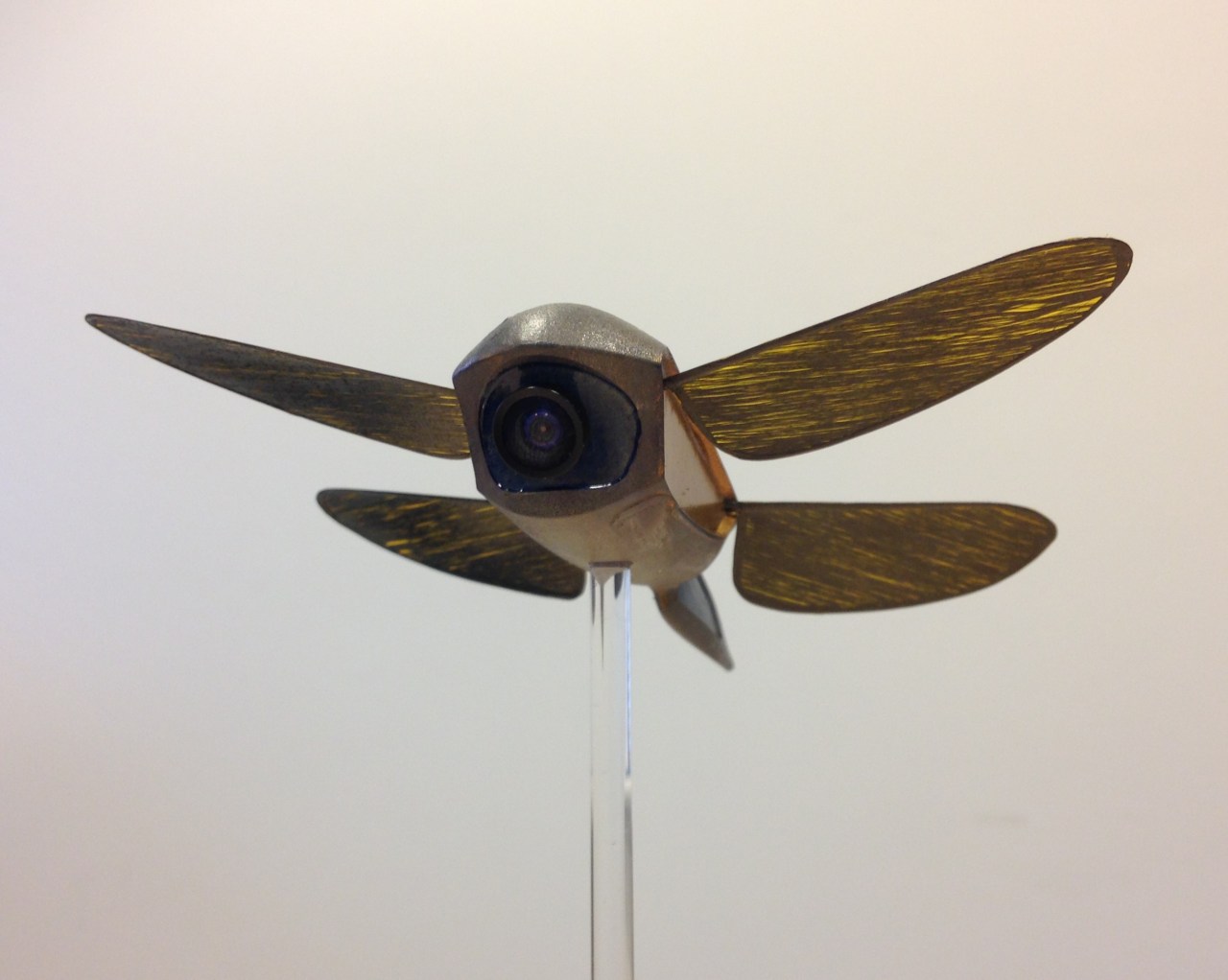
The awe-inspiring flight of a dragonfly is the perfect metaphor for innovation in technology. Imagine harnessing that very essence, a concept so grounded in the natural world, to revolutionize modern-day drones. Enter the UK’s own Animal Dynamics—a biomimetic engineering startup on the frontier of creating a microdrone named Skeeter, modeled on the unique flapping flight mechanisms of nature’s winged experts. With a focus on durability and efficiency, this ambitious project could redefine the use of drones, especially in military and agricultural applications.
From Concept to Prototype: The Journey of Skeeter
The journey of Skeeter began with a feasibility study in mid-2015, and now, Animal Dynamics is on the brink of unveiling a flying prototype. Backed by £1.5 million from the UK Ministry of Defence and ambitious yet digestible timelines, the stakes are high, but so are the potential rewards. Co-founder Alex Caccia notes that the real challenge in engineering this drone lies in achieving a precisely tuned mechanical design capable of overcoming friction.
- The Challenge: Mechanical Precision – Caccia emphasizes the need for a low-friction mechanism that allows the wings to flap with minimal resistance. Any friction could hamper the performance and efficiency of the drone.
- Learning from Nature – Nature is brimming with solutions; insects like bumblebees have mastered flying in turbulent conditions, a feat the Skeeter aims to replicate. In high winds, where conventional drones fail, a flapping-wing approach could excel.
Technical Advancements and Future Prospects
The attention to technical detail is not just about understanding flapping flight but also leveraging modern electronic components that have rapidly decreased in cost. This accessibility is vital for creating a drone that is not only lightweight but also performs superbly in challenging environments.
Moreover, as Caccia explains, advancements in electronics that have spilled over from the mobile industry can significantly contribute to making specialized drones like Skeeter commercially viable. This convergence of technology and design holds promise for applications extending well beyond military use.
- A New Era in Agriculture – Skeeter could aid in precision agriculture by delivering targeted interventions in greenhouses, thereby maximizing efficiency.
- Environmental Monitoring and Disaster Response – With its flapping wings allowing more stable flight in adverse conditions, the drone is also poised for applications in environmental monitoring and search-and-rescue operations.
Insights From Experts in the Field
Dr. Mirko Kovac, director of the Aerial Robotics Lab at Imperial College London, acknowledges the challenges but also the significant advantages of flapping wing flight. He highlights potential applications in smart farming and environmental monitoring, suggesting that the technological gap is narrowing due to ongoing research and development.
According to Adrian Thomas, co-founder and professor of biomechanics, the advantage lies not only in the mechanical design but also in the inherent features that flapping wings could offer, including safer landing due to their passive glide capabilities. Lower injury risks could lead to exciting new applications in urban environments.
Future Implications: Beyond Military Use
Caccia envisions that as the technology evolves, the applications could extend into larger-scale scenarios like humanitarian aid delivery or targeted agricultural efforts. However, urban drone delivery remains a complex landscape, with Skeeter’s design better suited for precision tasks rather than mass delivery services.
The developments within Skeeter illustrate a broader potential for marrying nature-inspired design with cutting-edge technology. As the lines blur between defense applications and consumer technologies, what began as a military project may very well percolate into everyday uses.
Conclusion: A Flapping Revolution on the Horizon
The emergence of the Skeeter microdrone marks an exciting chapter in biomimetic engineering, showing that learning from nature can lead to innovative solutions for contemporary challenges. While the initial focus is on military applications, the overarching potential in agriculture, environmental monitoring, and emergency response unveils a treasure trove of opportunities. At **[fxis.ai](https://fxis.ai/edu)**, we believe that such advancements are crucial for the future of AI, as they enable more comprehensive and effective solutions. Our team is continually exploring new methodologies to push the envelope in artificial intelligence, ensuring that our clients benefit from the latest technological innovations. For more insights, updates, or to collaborate on AI development projects, stay connected with **[fxis.ai](https://fxis.ai/edu)**.