
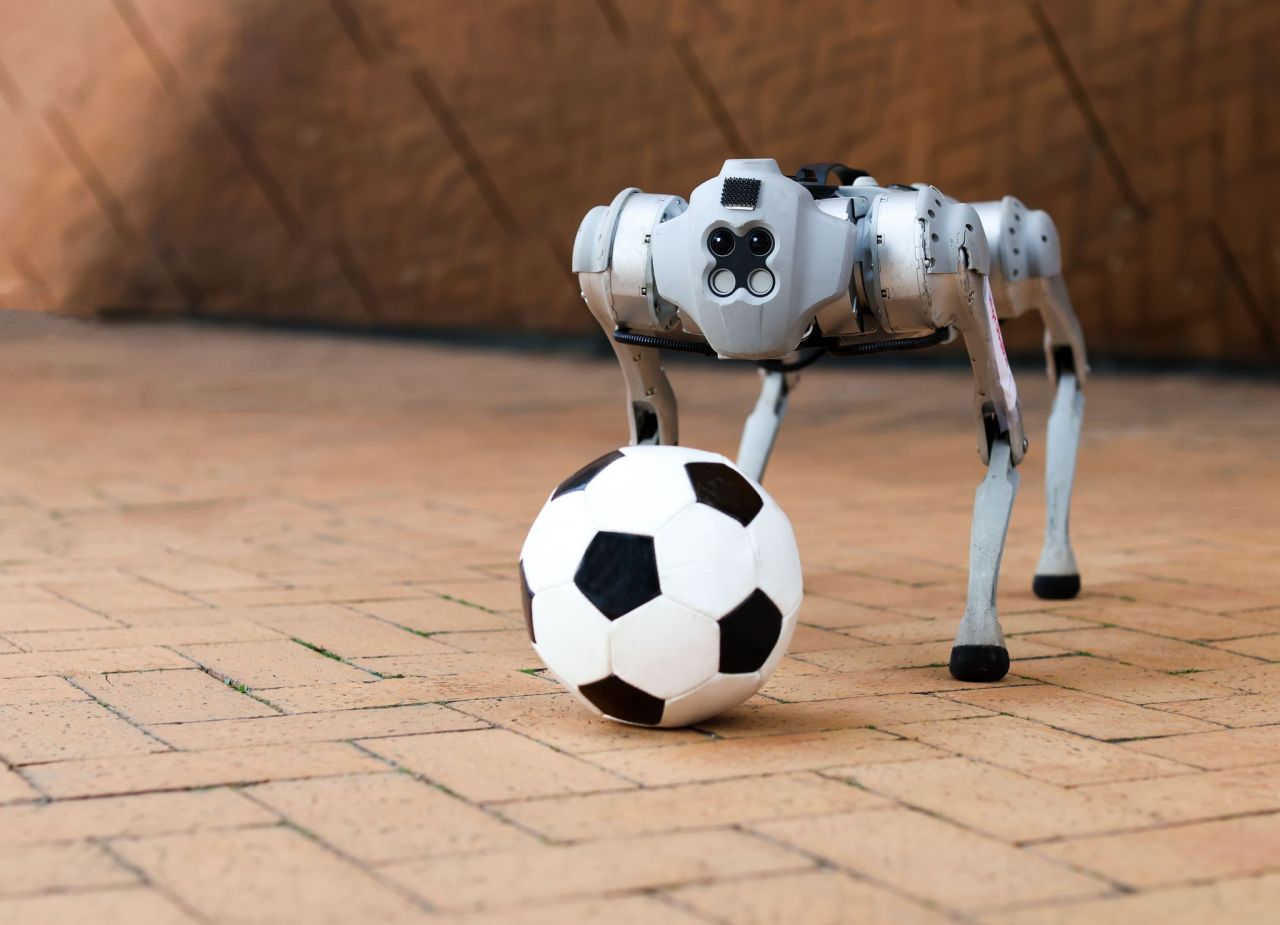
Imagine a world where robots not only assist humans but also engage in competitive sports like soccer. Meet MIT’s Dribblebot, a cutting-edge quadrupedal robot designed to master the art of dribbling a soccer ball across various terrains—grass, sand, mud, and more. Beyond the fun of kicking a ball around, this innovation reflects significant advancements in robotics and could redefine rescue operations in challenging environments. Let’s dive into the capabilities of Dribblebot and its potential implications.
The Challenge of Dribbling
Teaching a robot to dribble and maneuver a soccer ball isn’t just a whimsical endeavor; it is integral to the RoboCup competition founded back in 1996. This international event emphasizes the agility, decision-making, and locomotion skills of robots, effectively testing them in dynamic scenarios. However, Dribblebot takes this concept a step further. Unlike typical RoboCup participants, which are primarily bipeds, Dribblebot is engineered for uneven and unpredictable terrains.
The Innovation Behind Dribblebot
Yandong Ji, the project’s co-lead, explains that past robotic attempts often trained on flat surfaces. However, at MIT, the researchers identified the need to navigate and dribble on diverse environments, introducing a new level of complexity. Unlike its predecessors, Dribblebot combines advanced locomotion with deft ball manipulation. The challenge is twofold: maintaining balance while ensuring precise control of the ball.
- Diverse Terrestrial Challenges: The robot’s training regime includes various environments, from grassy fields to muddy terrains, all critical for developing dribbling techniques.
- Advanced Simulation: To achieve mastery, MIT leverages simulations, considering the robot’s likeness a “digital twin.” Running up to 4,000 simultaneous simulations prepares Dribblebot for real-world scenarios.
Beyond the Soccer Field: Practical Applications
The applications of such technology extend beyond the realm of sports. Consider the implications in disaster response scenarios where traditional wheeled robots falter. Pulkit Agrawal, an MIT professor, emphasizes the limitations of wheeled robotics in navigating rough terrain, which Dribblebot was designed to conquer. In situations like floods or earthquakes, the ability to traverse challenging surfaces is crucial for search and rescue missions. This versatility makes quadrupedal robots an invaluable tool in emergency situations.
Addressing Limitations and Looking Forward
While Dribblebot sets new benchmarks in robotic mobility, it isn’t without challenges. Navigating stairs and inclines remains a significant hurdle. Nevertheless, with ongoing research and iterative improvements, the potential for overcoming these obstacles is promising. The continued exploration of legged robotics will not only enrich the field but could also inspire a wave of new applications across various industries.
Conclusion: The Future of Robotics
As we watch Dribblebot dribble its way across different terrains, we are reminded of the exciting possibilities that lie ahead in robotics. Innovations like Dribblebot reflect the blend of entertainment, engineering, and practical applications crucial for future technologies. The journey towards overcoming the limitations of wheeled robots demonstrates our commitment to advancing robotic capabilities for real-world challenges.
At fxis.ai, we believe that such advancements are crucial for the future of AI, as they enable more comprehensive and effective solutions. Our team is continually exploring new methodologies to push the envelope in artificial intelligence, ensuring that our clients benefit from the latest technological innovations.
For more insights, updates, or to collaborate on AI development projects, stay connected with fxis.ai.