
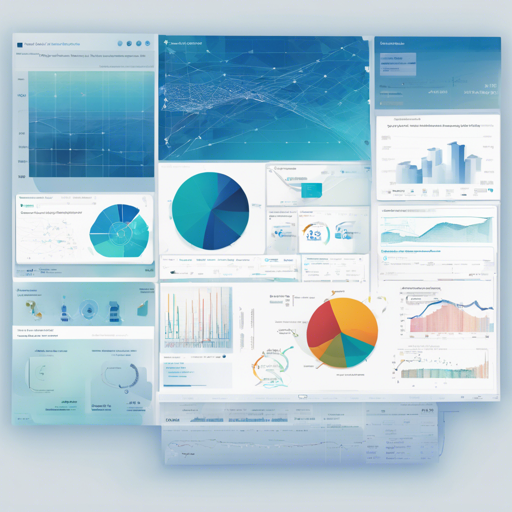
In today’s data-driven world, the ability to navigate complex datasets and uncover new hypotheses is invaluable. Enter Mirador, a dynamic tool designed to facilitate visual exploration of intricate data, enabling users to identify trends and relationships that might otherwise remain hidden. In this article, we will delve into how to use Mirador effectively, explore its applications, and provide some troubleshooting tips to enhance your experience.
Getting Started with Mirador
Using Mirador is akin to embarking on a treasure hunt, where the dataset serves as the map and the insights are your treasures. Here’s how to get started:
- Download Mirador: First, head over to the home page to download the tool.
- Set Up Your Environment: Follow the installation instructions to set up Mirador in your development environment.
- Load Your Dataset: Import the dataset you wish to explore. Ensure that your data is clean and well-structured to yield the best results.
- Visual Exploration: Utilize the visual exploration features of Mirador to manipulate your data and uncover hidden patterns.
Understanding Mirador’s Functionality
Mirador allows users to create visualizations that make complex relationships within data much more comprehensible. To put it in perspective, imagine you are a detective sifting through a sea of clues (data points). Every visualization serves as a magnifying glass, helping you scrutinize specific aspects of the case (dataset) to find those significant details that could lead to a breakthrough hypothesis.
Applications of Mirador
The versatility of Mirador makes it a valuable asset across various domains:
- Scientific Research: Scientists can visualize DNA sequences or chemical compositions to formulate new hypotheses.
- Market Analysis: Businesses can explore consumer behavior data to gain insights for targeted marketing strategies.
- Healthcare: Medical researchers can analyze patient data to identify patterns related to diseases.
Troubleshooting Mirador
If you encounter any roadblocks while using Mirador, here are some troubleshooting tips:
- Ensure that your data is correctly formatted. Corrupted or improperly formatted data can lead to errors during visualization.
- Restart Mirador if it becomes unresponsive. Sometimes, a simple restart is all it takes to resolve temporary glitches.
- If the visualizations are not rendering as expected, check for updates on the wiki. It often contains useful guidance on advanced issues and solutions.
- For more insights, updates, or to collaborate on AI development projects, stay connected with fxis.ai.
Conclusion
Mirador is a powerful tool that equips users to delve deeply into complex datasets with ease. By combining visual exploration with robust data handling capabilities, it opens new avenues for hypothesis generation and discovery. At fxis.ai, we believe that such advancements are crucial for the future of AI, as they enable more comprehensive and effective solutions. Our team is continually exploring new methodologies to push the envelope in artificial intelligence, ensuring that our clients benefit from the latest technological innovations.