
The realms of space exploration and machine learning are at the intersection of astonishing possibilities. Remember the excitement when NASA and Google Brain unveiled their discovery of new exoplanets using advanced AI techniques? That moment marked a significant milestone in the quest to understand our universe. Now, thanks to the determined efforts of this team, they’ve made it possible for anyone with an interest in astronomy to employ similar methods through the release of AstroNet—a powerful open-source tool designed to mine the vast data sets from the Kepler space telescope.
The Kepler Space Telescope: A Goldmine for Discovery
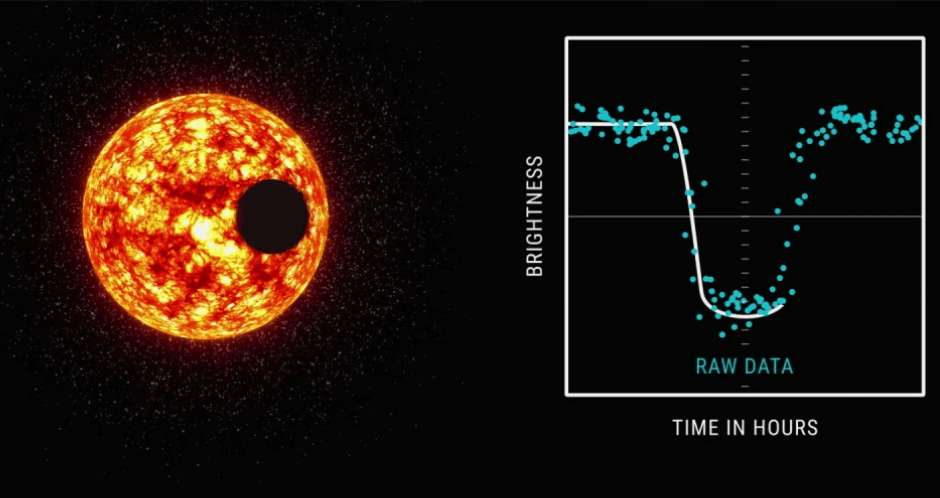
Since its launch, the Kepler space telescope has been observing the Milky Way, diligently monitoring millions of stars to detect planets. This is achieved by analyzing the minute dips in brightness that occur when a planet passes in front of its parent star. Each observation captured is laden with rich data—an ideal testing ground for machine learning algorithms. However, the complexity of these data sets, filled with noise and subtle variations, presents considerable challenges for traditional analysis methods.
AstroNet: Your Gateway to Planet Discovery
Enter AstroNet, a convolutional neural network that has been specifically trained to discern these intricate patterns within Kepler’s enormous database. By studying thousands of carefully labeled readings, it has learned to differentiate between planet and non-planet signals with precision. The algorithm has successfully identified exoplanets like Kepler-90i and Kepler-80g, igniting curiosity about what else might be lurking in the data.
- Easy accessibility: With the source code released on GitHub, anyone can dive in and experiment with their models.
- Expanding capabilities: The design allows users to adapt AstroNet to new datasets, paving the way for real-time discoveries.
- Collaboration potential: By sharing the code with the research community, there’s an opportunity for enhanced accuracy and improved algorithms from contributions worldwide.
Real-World Applications and Future Potential
The implications of a tool like AstroNet extend far beyond the immediate realm of astronomy. Machine learning applications in planetary discovery can advance our understanding of celestial mechanics and even refine models predicting the possibility of habitable exoplanets.
For instance, if amateur astronomers or researchers employ AstroNet on newly-released datasets, we may witness local collaborations springing to life. A hobbyist in their back yard could uncover celestial discoveries that previously seemed beyond reach. Imagine the thrill in circumventing traditional boundaries to forge new pathways in space exploration!
Conclusion: An Invitation to Explore
AstroNet symbolizes the fusion of human curiosity and advanced technology. By democratizing access to sophisticated machine learning tools, it invites a broader audience to engage in the pursuit of cosmic knowledge. This initiative represents a step forward in the collaborative scientific ethos, as individuals become empowered to contribute to our understanding of the universe.
At fxis.ai, we believe that such advancements are crucial for the future of AI, as they enable more comprehensive and effective solutions. Our team is continually exploring new methodologies to push the envelope in artificial intelligence, ensuring that our clients benefit from the latest technological innovations. For more insights, updates, or to collaborate on AI development projects, stay connected with fxis.ai.