
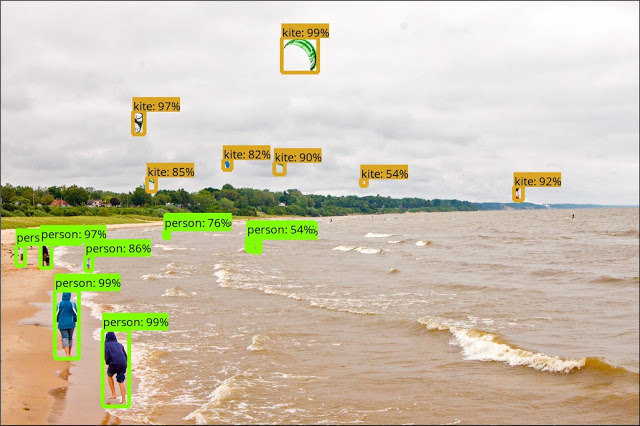
As the frontiers of artificial intelligence expand, the use of machine learning for image recognition has taken center stage. Google, a pioneer in this domain, has taken a significant step forward by rolling out its TensorFlow Object Detection API. This revolutionary tool simplifies the process for developers and researchers, enabling them to seamlessly identify objects within images. By combining simplicity with high performance, Google aims to democratize access to advanced object detection techniques across varied platforms.
What Makes the Object Detection API Stand Out?
The TensorFlow Object Detection API comes packed with heavy-hitting models that are game-changers in the realm of machine learning. Here’s what makes it a remarkable asset:
- Performance-Driven: The API features inception-based convolutional neural networks, which have proven their worth in rigorous benchmarking tests. These models boast high accuracy and robustness, making them reliable choices for serious research.
- Lightweight Models: Adapting to varying contexts, it also features streamlined models such as MobileNets. This single-shot detector is tailored for smartphones, ensuring real-time object detection without compromising performance.
- Pre-packaged Ease of Use: Developers can dive in right away with a full kit that includes pre-packaged weights and even a Jupyter notebook. This means you can start experimenting with little to no setup hassle.
The Need for Mobile-Friendly Solutions
Today’s smartphones, while highly capable, lack the extensive computational resources available on larger desktop and server systems. This creates challenges for developers who want to implement machine learning models effectively. Traditionally, there have been two primary approaches:
- Cloud-Based Models: Although powerful, running models in the cloud introduces latency and requires a constant internet connection, rendering them unsuitable for many applications.
- Localized Simplification: The alternative has been to simplify models, accepting some trade-offs in performance to make them accessible on lower-power devices.
Google isn’t alone in this endeavor; tech giants like Facebook and Apple are also investing heavily in mobile machine learning. For instance, Facebook’s Caffe2Go and Apple’s CoreML framework aim to provide optimized solutions for object detection and other tasks on mobile devices.
Google’s Competitive Advantage
What sets Google apart in this competitive landscape is its robust public cloud offerings, combined with a legacy of delivering computer vision services at scale through tools like the Cloud Vision API. This positions Google as a frontrunner in integrating machine learning with mobile technology effectively.
Implementing the TensorFlow Object Detection API
If you’re eager to test out the capabilities of the TensorFlow Object Detection API, getting started is a breeze. The API is accessible on [GitHub](https://github.com/tensorflow/models). The comprehensive documentation, along with the pre-configured tools, allows even those new to machine learning to implement sophisticated object detection models with ease.
Conclusion: A New Era of Image Recognition Awaits
Google’s TensorFlow Object Detection API is paving the way for an exciting new era in image recognition and machine learning. Its combination of high performance and mobile adaptability makes it a powerful tool for developers and researchers alike. As the technology continues to evolve, we can expect even more innovative applications that will change how we interact with our visual world.
At fxis.ai, we believe that such advancements are crucial for the future of AI, as they enable more comprehensive and effective solutions. Our team is continually exploring new methodologies to push the envelope in artificial intelligence, ensuring that our clients benefit from the latest technological innovations. For more insights, updates, or to collaborate on AI development projects, stay connected with fxis.ai.