
If you’re diving into the world of Artificial Intelligence (AI) and looking to explore its vast potential, you’ve come to the right place. This blog aims to guide you through essential concepts, ensuring that even the most complex programming elements become easy to grasp. So, let’s embark on this enlightening journey!
Understanding AI: The Framework
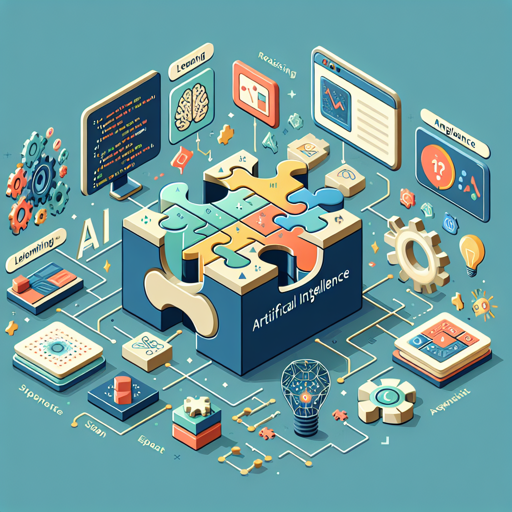
At its core, AI is not just about complex algorithms; it’s about mimicking human intelligence. Think of AI as a smart assistant that can learn, reason, and optimize processes based on provided data. To create an AI model, one needs to follow certain steps akin to assembling a puzzle, where each piece represents a unique component of the project.
How to Start Your AI Project
Getting started with AI involves several fundamental steps. Here’s a straightforward approach:
- Define the Problem: Identify a specific issue that you want your AI to address.
- Gather Data: Collect relevant data that can be used to train your AI model.
- Choose an Algorithm: Select an algorithm best suited for your task, be it decision trees, neural networks, or others.
- Train Your Model: Use your data to train the chosen algorithm, tweaking parameters as necessary to enhance performance.
- Test and Validate: Assess your model’s performance on a separate dataset to ensure its accuracy and efficiency.
Explaining the Training Process
Imagine teaching a child to recognize animals. You start by showing them multiple pictures of cats and dogs. Over time, they learn to differentiate between the two based on distinct features like ears, fur texture, and size. In the same way, training your AI model involves showing it many examples (data) so it can learn to make predictions or decisions based on similarities and differences.
Troubleshooting Common Issues
Even the most seasoned developers face challenges. Here are some troubleshooting tips for common problems you might encounter:
- Data Quality Issues: Ensure your data is clean and accurately labeled. Data cleansing can significantly improve model performance.
- Overfitting: If your model performs well on training data but poorly on validation data, it may be overfitting. Try simplifying the model or using regularization techniques.
- Too Little Data: If training data is insufficient, the model may not learn generalizable patterns. Consider augmenting your dataset or utilizing transfer learning.
- Debugging Errors: Review error logs closely; even minor issues in code can cause unexpected behaviors.
For more insights, updates, or to collaborate on AI development projects, stay connected with fxis.ai.
Conclusion
Engaging with AI development is not only about coding; it’s about solving real-world problems creatively. Just like a sculptor chisels away at a block of marble to reveal a masterpiece, you too can craft impactful models that drive innovation and efficiency.
At fxis.ai, we believe that such advancements are crucial for the future of AI, as they enable more comprehensive and effective solutions. Our team is continually exploring new methodologies to push the envelope in artificial intelligence, ensuring that our clients benefit from the latest technological innovations.