
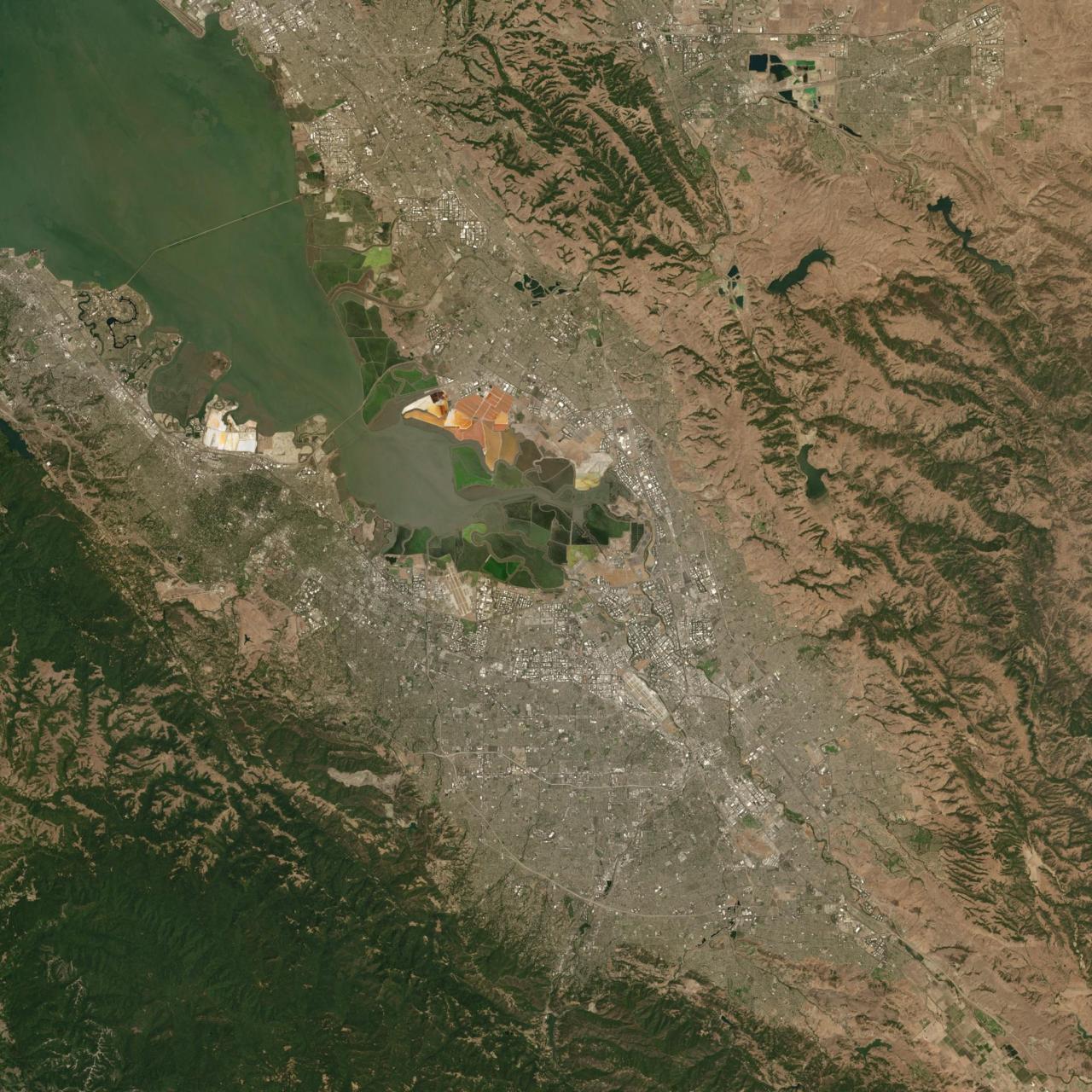
In an era where big data meets machine learning, the challenge of processing and analyzing vast amounts of satellite imagery is emerging as a crucial frontier for innovation. Descartes Labs, a company featuring prominently in this space, is making significant strides with its cloud-based geospatial analysis engine. By combining sophisticated algorithms with satellite data, they are not just transforming the landscapes of agriculture and environmental monitoring but also redefining how we interpret our planet’s surface.
The Importance of Clean Data in Satellite Imagery
When it comes to extracting meaningful insights from satellite images, raw data is not enough. Clouds, shadows, and other atmospheric conditions can obstruct our view and muddle comparisons across time, complicating predictions about crucial factors like crop yields. Without proper data cleaning, any insights derived remain unreliable, highlighting the fundamental role of human intervention in preparing data for machine learning.
A Cloud in the Sky: The Need for Composite Images
To tackle these challenges, Descartes Labs employs composite imaging—a technique that amalgamates data from numerous satellite captures to yield the most accurate representation of Earth’s surface. For instance, as seen with Google Maps, this method allows for the removal of clouds, ensuring that users obtain evenly lit images free from disturbances caused by weather conditions. However, generating these composite images demands enormous computational resources, which is where the groundbreaking processing engine from Descartes Labs shines.
Transforming Data Processing with Parallel Computing
Designed to handle the complexities of big data, Descartes Labs’ parallel computing infrastructure is capable of processing petabytes of geospatial data with impressive efficiency. The team has successfully launched composite images sourced from the Sentinel-1 and 2A satellites, combining these with data from Landsat 8 to create dynamic online tools for data exploration. What’s more, the process involves sophisticated mathematical techniques to standardize the light levels before sifting through clouds and assembling composites.
Applications and Limitations of Composite Imagery
While composite images yield substantial benefits, they are not without limitations. The primary drawback lies in their effectiveness over short time intervals. Given the need to combine imagery to produce a composite, agricultural predictions or other insights are primarily valuable over longer durations (monthly or quarterly) rather than on a week-to-week basis. This often presents challenges for specific sectors—especially in agriculture, where timely decisions can be critical.
The Future of Geospatial Insights
As Descartes Labs continues to refine its geospatial analysis engine, the opportunities for developers and businesses are expanding in leaps and bounds. For now, access to this powerful tool is limited to a select group, but the potential for future applications is immense. From monitoring changes in vegetation to predicting crop yields, the utility of composite images extends across various industries—for instance, agri-tech firms could leverage this technology to make data-driven decisions that improve yields and optimize resource usage.
Concluding Thoughts
In conclusion, the revolutionary approach by Descartes Labs in harnessing satellite imagery for meaningful insights exemplifies how technology can dramatically reshape our understanding of the world. While there are challenges to overcome, innovations like these pave the way for more effective monitoring and forecasting across numerous domains. For those intrigued by applying advanced data solutions in real-world scenarios, the developments at Descartes Labs serve as a reminder of the ever-growing intersection of technology and nature.
At fxis.ai, we believe that such advancements are crucial for the future of AI, as they enable more comprehensive and effective solutions. Our team is continually exploring new methodologies to push the envelope in artificial intelligence, ensuring that our clients benefit from the latest technological innovations.
For more insights, updates, or to collaborate on AI development projects, stay connected with fxis.ai.