
Welcome to the world of artificial intelligence where code generation meets massive language models! In this blog, we’ll explore how to use the StarCoder2-15B model for your programming needs, discuss its limitations, troubleshoot common issues, and give you a clear path forward.
Table of Contents
Model Summary
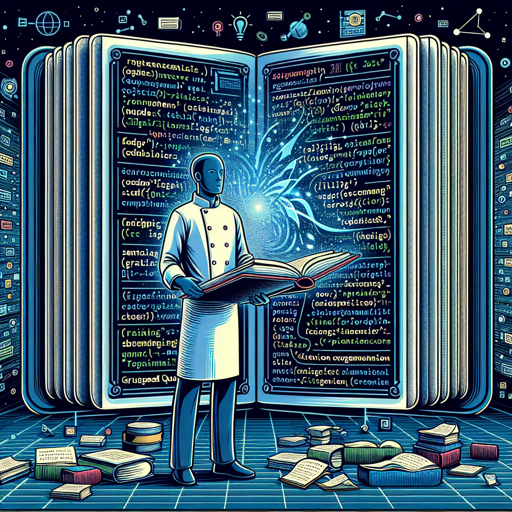
The StarCoder2-15B model is a state-of-the-art parameter model trained on over 600 programming languages. Think of it as a chef with a vast cookbook, representing a variety of coding recipes. The model efficiently utilizes Grouped Query Attention and has astounding capabilities thanks to its training on more than 4 trillion tokens!
Use
Intended Use
While this model can generate code snippets, note that it’s not intended for instruction-based commands. Just like asking a chef to create on-demand, you may not always get the best results with requests like “Write a function that computes the square root.”
Getting Started
To start using StarCoder2, follow these simple steps:
- Install the necessary frameworks:
pip install git+https://github.com/huggingface/transformers.git- Run the model:
from transformers import AutoModelForCausalLM, AutoTokenizer
checkpoint = "bigcode/starcoder2-15b"
tokenizer = AutoTokenizer.from_pretrained(checkpoint)
model = AutoModelForCausalLM.from_pretrained(checkpoint).to("cuda")  # 'cpu' for CPU usage
inputs = tokenizer.encode("def print_hello_world():", return_tensors="pt").to("cuda")
outputs = model.generate(inputs)
print(tokenizer.decode(outputs[0]))
Limitations
Even with its capability to generate code, StarCoder2 has some drawbacks. It’s not foolproof; the generated code may be inefficient, contain bugs, or might not function as intended. Consider it as a master chef who occasionally burns the bread—use the output wisely!
Training
StarCoder2 was crafted using a transformer architecture, specifically designed to process large amounts of data efficiently. The training used a staggering 4 trillion tokens, ensuring the model has an extensive range of programming knowledge. If you think of the training process as a preparation phase for our chef, this includes learning all those exotic recipes (i.e., coding languages and paradigms).
License
The model is licensed under the BigCode OpenRAIL-M v1 license. This ensures that developers can use it with certain guidelines, promoting ethical use throughout the programming community.
Troubleshooting Your Way to Success
If you encounter issues while using StarCoder2, here are some common troubleshooting ideas:
- Ensure you have the latest version of the
transformerslibrary installed. - Check if your hardware specifications are sufficient—running such a model may require high-performance systems.
- If the model generates errors, remember to provide ample context in your prompts.
- For optimal performance, using a GPU is highly recommended over a CPU.
For more insights, updates, or to collaborate on AI development projects, stay connected with fxis.ai.
Conclusion
At fxis.ai, we believe that such advancements are crucial for the future of AI, as they enable more comprehensive and effective solutions. Our team is continually exploring new methodologies to push the envelope in artificial intelligence, ensuring that our clients benefit from the latest technological innovations. Dive into the world of StarCoder2, and harness the future of coding today!