
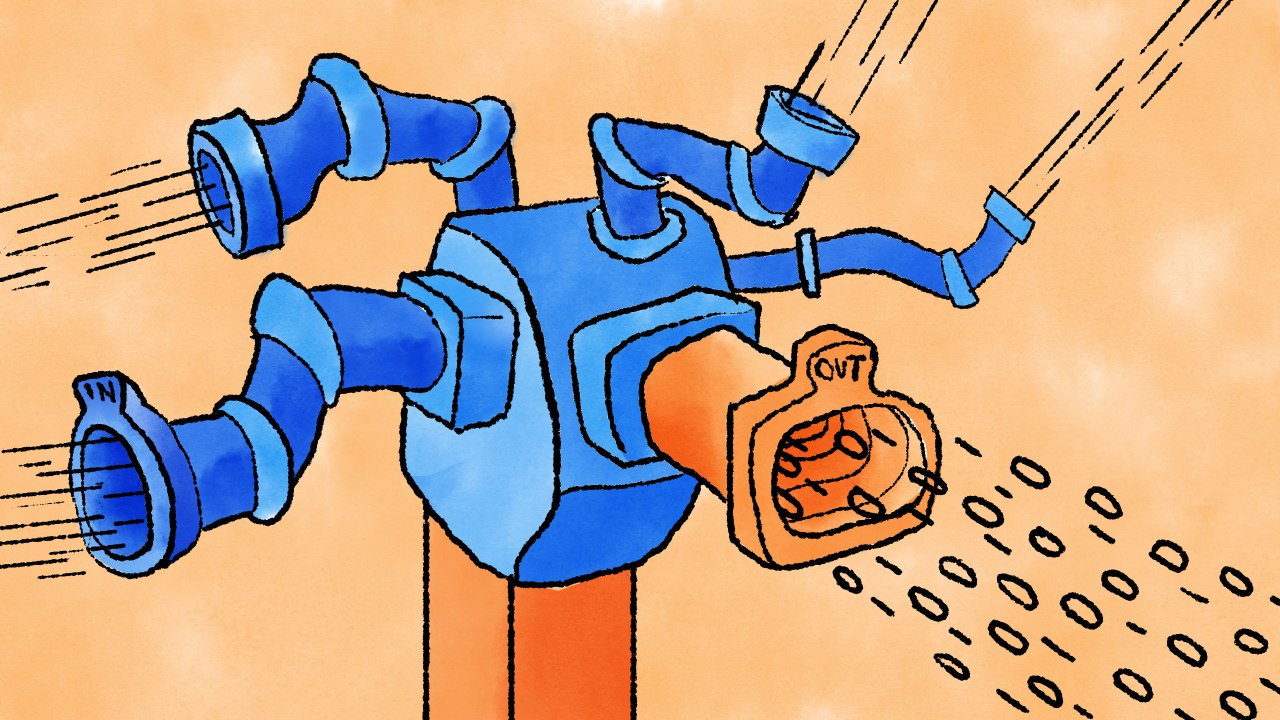
Machine learning often seems like the latest and greatest buzzword tearing through the tech landscape, but its roots stretch back much further than contemporary headlines suggest. While the essence of machine learning has evolved dramatically, its core principles harken back to the early days of computing. The quest to create machines that can think and learn has captivated scientists and dreamers alike, prompting fundamental questions about consciousness and cognition. Let’s dissect the fascinating history and mechanics behind machine learning, clarify some myths, and explore its applications today.
From Vision to Reality: The Pioneers of Machine Learning
To fully appreciate modern machine learning, we need to revisit its inception. One of the earliest figures in this field was Alan Turing, whose seminal query, “Can machines think?” laid the groundwork for artificial intelligence (AI). Fast forward to the 1950s, a time when computing power was primitive, yet brilliant minds were already engineering initial prototypes of intelligent systems.
- Arthur Samuel’s Pioneering Chess Program: In 1952, Samuel created a chess program that utilized a basic strategy called alpha-beta pruning to enhance its decision-making capabilities. This method highlighted the potential of AI without massive computational resources.
- Frank Rosenblatt’s Perceptron: Rosenblatt’s perceptron, a simple neural network, mimicked the human brain’s basic functioning. It categorized inputs into distinct classes by adjusting weights—a fundamental process still used in machine learning today.
Defining Machine Learning: The Science of Reasoning
At its heart, machine learning is about enabling computers to learn from data. Unlike traditional programming that relies on explicit instructions, machine learning grants computers the ability to reason with the information they gather. However, comprehending this concept doesn’t require a PhD in computer science. Essentially, machine learning can be distilled into two primary types of tasks: classification and regression.
- Classification: This process involves categorizing data. For example, a model can classify an email as ‘spam’ or ‘not spam’ based on learned features.
- Regression: This methodology predicts continuous values. For instance, predicting housing prices based on various attributes like location and size.
The Evolution of Techniques: From Shallow to Deep Learning
Migrating from early algorithms to advanced neural networks, we now embrace deep learning—a sophisticated form of machine learning characterized by its multi-layered architecture. Each layer in a deep learning model extracts increasingly complex features from the data. For example:
- The first layer may detect basic edges in images.
- Subsequent layers may recognize shapes, and then complex objects, leading up to understanding entire scenes.
This multi-layered approach empowers machines to accomplish remarkable feats, from facial recognition to language translation.
The Challenges Ahead: Understanding the Black Box
Despite the phenomenal advancements, machine learning is not without its challenges, particularly the infamous “black box” problem. While we know the inputs and outputs of algorithms, revealing how these systems reach conclusions often remains elusive. This lack of transparency mirrors our understanding of the human brain—an organ we have yet to fully decode. Accepting this ambiguity might feel disheartening, but it also opens doors for exploration and innovation.
Exciting Applications: Where Machine Learning Meets Reality
The potential applications of machine learning are nearly limitless. Today, industries are leveraging its capabilities to drive groundbreaking solutions:
- Autonomous Vehicles: They’re utilizing object recognition technologies to traverse the complex environments of city streets.
- Predictive Models: Agricultural sectors foresee crop yields through satellite imagery analysis, optimizing food production.
- Healthcare Innovations: From diagnosing diseases to predicting patient outcomes, machine learning holds promise in revolutionizing healthcare services.
Conclusion: The Journey of Understanding
Machine learning, while complex, is an incredible journey into the unknown. As we continue to unveil its intricacies, we understand not only how machines can learn but also how they mirror aspects of our cognition. As we move forward in this dynamic landscape, collaborating and innovating will be key to shaping a promising future.
At fxis.ai, we believe that such advancements are crucial for the future of AI, as they enable more comprehensive and effective solutions. Our team is continually exploring new methodologies to push the envelope in artificial intelligence, ensuring that our clients benefit from the latest technological innovations. For more insights, updates, or to collaborate on AI development projects, stay connected with fxis.ai.