
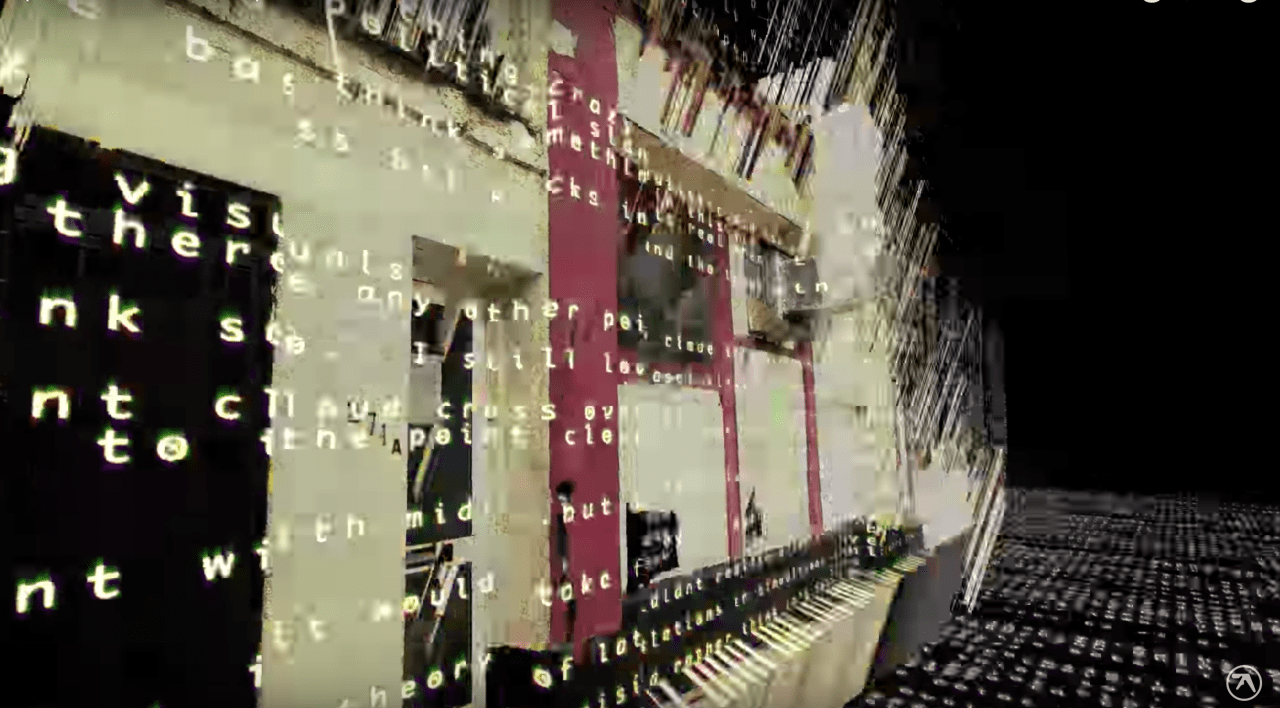
In a world where virtual and physical realities are increasingly interwoven, 6D.ai has emerged as a trailblazer, taking significant strides in democratizing and enhancing augmented reality (AR) experiences. After more than a decade of intensive development, the company is opening its beta to developers, promising an innovative toolkit that paves the way for creating lifelike, interactive AR applications. This post will delve into the essence of 6D.ai’s technology, its visionary goals, and potential applications with a fresh perspective on the capabilities that lie ahead.
The Vision Behind 6D.ai
When Matt Miesnieks, CEO of 6D.ai, launched the company, he had a clear vision: establish a framework where augmented reality can thrive in its fullest potential. This framework comprises three pivotal goals:
- API Development: Creating APIs that capture comprehensive three-dimensional geometry of the world.
- Semantic Understanding: Applying the three-dimensional data to develop semantic APIs that enhance application understanding of environments.
- Collaborative Ecosystem: Partnering with other entities to extend these APIs, ultimately creating a groundbreaking operating system for reality.
While 6D.ai has successfully achieved the first goal, the focus is now shifting to harnessing that data for improved interaction through the second goal. Miesnieks emphasizes that AR needs to create a native experience that feels intuitive and seamless, without introducing cumbersome processes that hinder user engagement.
The Quest for Believable Visual Objects
Miesnieks points out that one of the main challenges confronting augmented reality lies in crafting visually believable digital objects that blend seamlessly into real-world environments. To address these hurdles, 6D.ai insists on three critical capabilities: persistence, occlusion, and interaction.
According to Miesnieks, the approach to interaction should be effortless; users shouldn’t have to grapple with complex workflows. The goal is as simple as saying, “Hey, join my game,” and having it work flawlessly. To achieve this, on-device localization plays a crucial role, a feature that 6D.ai is proud to offer through their technology.
Creating a 3D Mesh of Reality
The backbone of 6D.ai’s innovation is the ability to create a shared 3D mesh of the environment. Miesnieks articulates this beautifully: “Once you have that 3D model then the virtual content can bounce off the 3D model.” This is where shadows are cast correctly, and the digital and physical layers harmonize in extensive locations—from the corners of living rooms to expansive outdoor settings. The usage of depth cameras or offline photogrammetry is essential to achieving these models.
Collaborative Ventures and Future Applications
6D.ai has already begun forging partnerships with notable entities, including collaborations with bands like Massive Attack, and the Victoria and Albert Museum, demonstrating the practicality of their tech in creative and cultural domains. Exciting ventures on the horizon include launching a game with a significant Japanese game developer and a virtual platform akin to YouTube in collaboration with the social network Gree. However, Miesnieks believes that the most compelling applications lie in the realm of navigation for a prominent transportation company, aiming to redefine mobility in both terrestrial and aerial contexts.
Security and Privacy Concerns
As the digital and physical worlds converge, concerns around security and privacy become paramount. Miesnieks reassures users that safety was a core consideration during the development of their technology. The system ensures that data access corresponds to physical location, meaning users can only gather contextual information relevant to the spaces they inhabit.
Moreover, the point cloud generated by 6D.ai’s technology does not provide recognizable images but rather a randomized data representation that cannot be easily reversed engineered, thus enhancing privacy protection.
A New Era of Augmented Reality
As 6D.ai continues to develop, they are calling on developers to view this platform as an avenue for creating revolutionary AR experiences. Miesnieks aptly summarizes their ambition by saying, “Our business is web services meet Waze.” This amalgamation reflects an exciting intersection of navigation, connectivity, and user engagement that is set to redefine interactions with augmented environments.
Conclusion
6D.ai stands at the forefront of augmented reality innovation, bridging the gap between the tangible and digital worlds. With its comprehensive toolkit, enriched API offerings, and a commitment to user-friendly experiences, 6D.ai is on a mission to establish a new operating system for reality. As we look towards the future, the possibilities for collaboration, creativity, and connectivity are boundless.
At fxis.ai, we believe that such advancements are crucial for the future of AI, as they enable more comprehensive and effective solutions. Our team is continually exploring new methodologies to push the envelope in artificial intelligence, ensuring that our clients benefit from the latest technological innovations.
For more insights, updates, or to collaborate on AI development projects, stay connected with fxis.ai.